 ultimate-guide
Custom Peptide Quantities for Research Labs: 2026 Guide
Table of Contents
- How to Match Custom Peptide Quantities to Your Experimental Design
- Peptide Synthesis Purity Requirements: What Your Assay Actually Demands
- Peptide Modification Options and How They Affect Minimum Order Quantities
- Analytical Data and Documentation for Research-Grade Peptides
- Peptide Reconstitution Best Practices After Bulk Quantity Delivery
- Research Peptide Storage Guidelines for Multi-Vial Kit Inventories
- Troubleshooting Synthesis Failures and Regulatory Compliance for Research-Grade Peptides
- Frequently Asked Questions
Last Updated: September 13, 2026
How to Match Custom Peptide Quantities to Your Experimental Design
Custom peptide quantities for research labs are determined by working backward from your experimental design, not by defaulting to whatever vial count a supplier stocks. This guide breaks down the quantity math, purity thresholds, and documentation standards that principal investigators and lab managers actually need before placing an order. Get the quantity wrong and you either waste grant money on unused vials or halt a study mid-run waiting on a resupply.
The core principle is simple: calculate total mass needed across every replicate, add a synthesis-loss buffer, then round up to the nearest tier that keeps a single lot number across the whole study. Mixing lots mid-experiment introduces batch-to-batch variation that can invalidate your results, and no reviewer will accept it.
Below, we'll show you exactly how to size an order for in vitro screening versus in vivo dosing, where bulk tiers save money, and what analytical paperwork to demand with every shipment.
In Vitro Screening vs. In Vivo Dosing: Quantity Math That Matters
In vitro work consumes milligrams; in vivo work consumes grams. That gap drives every quantity decision you make.
For a typical in vitro screen, calculate: (number of wells) x (peptide concentration in µg/mL) x (volume per well in mL) x (number of replicate plates). A 96-well plate run at 10 µg/mL with 100 µL per well uses under 0.1 mg per plate. Even a full dose-response curve across ten concentrations rarely exceeds a few milligrams.
In vivo dosing scales differently. Multiply your dose in mg/kg by animal body weight and by the number of doses per subject, then by subject count. A study using 5 mg/kg in 250 g animals across 20 subjects and 14 daily doses needs roughly 350 mg of peptide before you account for formulation loss (peer-reviewed research).
A common mistake is ordering exactly the calculated amount. Synthesis and purification always lose material, so add a 20-30% overage. Running short mid-study forces a new lot, and that new lot may not match your original purity profile.
Quantity Tiers and Cost-Benefit Analysis for Grant-Funded Labs
Cost per milligram drops sharply as quantity rises, but only if you can actually use the material before it degrades.
Most suppliers price in tiers: small research quantities in the low milligram range, mid-scale orders in the tens to hundreds of milligrams, and bulk orders at the gram scale and above.
Here's the trade-off grant-funded labs consistently get wrong:
| Order Size | Best For | Main Risk |
|---|---|---|
| Low mg | Pilot screens, feasibility checks | Highest cost per mg |
| Tens to hundreds of mg | Full in vitro studies, small in vivo runs | Modest savings, still limited shelf life |
| Gram scale and above | Multi-phase studies, library work, scale-up | Capital tied up in material that may expire |
For a single screening campaign, buying at a mid tier may be suitable. For a study that will run in phases over a year or more, bulk pricing may make sense only if your storage setup can hold the material stable. Otherwise, material degradation could be a factor.
Peptide Synthesis Purity Requirements: What Your Assay Actually Demands
Purity requirements should be set by your assay's sensitivity, not by habit. Crude synthesis produces a mixture; RP-HPLC purification isolates the target sequence to a defined purity level.
Match purity to application:
- Routine ELISA or binding screens: lower purity grades often suffice because the assay tolerates minor impurities.
- Cell-based assays: mid-to-high purity, since contaminants can trigger off-target cellular responses.
- In vivo work and anything feeding into regulatory documentation: high purity with full analytical data, because impurity profiles affect toxicity and reproducibility.
- Structural studies and bioconjugation: the highest available purity, since a single modified byproduct can ruin a crystal or a conjugation reaction.
Purity is reported as a percentage from RP-HPLC, typically by area under the main peak. Mass spectrometry confirms the molecular weight matches your intended sequence. Demand both. A purity figure without an accompanying mass spec tells you nothing about whether the correct peptide was made.
Peptide Modification Options and How They Affect Minimum Order Quantities
Modifications change both the synthesis difficulty and the minimum quantity a supplier will produce, because each modification adds synthesis steps and purification challenges.
Common modifications and their quantity impact:
- N-terminal acetylation and C-terminal amidation: routine, minimal effect on minimum order quantities. Amidation often improves stability against exopeptidases.
- Fluorescent labels and biotin tags: moderate impact. Labeled peptides usually carry higher minimums because synthesis yield drops and purification is harder.
- Phosphorylation, methylation, and other post-translational mimics: significant impact. These require protected building blocks and careful coupling, raising both cost and minimum quantities.
- Cyclization and disulfide bridge formation: the largest impact. Cyclic peptides frequently carry gram-scale minimums or custom quotes because folding and purification losses are substantial.
Sequence optimization matters here too. Hydrophobic sequences and those prone to aggregation are harder to purify and often force higher minimums. If your sequence is difficult, expect to pay for a larger batch than the experiment strictly needs.
Analytical Data and Documentation for Research-Grade Peptides
Research-grade peptides should arrive with documentation that lets you verify identity, purity, and provenance without re-testing everything in-house.
The documentation package to require:
- Certificate of analysis listing sequence, molecular weight, and purity percentage
- RP-HPLC chromatogram showing the main peak and impurity profile
- Mass spectrometry data confirming the observed mass against the calculated mass
- Batch or lot number traceable to the synthesis run
- Storage and handling recommendations specific to the peptide
For labs that need independent verification, third-party testing adds a layer of assurance. Online Peptide Sales provides Janoshik-verified batch reports for identified samples, which lets procurement officers confirm a batch's profile before releasing it into a controlled study. That matters when your documentation feeds into an assay development record or a regulatory submission.
Peptide Reconstitution Best Practices After Bulk Quantity Delivery
Peptide reconstitution best practices start with the right solvent: use bacteriostatic water for most peptides intended for repeated withdrawal, and sterile water for applications where the preservative interferes.
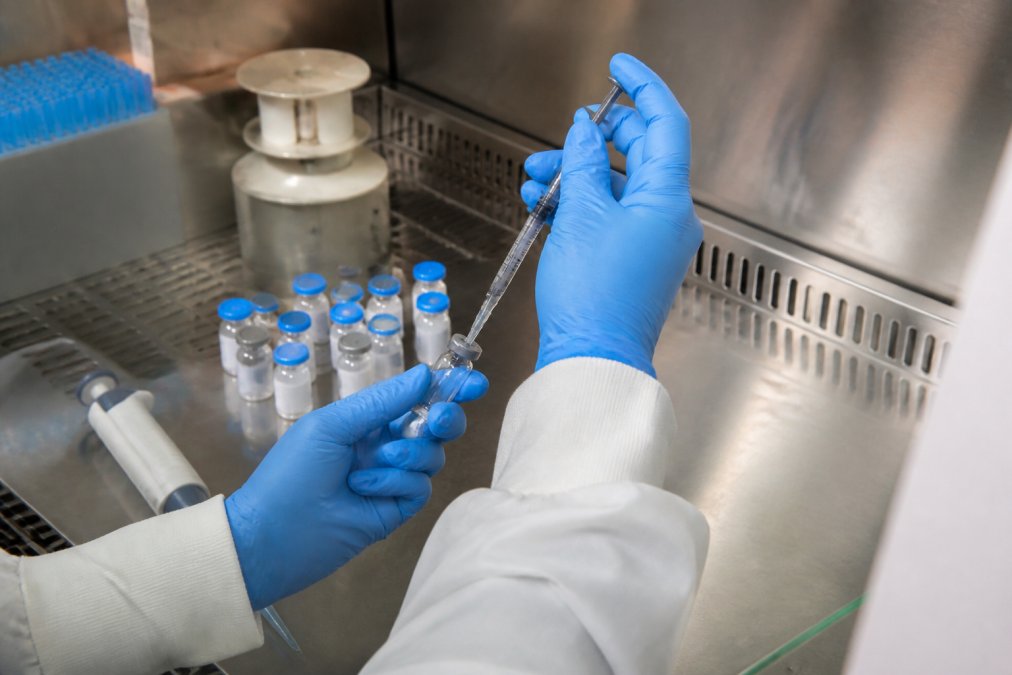
The process:
- Let the lyophilized vial reach room temperature before opening to prevent condensation.
- Add solvent slowly down the vial wall rather than directly onto the powder to avoid foaming.
- Swirl gently; never vortex or shake, which can shear the peptide and cause aggregation.
- Calculate concentration from the actual peptide mass in the vial, accounting for purity and any counterion content.
- Aliquot immediately into single-use volumes before freezing.
That last step is where most labs cut corners. Repeated freeze-thaw cycles degrade peptides, so aliquoting on day one protects the whole batch. Solubility testing on a small portion first is wise for hydrophobic sequences that may need a co-solvent like DMSO before aqueous dilution.
Research Peptide Storage Guidelines for Multi-Vial Kit Inventories
Research peptide storage guidelines for a multi-vial kit come down to temperature, moisture, and light control, plus a labeling system that survives the freezer.
Lyophilized peptides are stable for extended periods at -20°C, and longer at -80°C. Keep them dry: desiccant in the container and a tight seal matter more than most people assume, because moisture drives degradation even in the freezer. Protect from light, especially for peptides with aromatic residues.
Once reconstituted, store working aliquots at -20°C or below and avoid keeping a thawed stock at 4°C for more than a few days. Label every vial with peptide name, lot number, concentration, and reconstitution date. For multi-vial kits, log which vials came from which lot so you can trace any anomaly back to its batch.
Troubleshooting Synthesis Failures and Regulatory Compliance for Research-Grade Peptides
Synthesis failures trace back to a handful of causes, and knowing them helps you interpret a supplier's lead time and yield claims, or push back when a quote seems off.
The usual culprits:
- Sequence aggregation during coupling. Hydrophobic stretches, runs of leucine, isoleucine, valine, phenylalanine, or tryptophan, cause the growing peptide chain to fold back on itself and aggregate on the resin. Once aggregated, coupling reagents cannot reach the reactive site, and the chain terminates early. This is the single most common cause of low yield on otherwise routine sequences.
- Incomplete deprotection. Each cycle requires removing the Fmoc protecting group before the next amino acid couples. If deprotection is incomplete, truncated sequences carry forward and appear as impurities in the final product. Long sequences and sterically hindered residues make this worse.
- Difficult couplings at specific positions. Beta-branched residues (valine, isoleucine, threonine) and bulky protected amino acids couple slowly. A single slow coupling can drop overall yield by double digits on a long sequence.
- Purification losses on hydrophobic or highly charged peptides. A peptide that aggregates during synthesis often also behaves badly on the HPLC column, eluting as a broad or split peak that is hard to isolate cleanly. Highly charged sequences can be equally difficult to separate from truncation products.
- Cysteine oxidation and disulfide scrambling. Sequences with multiple cysteines are prone to forming the wrong disulfide bonds during folding, producing a product with the correct mass but the wrong structure.
When a supplier reports a low yield or a longer lead time, sequence difficulty is often the reason. A reputable supplier flags this before you order rather than after. If you are designing a sequence from scratch, a few practical mitigations exist: break long hydrophobic stretches with a polar residue, keep the peptide under roughly 30 residues when possible, and consider whether a scrambled or truncated variant would serve the same experimental purpose.
On compliance, research-grade peptides occupy a specific lane. They are sold for laboratory research use, not for human or veterinary consumption, and that distinction drives labeling, documentation, and shipping requirements. In the United States, the FDA guidance on compounding and research-use materials sets the boundaries researchers should understand before procurement. For controlled substances and listed chemicals, DEA regulations on scheduled compounds govern what a lab may legally possess and document.
The distinction that matters most for labs moving toward clinical work is the one between RUO and GMP-grade material:
- RUO (Research Use Only) peptides are sold for laboratory investigation. They carry a label stating they are not for diagnostic, therapeutic, or human use. Documentation typically includes a certificate of analysis, HPLC chromatogram, and mass spec, enough to verify identity and purity for research, but not enough to support a regulatory filing.
- GMP-grade peptides are manufactured under current Good Manufacturing Practices, with validated processes, documented batch records, and quality systems that support use in clinical trials or as reference standards. The documentation burden is substantially higher, and so is the cost.
The practical implication: if your study is purely mechanistic or preclinical, RUO material is appropriate and cost-effective. If your work will feed into an Investigational New Drug application or a clinical protocol, you will eventually need GMP-grade material, and the transition point should be planned rather than discovered. Retrofitting a study that was run on RUO material to meet GMP documentation requirements is expensive and sometimes impossible.
Work with your institution's compliance office to confirm your specific sequence and intended use fall within research exemptions, and to map out when your project will need to cross the RUO-to-GMP line.
Frequently Asked Questions
How do I determine the required peptide quantity for my research study?
Start with your assay's working concentration, number of replicates, and total experiments planned. Calculate total peptide mass needed, then add 20-30% overage for weighing and reconstitution losses. For a typical in vitro study using 1 mg/mL stock and 10 uL per well across 96-well plates, a 10 mg quantity usually covers a full screen. Ordering slightly more than your calculated need prevents mid-study reorders that delay timelines.
What are the standard purity levels for custom research peptides, and how do they affect quantity pricing?
Research-grade peptides are typically offered at various HPLC purity levels. Higher purity requires additional RP-HPLC purification rounds. For screening assays, a moderate purity may suffice; for quantitative assays or in vivo work, higher purity is standard.
What documentation should I request from a peptide supplier?
Ask for a certificate of analysis per batch, including RP-HPLC chromatogram and mass spectrometry data confirming molecular weight. When a supplier offers Janoshik-verified batch reports for identified samples, that third-party verification adds independent confirmation of purity and identity. Also request the synthesis yield and any modifications (N-terminal acetylation, C-terminal amidation) documented on the CoA.
How does peptide quantity affect the cost of custom synthesis?
Custom synthesis pricing may follow a tiered curve. Modifications, high purity requirements, and difficult sequences can affect pricing. For multi-phase studies, ordering in bulk at a higher tier may offer cost advantages compared to repeated small orders, even accounting for storage.