 how-to
How to Verify Peptide Purity: A 2026 Guide
Table of Contents
- What Peptide Purity Actually Means (And Why It Changes Your Results)
- Step-by-Step: How to Verify Peptide Purity Before You Use It
- Peptide Certificate of Analysis Interpretation: Reading the Numbers Correctly
- HPLC vs Mass Spectrometry for Peptides: Which Test Tells You What
- Third-Party Peptide Testing Labs: DIY vs. Professional Verification
- How to Verify Peptide Purity When Sourcing from Overseas Suppliers
- Frequently Asked Questions
Last Updated: August 30, 2026
What Peptide Purity Actually Means (And Why It Changes Your Results)
Peptide purity is the percentage of the target peptide in a lyophilized powder sample relative to all other substances, expressed as main peak area by HPLC analysis. A sample labeled "95% pure" contains roughly 95 parts target peptide to 5 parts everything else: degradation products, truncated sequences, residual solvents, counter-ions like trifluoroacetic acid, and synthesis byproducts.
That 5% matters more than most researchers expect. Impurities aren't inert, some are biologically active, some interfere with downstream assays, and some degrade the target peptide during storage. The difference between 90% and 98% pure peptide isn't just 8 percentage points; it's potentially the difference between reproducible data and noise.
Learning to verify peptide purity doesn't require a chemistry PhD. It requires knowing which documents to request, which numbers to read, and when to send a sample to an independent lab.
Purity vs. Potency: Two Different Numbers
A common mistake is treating purity and potency as synonymous. They are not.
Purity measures how much of the sample is the target peptide. Potency measures how biologically active that peptide is, whether it folds correctly, binds its receptor, and produces the expected effect. A peptide can be analytically pure and biologically inactive if stored incorrectly, reconstituted improperly, or synthesized with a sequence error that HPLC cannot detect.
Verify both dimensions separately when interpreting vendor claims.
Common Impurities in Synthetic Peptides
Peptide synthesis introduces several categories of contaminants: truncated sequences from failed coupling reactions, deletion sequences missing internal amino acids, oxidized residues (particularly methionine and cysteine), trifluoroacetic acid (TFA) counter-ions that can be cytotoxic at higher concentrations, residual acetate from ion-exchange steps, aggregates and dimers (especially in cysteine-containing peptides), and residual solvents like acetonitrile, DMF, or water from lyophilization.
Knowing the contaminant profile of your specific peptide helps you interpret the CoA intelligently rather than just reading the headline purity number.
Step-by-Step: How to Verify Peptide Purity Before You Use It
Verifying peptide purity follows a logical sequence: start with what you can see, then work through the documentation, then decide whether the data warrants independent confirmation.
Step 1: Visual Inspection of the Lyophilized Powder
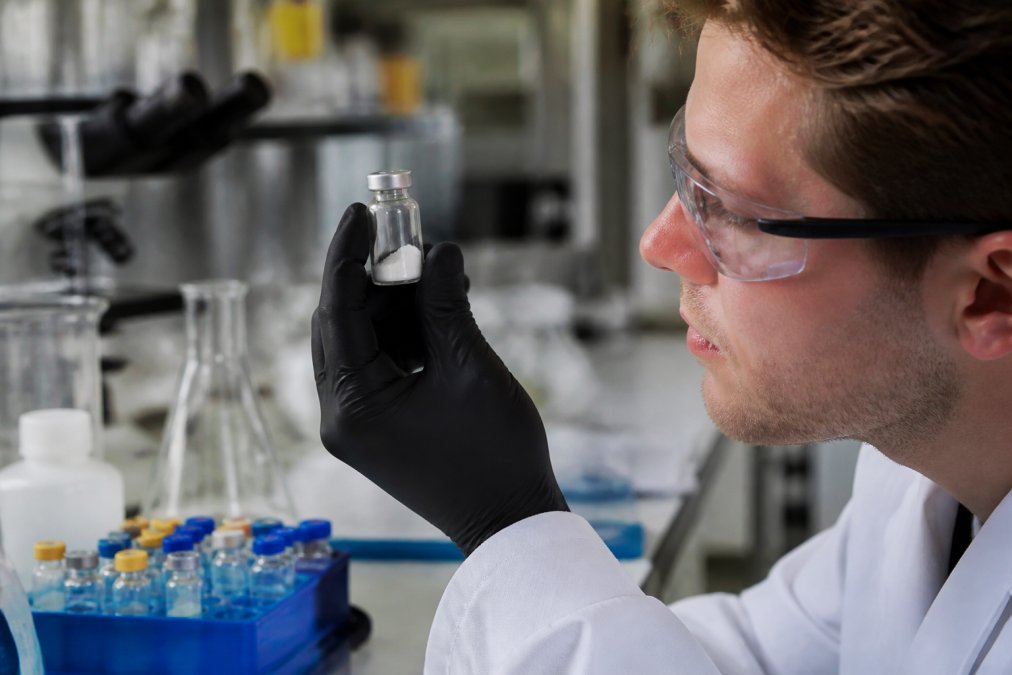
A properly lyophilized peptide should appear as a uniform white to off-white powder, occasionally with a slight yellow tint depending on the sequence. Warning signs include clumping or caking suggesting moisture contamination, discoloration (brown or grey tones) indicating oxidation, oily residue on vial walls suggesting incomplete solvent removal, and visible particulates that shouldn't be present in a filtered preparation.
These observations don't confirm purity, but they can immediately flag a batch worth rejecting before you invest time in reconstitution and assay setup.
Step 2: Request and Review the Batch-Specific CoA
The batch-specific Certificate of Analysis is the primary document for peptide purity verification. A legitimate CoA should include the peptide sequence and molecular weight, HPLC purity percentage with main peak area, mass spectrometry confirmation of molecular weight, batch or lot number matching your vial, date of analysis, and analytical method details (column type, mobile phase, detection wavelength at 214 nm).
Request this document before purchase. If a supplier cannot provide a batch-specific CoA on request, that is a significant red flag.
Step 3: Cross-Check Analytical Data Against Claimed Purity
The purity percentage on the CoA front page is a summary. The chromatogram is the evidence. These two must be consistent.
Open the HPLC chromatogram and locate the main peak. The purity percentage should correspond to the ratio of the main peak area to total peak area. If the front page claims 98% purity but the chromatogram shows a large secondary peak at a different retention time, the numbers don't reconcile.
Also check the mass spectrometry data, the observed mass-to-charge ratio should match the theoretical molecular weight to within ~1 Da. Verify detection wavelength (214 nm is standard for broad peptide coverage; 280 nm only captures aromatic residues). Confirm the column and method are standard C18 reverse-phase with acetonitrile/water gradient.
Step 4: Decide Whether Independent Retesting Is Warranted
Most researchers don't need to independently retest every batch. But certain situations make third-party verification worth the cost: new and unvetted suppliers, safety-critical or in vivo work, borderline purity below 95%, absent or inconsistent mass spectrum data, or inability to verify CoA origin from an accredited lab.
If any of these apply, send a sample to an independent analytical lab before committing the batch to experiments.
Peptide Certificate of Analysis Interpretation: Reading the Numbers Correctly
A Certificate of Analysis is only as useful as your ability to read it critically. The headline purity number is the starting point, not the conclusion.
| CoA Element | What to Look For | Red Flag |
|---|---|---|
| HPLC purity % | Main peak area ≥ 95% for most research use | Below 90% without explanation |
| Mass spectrum | Observed MW matches theoretical ± 1 Da | MW mismatch or absent data |
| Batch number | Matches vial label exactly | Generic or missing lot number |
| Analysis date | Recent, not years old | Undated or predates synthesis |
| Detection wavelength | 214 nm for broad peptide coverage | 280 nm only, or unspecified |
| Lab identity | Named accredited lab, not "internal QC" | No lab name or method detail |
HPLC measures area under the curve at a specific wavelength. A peptide with very few aromatic amino acids may appear artificially pure at 280 nm because impurities absorb poorly at that wavelength. This is why 214 nm detection is the standard, it captures the full contaminant profile.
Spotting a False or Template-Generated CoA
False CoAs show identical retention times across different peptides, chromatogram images with mismatched axes, and lot numbers that don't correspond to any traceable synthesis batch. Outdated CoAs show valid analytical data for a batch synthesized years ago; the sample in your vial may have degraded significantly since that analysis.
A legitimate CoA names the analytical laboratory that ran the tests. You can verify whether that lab is accredited through the NVLAP accreditation directory at NIST or equivalent laboratory accreditation bodies. If the CoA lists no lab or lists "internal QC" without method detail, treat the data as unverified.
HPLC vs Mass Spectrometry for Peptides: Which Test Tells You What
High-Performance Liquid Chromatography and mass spectrometry are complementary tools, not interchangeable ones.
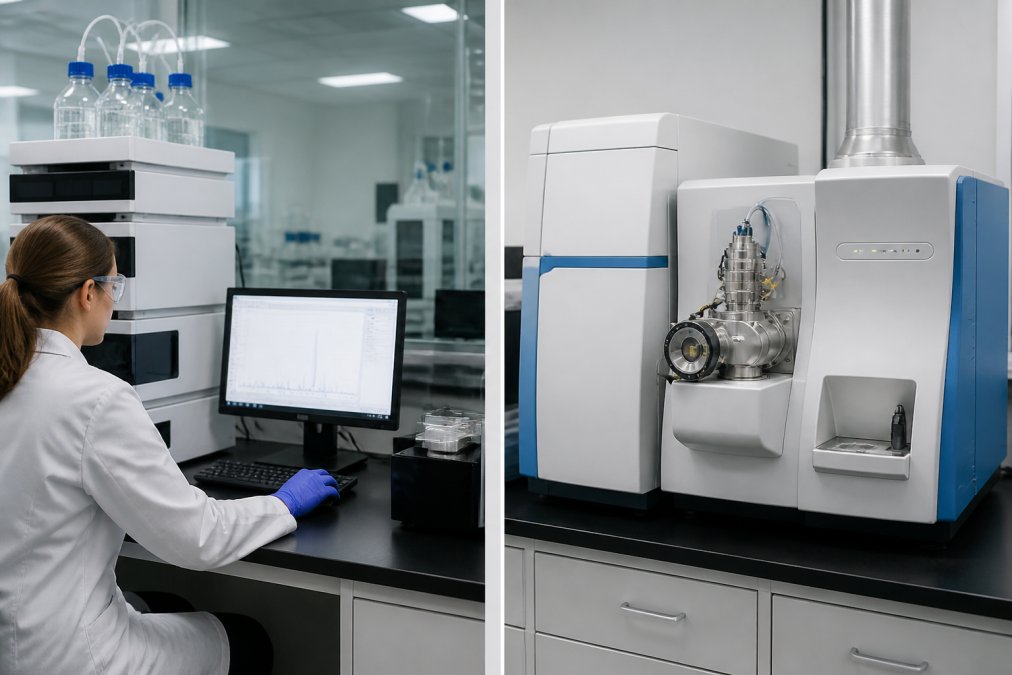
HPLC separates the components of a peptide sample by their interaction with a stationary phase and mobile phase, then quantifies them by UV detection. The result is a chromatogram showing peaks at different retention times. HPLC tells you how much of your sample is the target peptide. It does not tell you what the target peptide actually is.
Mass spectrometry, specifically electrospray ionization mass spectrometry (ESI-MS), ionizes the peptide and measures its mass-to-charge ratio. The result confirms molecular weight and, by extension, confirms that the peptide you received matches the sequence you ordered. ESI-MS tells you what the compound is. It does not quantify impurities with the same precision as HPLC.
A CoA with only HPLC data confirms purity but not identity. A CoA with only mass spectrometry data confirms identity but not purity. A complete analytical package requires both.
Reading an HPLC Chromatogram
The chromatogram is the raw evidence behind the purity number. The x-axis shows retention time in minutes; the y-axis shows UV absorbance. Each peak represents a compound eluting from the column.
The main peak should be the dominant feature, tall, sharp, and well-separated from neighboring peaks. Purity is calculated as:
Purity % = (Main peak area / Sum of all peak areas) × 100
Secondary peaks at different retention times represent impurities. Pay attention to peak shape, a symmetrical, Gaussian peak indicates a single compound, while shouldering or asymmetry suggests co-eluting impurities.
What ESI-MS Confirms That HPLC Cannot
ESI-MS provides molecular weight verification that HPLC cannot deliver. The observed molecular weight should match the theoretical molecular weight of the peptide sequence to within approximately 1 Dalton. A mismatch indicates a sequence error, incomplete deprotection, oxidation, or a truncated/extended sequence.
As documented in USP guidelines on peptide characterization, mass spectrometry is considered essential for identity confirmation of synthetic peptides used in research and pharmaceutical development. HPLC purity data alone is insufficient for full characterization.
Third-Party Peptide Testing Labs: DIY vs. Professional Verification
The decision to independently retest a peptide batch comes down to risk tolerance and application requirements.
DIY verification means interpreting the CoA the supplier provides, reading the chromatogram, checking mass spec data, and cross-referencing lot numbers. This is sufficient for most routine research applications when the supplier provides batch-specific reports from an identified, accredited laboratory.
Professional independent verification means sending a sample to a third-party analytical laboratory with no commercial relationship to your supplier. The lab runs HPLC and ESI-MS independently and reports results directly to you. This eliminates the possibility of document manipulation.
The FDA guidance on analytical procedures and method validation outlines standards that analytical methods should meet for pharmaceutical research contexts, a useful benchmark for evaluating whether a supplier's reported methodology is credible.
When independent testing is worth the investment: first order from a new supplier, critical in vivo or ex vivo studies, regulatory-adjacent research, or inconsistent results between batches.
When the supplier's CoA is sufficient: routine in vitro screening with well-characterized peptides, non-critical assay development, or suppliers with established track records and publicly accessible Janoshik-verified batch reports.
Online Peptide Sales provides Janoshik-verified batch reports for identified samples, meaning the analytical data comes from an independent verification process, not internal QC.
How to Verify Peptide Purity When Sourcing from Overseas Suppliers
Sourcing synthetic peptides from overseas manufacturers introduces specific verification challenges beyond standard CoA review. The core issue is document integrity. A CoA generated overseas may reference an analytical lab that is difficult to verify through domestic accreditation databases.
The ISO 17025 accreditation standard for testing laboratories applies internationally, and reputable overseas labs will hold this accreditation. Requesting the lab's ISO 17025 certificate alongside the CoA is a reasonable due diligence step.
Practical verification steps for overseas-sourced peptides: request the original analytical report, not a formatted summary; verify the analytical lab independently against ISO 17025 accreditation databases; check batch number traceability against the vial label and synthesis date; assess the supplier's verification infrastructure and use of named third-party labs like Janoshik; and factor in transit conditions, ensuring the supplier uses secure export packaging appropriate for peptide stability.
| Verification Step | DIY Sufficient? | When to Go Further |
|---|---|---|
| Visual inspection | Yes | Always do this first |
| Batch-specific CoA review | Yes | Check lot number match |
| HPLC chromatogram analysis | Yes, with training | Asymmetric peaks or borderline purity |
| ESI-MS identity confirmation | Yes, with training | MW mismatch or no MS data provided |
| Lab accreditation check | Yes | New supplier or critical application |
| Independent third-party retest | No, requires lab access | In vivo studies, regulatory work, new suppliers |
Verifying peptide purity is a multi-step process that most researchers compress into a single number. The purity percentage on a CoA is a starting point, not a conclusion. Reading the underlying chromatogram, confirming identity by mass spectrometry, and validating the analytical source are what separate informed procurement from wishful thinking. Online Peptide Sales supports this process by providing Janoshik-verified batch reports, giving researchers access to independent analytical documentation before committing a batch to critical experiments. View batch lab reports directly on the product pages to review HPLC and ESI-MS data for your specific lot before ordering.
Frequently Asked Questions
What purity level should my research peptides be?
For most in vitro research applications, a purity of 95% or higher is the accepted standard. Studies involving cell-based assays or animal models generally require this threshold to minimize the risk that impurities skew results. Some applications, such as NMR structural studies, may tolerate lower purity, while highly sensitive bioassays often demand 98%+. Always confirm the minimum specification your study protocol requires before ordering, and check that the batch-specific CoA documents a purity percentage at or above that threshold.
How do I interpret a Certificate of Analysis (CoA) for peptides?
A legitimate CoA for a synthetic peptide should include the peptide sequence, molecular weight verification via mass spectrometry (typically ESI-MS), and an HPLC purity percentage derived from the main peak area at 214 nm. Check that the CoA is batch-specific, not a generic template. The molecular weight reported should match the calculated value for your sequence. Any counter-ions such as TFA or acetate content should be noted. If the document lacks a chromatogram, a mass-to-charge ratio, or a traceable lot number, treat it with caution.
Is there a way to test peptide purity at home or without a lab?
Reliable purity testing requires analytical instrumentation. High-Performance Liquid Chromatography and mass spectrometry are not available outside a properly equipped laboratory. Visual inspection of lyophilized powder can flag obvious physical problems such as discoloration or clumping, but it cannot confirm purity percentage or detect molecular-level impurities. Researchers without in-house HPLC or MS capability should either request batch-specific reports from their supplier or send samples to a third-party peptide testing lab for independent analytical validation.
Why is third-party testing critical for peptide research?
Supplier-issued CoAs represent internal quality control, which means the same organization that profits from the sale also produced the test data. Third-party peptide testing labs provide independent analytical validation with no commercial stake in the result. This matters most when purchasing from overseas manufacturers where you cannot audit the facility directly. An independent HPLC or ESI-MS report on a specific batch gives you a verifiable, unbiased purity percentage and contaminant profile before the compound enters your study protocol.