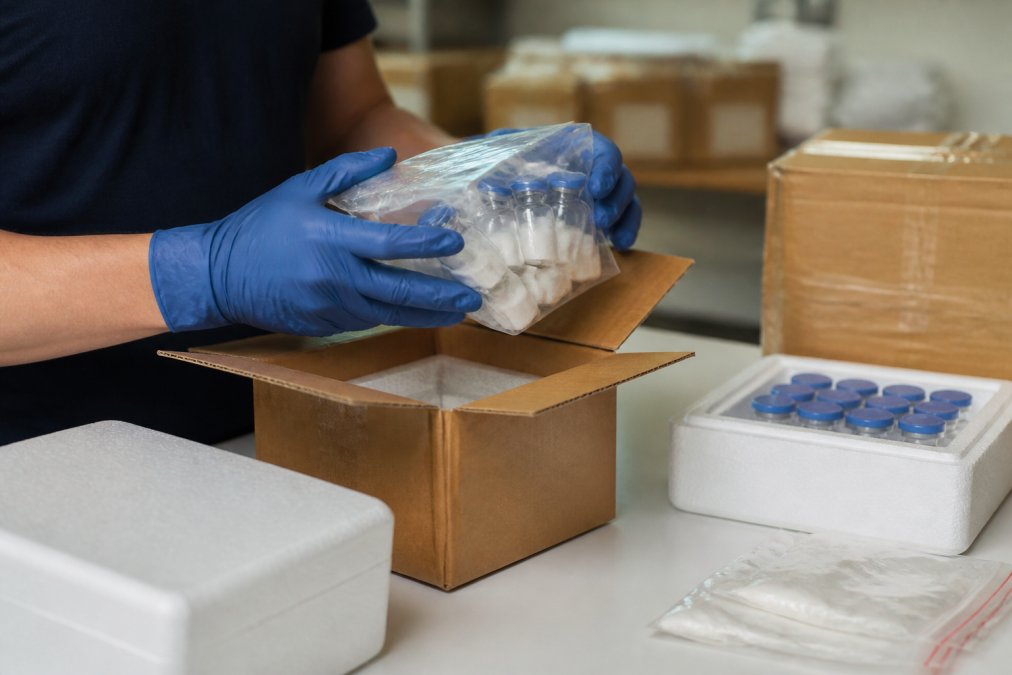
 how-to
Importing Research Chemicals Safely in 2026
Table of Contents
- What Importing Research Chemicals Actually Requires in 2026
- TSCA Import Certification Requirements: What You Must File
- Customs Clearance, Documentation, and CBP Procedures
- Risks of Buying Grey Market Peptides and Research Compounds
- Verifying Research Chemical Purity Reports Before You Order
- How to Qualify an International Supplier for Importing Research Chemicals
- Step-by-Step Checklist for a Compliant Import in 2026
- Frequently Asked Questions
Last Updated: September 1, 2026
What Importing Research Chemicals Actually Requires in 2026
Importing research chemicals is one of the most compliance-intensive procurement activities a laboratory can undertake. The regulatory framework is multi-layered, enforcement has tightened considerably, and the documentation burden is real. Get it wrong, and you're looking at shipment seizure, civil penalties, or worse.
At Online Peptide Sales, we work directly with research institutions, biotechnology firms, and procurement officers navigating this process every day. This guide covers exactly what the current regulatory environment requires, where most importers trip up, and how to run a compliant import from first order to final delivery.
The core requirement for importing research chemicals into the United States is demonstrating that each shipment complies with the Toxic Substances Control Act, satisfies Customs and Border Protection documentation standards, and arrives with complete safety and purity documentation. All three must be addressed before your shipment clears the border.
TSCA Import Certification Requirements: What You Must File
TSCA import certification is the foundational legal requirement for importing research chemicals into the United States. Under the Toxic Substances Control Act import certification rules, every importer of chemical substances must certify that their shipment either complies with TSCA or is not subject to it. This certification must accompany every entry.
The Environmental Protection Agency enforces TSCA compliance at the border in coordination with U.S. Customs and Border Protection. Failing to provide a valid certification is sufficient grounds for CBP to refuse entry to the shipment.
Positive vs. Negative TSCA Certifications
A positive certification states that the chemical substance complies with all applicable TSCA rules and orders. Use this when the substance is on the TSCA Chemical Substance Inventory and no significant new use rules or other restrictions apply.
A negative certification states that the substance is not subject to TSCA. This applies to substances excluded from TSCA's scope, such as pesticides regulated under FIFRA, food additives under FDA jurisdiction, and certain other categories.
Research peptides and novel chemical compounds typically require a positive certification. If your compound falls under FDA jurisdiction as a drug or drug intermediate, you may need both TSCA and FDA documentation. Misclassifying a substance and filing the wrong certification type is a common error that triggers holds.
How to File Your TSCA Certification Digitally
CBP processes TSCA certifications through the Automated Broker Interface within the Automated Commercial Environment system. Most importers work through a licensed customs broker, but understanding the digital workflow matters even if you outsource the filing.
- Identify the correct Harmonized System code for your chemical substance
- Confirm the CAS number for every chemical in the shipment
- Determine positive or negative certification status before filing
- Submit the TSCA certification language as part of the entry filing in ACE
- Retain a copy of the certification and all supporting documentation for five years
The certification language must appear on the entry documentation itself, not as a separate attachment. CBP officers check for this during examination.
Customs Clearance, Documentation, and CBP Procedures
Customs clearance for research chemicals involves more scrutiny than standard commercial imports. CBP's Centers of Excellence and Expertise handle chemical imports, and examiners are trained to flag incomplete or inconsistent documentation.

The clearance process begins when the entry is filed in ACE and ends when CBP releases the shipment. For chemical substances, that window can stretch from same-day release to several weeks if the shipment is selected for examination or if documentation is incomplete.
Required Documents for Each Shipment
Every compliant research chemical import requires:
- Commercial invoice with full chemical name, CAS number, quantity, unit of measure, and declared value
- Packing list matching the invoice line by line
- Bill of lading or airway bill from the carrier
- TSCA certification (positive or negative, as applicable)
- Safety Data Sheet for each chemical substance in the shipment
- Certificate of Analysis from the manufacturer or a third-party testing laboratory
- Import permit or license, if the substance falls under DEA scheduling or other controlled substance frameworks
- Harmonized System classification confirmed in the entry filing
The Safety Data Sheet must meet the OSHA Hazard Communication Standard format, which follows the Globally Harmonized System of Classification and Labelling of Chemicals.
Common Pitfalls That Lead to Shipment Seizure
Mismatched documentation is the leading cause of holds. The chemical name on the invoice does not match the SDS, or the CAS number on the Certificate of Analysis differs from what was filed in the entry. CBP examiners cross-reference these documents, and any discrepancy triggers an examination hold.
Missing or non-compliant SDS is the second most common issue. Suppliers in some countries provide SDSs formatted for their domestic market, not the GHS format required in the United States.
Undeclared or mislabeled substances represent the most serious category. A shipment containing a substance not listed on the entry documentation will be seized, and the importer of record bears liability.
Scheduling errors occur when a substance has been added to DEA scheduling schedules and the importer has not updated their compliance process.
Risks of Buying Grey Market Peptides and Research Compounds
Grey market sourcing refers to purchasing research compounds through channels that bypass standard regulatory and quality controls. This includes vendors who cannot provide verifiable batch documentation or who operate in jurisdictions with no meaningful export oversight.
The scientific risk is immediate. A compound with unverified purity can produce unreliable experimental results or introduce unknown substances into a controlled study. Many grey market vendors provide documentation that looks credible but cannot be traced back to an accredited testing laboratory.
The legal risk compounds the scientific one. Importing a mislabeled or undeclared chemical substance, even unknowingly, exposes the importer of record to enforcement action under TSCA, the Controlled Substances Act, or the Federal Food, Drug, and Cosmetic Act. The regulatory framework does not distinguish between deliberate smuggling and negligent procurement.
Supply chain integrity is the practical answer to grey market risk. Sourcing from vendors who provide Janoshik-verified batch reports, factory-direct documentation, and traceable chain of custody removes the ambiguity that grey market sourcing introduces.
Verifying Research Chemical Purity Reports Before You Order
Purity documentation is only as reliable as the laboratory that produced it.
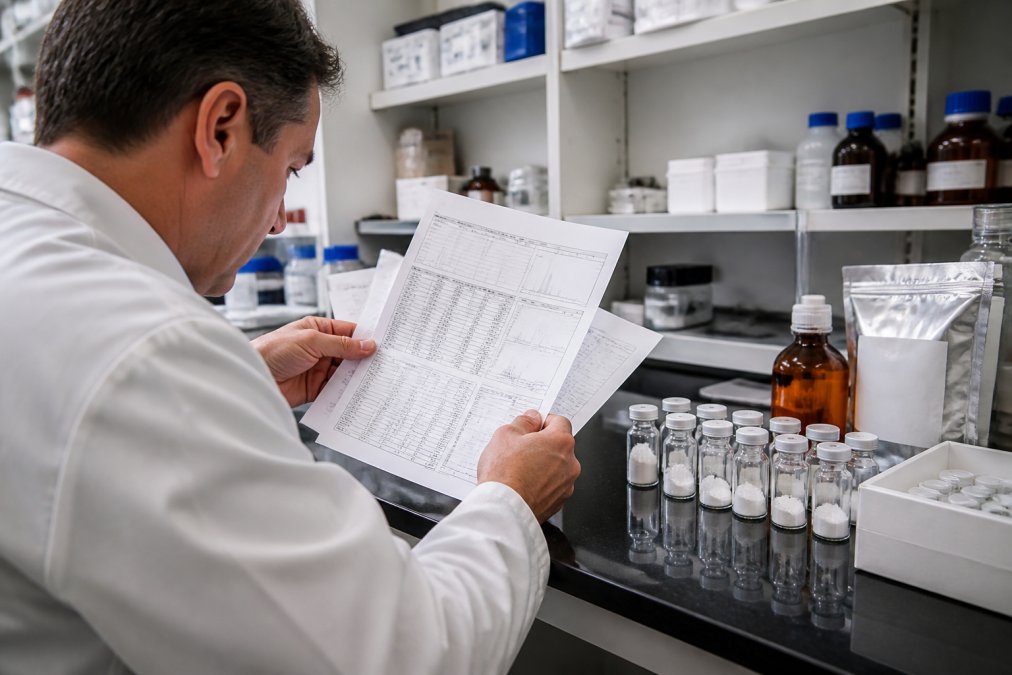
A Certificate of Analysis should specify the analytical methods used, not just the results. High-performance liquid chromatography, nuclear magnetic resonance spectroscopy, and mass spectrometry are the standard methods for confirming identity and purity of peptide compounds.
Before placing any order, verify:
- The testing laboratory is independent from the manufacturer
- The laboratory is accredited to ISO/IEC 17025
- The batch number on the CoA matches the batch number on the product label and invoice
- The CoA is dated and references the specific lot being shipped
Janoshik verification represents an independent third-party testing process tied to the specific sample submitted, not to a product category. This confirms the actual compound in the vial.
ISO/IEC 17025 accreditation requirements for testing laboratories
If a supplier cannot provide a CoA from an ISO/IEC 17025-accredited laboratory, treat that as a disqualifying condition.
How to Qualify an International Supplier for Importing Research Chemicals
Vendor qualification for importing research chemicals is a structured process. A supplier who passes proper qualification review reduces regulatory risk at every stage of the supply chain.
The qualification process should cover four areas:
Manufacturing documentation. Request evidence of Good Manufacturing Practice compliance or equivalent quality management certification.
Export compliance. Verify that the supplier operates under a legitimate export license in their jurisdiction and that their products are legally exportable.
Testing and verification. Confirm that the supplier uses accredited third-party laboratories for batch testing, not in-house testing only.
Track record and accountability. Assess how long the supplier has been operating, whether they have verifiable customer references in the research sector, and what their process is for handling shipment issues.
According to U.S. Customs and Border Protection's importer guidance, the importer of record bears full responsibility for the accuracy of entry documentation regardless of what the foreign supplier provided.
Step-by-Step Checklist for a Compliant Import in 2026
Use this checklist for every research chemical import.
| Step | Action Required | Key Document |
|---|---|---|
| 1. Substance classification | Confirm CAS number and TSCA inventory status | EPA TSCA inventory record |
| 2. Scheduling verification | Check DEA controlled substance schedules | DEA scheduling list |
| 3. HS code assignment | Assign correct Harmonized System tariff code | CBP tariff schedule |
| 4. Supplier qualification | Complete vendor documentation review | CoA, GMP certificate, export license |
| 5. SDS review | Confirm GHS-compliant SDS for each substance | SDS from supplier |
| 6. Entry preparation | File TSCA certification and entry in ACE | Entry filing, TSCA certification |
| 7. Shipment documentation | Verify invoice, packing list, and airway bill match | Commercial invoice, packing list |
| 8. Post-arrival audit | Reconcile received goods against CoA and invoice | Received CoA, physical shipment |
Pre-order:
- Obtain CAS number for every substance in the order
- Verify TSCA inventory status for each substance
- Check current DEA scheduling status
- Request and review CoA from an accredited laboratory
- Confirm SDS is GHS-compliant and current
Pre-shipment:
- Assign correct HS code for tariff classification
- Prepare TSCA certification language (positive or negative)
- Confirm supplier has provided export documentation
- Verify packaging meets secure transit standards
Entry filing:
- Submit entry in ACE with TSCA certification included
- Confirm all document fields match across invoice, SDS, and CoA
- Retain copies of all documentation for five years
Post-arrival:
- Reconcile received batch numbers against CoA
- Conduct independent verification testing if required by protocol
- File any required post-importation reports
The EPA TSCA import certification guidance provides the official regulatory text underlying these steps.
Importing research chemicals compliantly in 2026 requires precise documentation, verified suppliers, and a working knowledge of TSCA, CBP procedures, and DEA scheduling. The complexity is manageable with the right supply chain partners and a systematic approach to documentation.
Online Peptide Sales addresses the supplier qualification and documentation challenges directly. Every order includes Janoshik-verified batch reports for identified samples, factory-direct documentation from Chinese manufacturers, and secure export packaging designed for compliant international transit. For research teams that cannot afford shipment delays or documentation gaps, the optional delivery guarantee provides a replacement or refund if a shipment does not arrive as expected.
View Batch Lab Reports at Online Peptide Sales before your next order.
Frequently Asked Questions
Who is responsible for filing a TSCA import certification?
The importer of record is responsible for filing the TSCA certification with U.S. Customs and Border Protection. For research institutions, that is typically the principal investigator, laboratory manager, or designated procurement officer listed on the import entry. The certification must accompany the shipment and declare either that the chemical complies with TSCA or that it is exempt. Signing a false certification carries civil and criminal penalties under TSCA Section 13.
Which research chemicals are exempt from TSCA import requirements?
Chemicals regulated by other federal agencies, including pesticides governed by the EPA under FIFRA, drugs and biologics under FDA jurisdiction, and food additives, are generally excluded from TSCA's scope. Research samples imported in quantities of 500 kilograms or less per year for scientific investigation may also qualify for a research and development exemption, but the importer must still file the appropriate negative certification and retain documentation for at least three years.
How can researchers verify the purity of imported research compounds?
Request a Certificate of Analysis and a batch-specific third-party report, such as a Janoshik-verified report, before accepting any shipment. The report should include HPLC purity data, mass spectrometry confirmation of the CAS number, and the exact batch identifier. Cross-reference the CAS number against the EPA's chemical substance inventory. Spot-checked or undated reports from suppliers are insufficient; each batch should carry its own traceable documentation to support audit requirements and internal quality control.
Are there specific restrictions on importing research chemicals from China in 2026?
Yes. In addition to TSCA compliance, shipments from China are subject to CBP entry requirements, Harmonized System tariff classification, and any applicable export controls under the Bureau of Industry and Security. Certain precursor chemicals and specially controlled substances face additional scrutiny. Importers should confirm that the Chinese manufacturer holds valid export licenses and that the compound does not appear on DEA controlled substance schedules or OFAC restricted-party lists before placing an order.