 ultimate-guide
Risks of Buying Grey Market Peptides: 2026 Guide
Table of Contents
- What Are Grey Market Peptides and Why People Buy Them
- The Real Dangers: Contamination, Dosing Errors, and Adverse Reactions
- How Third-Party Peptide Testing Separates Safe from Substandard
- FDA Regulation of Research Chemicals: What the Law Actually Says
- How to Verify Peptide Purity Before You Buy
- Legal vs. Ethical Distinctions in Grey Market Sourcing
- Harm Reduction Strategies for Researchers and Buyers
- Long-Term Physiological Impact of Unregulated Peptides
- Frequently Asked Questions
Last Updated: September 16, 2026
What Are Grey Market Peptides and Why People Buy Them
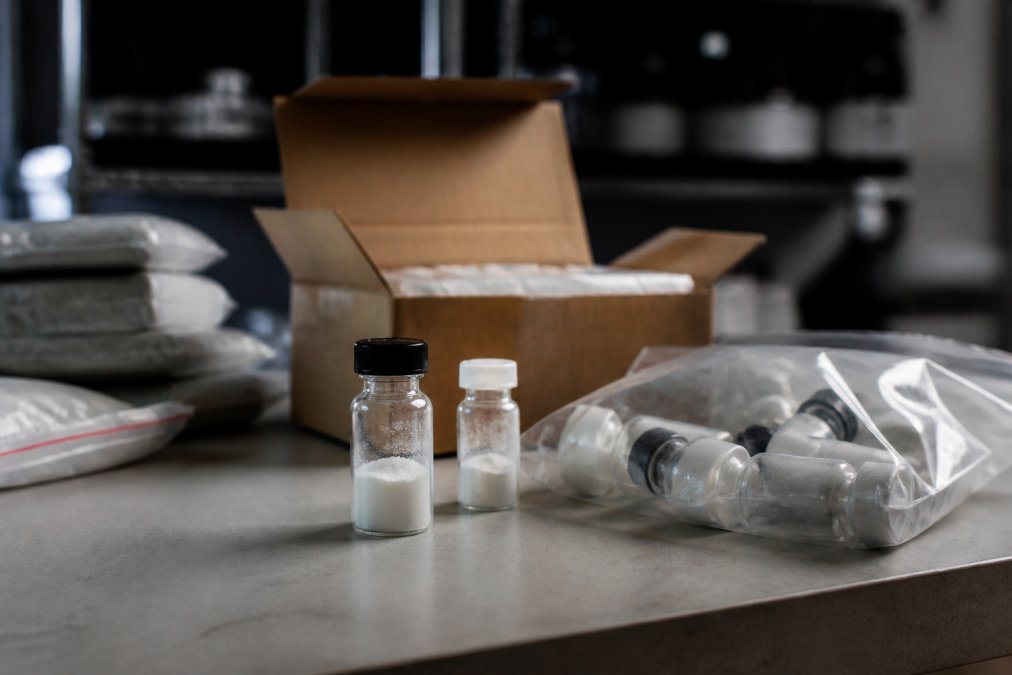
Grey market peptides are unregulated, research-grade injectable compounds sold outside the FDA-approved supply chain, often marketed for weight loss, muscle gain, and anti-aging despite never being cleared for human use. This guide from Online Peptide Sales examines the risks of buying grey market peptides from a laboratory procurement perspective.
The Real Dangers: Contamination, Dosing Errors, and Adverse Reactions
Contamination is the first and most serious risk. Because substandard manufacturing goes unchecked, vials can carry bacterial endotoxins, heavy metals, and residual solvents from synthesis. Injected contaminants bypass your body's first defenses entirely.
- Bacterial endotoxin contamination causing fever and injection-site infection
- Heavy metal accumulation with repeated use
- Concentration errors leading to accidental overdose
- Adulteration with unidentified or mislabeled compounds
- No recourse or medical guidance when something goes wrong
How Third-Party Peptide Testing Separates Safe from Substandard
Third-party peptide testing is the only reliable way to confirm identity, purity, and concentration of a compound. Reputable suppliers submit samples to independent labs, which publish a Certificate of Analysis (COA) for each identified batch. The distinction matters because in-house testing is meaningless: a vendor testing its own product controls the result, and independent labs do not.
Reading a Certificate of Analysis: What Matters and What Doesn't
A useful COA is a chain-of-custody document, not a marketing asset. At minimum it should contain:
- Sample identification, a batch or lot number that matches the vial in your hand, not a generic product name
- Testing methodology, typically reverse-phase HPLC for purity and LC-MS or MALDI-TOF mass spectrometry for identity confirmation
- Measured results, a purity percentage tied to a specific peak area, plus a mass that matches the theoretical molecular weight of the intended peptide
- Instrument data, an actual chromatogram and mass spectrum, not a summary graphic
- Lab identity and authentication, a verifiable lab name, contact information, and ideally a report ID that can be confirmed directly with the lab
- Date of analysis, recent enough to correspond to the batch being sold
What the Purity Percentage Actually Means
A "99% pure" claim is meaningless without context. HPLC purity measures the area of the target peak relative to all peaks in the chromatogram. A 99% figure can still hide a 1% impurity that is itself a potent or toxic byproduct of synthesis. Two reports can both say 99% and describe very different vials.
What matters alongside the number:
- Retention time, should be consistent with a reference standard for the same peptide
- Peak shape, a clean, symmetric peak suggests a single dominant species; a broad or split peak suggests degradation or a mixture
- Mass confirmation, the observed mass should match the theoretical mass within instrument tolerance (typically a fraction of a Dalton for small peptides)
- Impurity profile, a report that lists only the main peak and ignores everything else is incomplete
Red Flags That Signal a Fake or Misleading Lab Report
- No sample identification number tied to your specific batch
- Purity claims with no chromatogram or testing method listed
- A "lab" that shares an address, domain, or phone number with the vendor
- Reports dated years before the batch was produced, or reused across multiple unrelated products
- Results that describe the compound only by marketing name ("GLP-1 blend") rather than chemical structure or sequence
- A COA that is a screenshot or PDF with editable text fields and no lab letterhead
- Purity figures reported to suspicious precision (e.g., 99.87%) with no raw data attached
- No way to contact the lab independently to verify the report ID
How to Verify a Report Independently
Verification is a two-step process. First, confirm the lab exists as a separate legal entity, a real address, a real website, and a history of published reports. Second, where the lab offers it, cross-check the report ID or sample number directly with the lab rather than trusting the vendor's copy. A vendor that refuses to provide the lab's direct contact information, or that supplies a COA only as an image file, is signaling that the document is not meant to be checked.
Why This Gap Matters
Most grey market warnings tell buyers to "look for third-party testing" and stop there. That advice protects no one, because the vendors most likely to sell mislabeled product are also the most likely to produce a polished-looking COA. The only defense is literacy: knowing which fields are load-bearing, which numbers can be faked, and which claims require raw instrument data to be credible.
FDA Regulation of Research Chemicals: What the Law Actually Says
The FDA does not approve research chemicals for human consumption, and selling them as supplements or drugs is illegal. Under current FDA guidance on unapproved drugs, introducing an unapproved new drug into interstate commerce violates federal law, regardless of how the vendor labels it.
How to Verify Peptide Purity Before You Buy
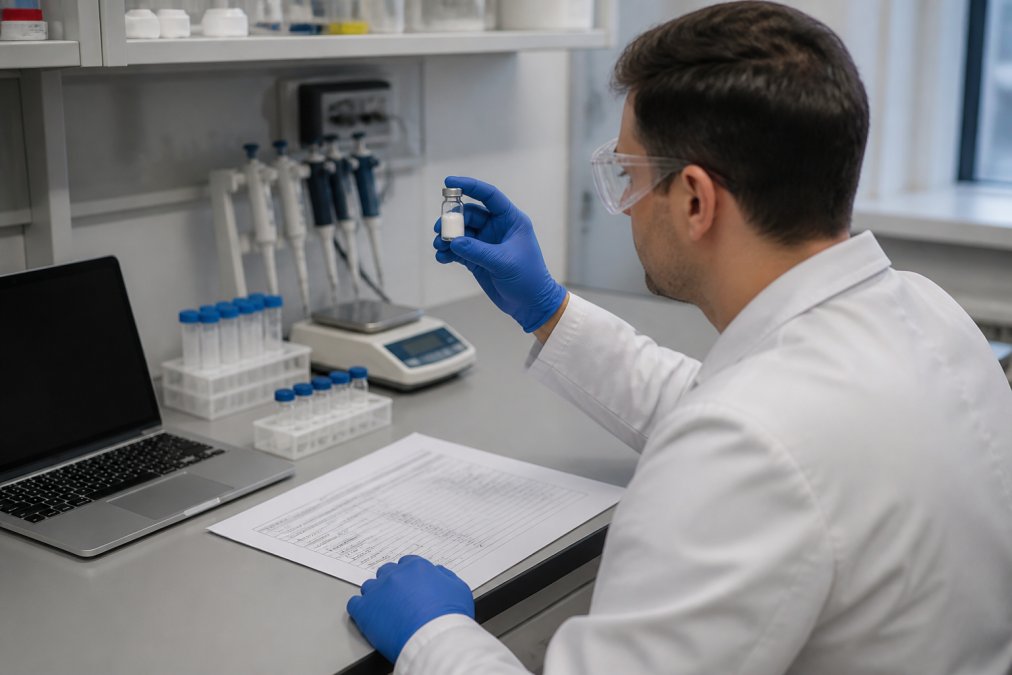
Verification starts before purchase, not after. Ask for a batch-specific Certificate of Analysis, confirm the testing lab is independent, and cross-check the sample ID against the lab's own records where possible.
Red Flags That Signal a Fake or Misleading Lab Report
- No sample identification number tied to your specific batch
- Purity claims with no chromatogram or testing method listed
- A "lab" that shares an address or domain with the vendor
- Reports dated years before the batch was produced
- Results that describe the compound only by marketing name, not chemical structure
Legal vs. Ethical Distinctions in Grey Market Sourcing
Legality and ethics are not the same question, and grey market sourcing exposes the gap. A purchase may fall outside criminal statute while still exposing the buyer to civil liability, import seizure, or professional consequences.
Harm Reduction Strategies for Researchers and Buyers
Harm reduction does not mean endorsement. It means reducing the damage when people proceed anyway. For legitimate researchers, the priority is verified sourcing. For individuals, the priority is understanding what they cannot verify.
Practical steps that reduce risk:
- Require a batch-specific Certificate of Analysis before any purchase
- Confirm the testing lab is independent of the vendor
- Never trust concentration labels without third-party confirmation
- Store compounds per the manufacturer's specification, not guesswork
- Treat any "for research only" product marketed for human use as unsafe by default
- Consult a licensed physician before injecting any unapproved compound
Long-Term Physiological Impact of Unregulated Peptides
The long-term picture is largely unknown, and that uncertainty is the point. Approved peptides go through clinical trials that map the endocrine system's response over years. Grey market compounds skip all of it. But "we don't know" is not the whole answer, enough is understood about how these compounds interact with human physiology to describe the categories of harm that chronic, unmonitored use can produce.
Endocrine Disruption and Feedback Loops
Many peptides people seek on the grey market act on hormonal axes. Growth hormone secretagogues, for example, stimulate pituitary release of growth hormone, which in turn drives IGF-1 production in the liver. Chronic stimulation of that axis without medical supervision can, in principle, blunt the body's own feedback regulation, the same mechanism that makes exogenous hormone use problematic over time.
Immune and Inflammatory Responses
Repeated injection of any foreign protein or peptide carries immunological risk. The body can develop antibodies against the compound itself, reducing its effect and potentially cross-reacting with endogenous peptides that share structural similarity. Contaminants that survive substandard manufacturing, bacterial endotoxins, residual solvents, host-cell proteins from synthesis, can trigger chronic low-grade inflammation that is easy to dismiss as unrelated fatigue or joint pain.
Organ Systems Under Repeated Load
The liver and kidneys process everything injected into the body. Chronic exposure to impurities, uncharacterized degradation products, or the compounds themselves places sustained metabolic demand on both. In a clinical setting, patients on peptide therapy get periodic bloodwork specifically to catch this. In the grey market, there is no monitoring, so early markers of strain go unnoticed until symptoms appear.
Dependency and Psychological Escalation
Peptides marketed for weight loss, recovery, or anti-aging tend to produce noticeable early effects, which reinforces use. When results plateau, as they typically do without dose adjustment or lifestyle change, the common response is to increase dose or stack additional compounds. That pattern mirrors what clinicians see with other performance-enhancing substances: a psychological dependency on the protocol itself, independent of any pharmacological dependence.
Why the Data Gap Is Itself the Risk
Approved peptides reach market only after trials that establish dosing ranges, adverse event profiles, and long-term safety data across defined populations. Grey market compounds have none of that. There is no established therapeutic window, no known interaction profile with prescription medications, and no post-market surveillance to catch problems that emerge after years of use.
Frequently Asked Questions
Are grey market peptides legal to purchase for research purposes?
Legality depends on the specific compound and its FDA approval status. Most grey market peptides are sold as research chemicals, not approved drugs. The FDA has not authorized them for human use, and importing unapproved substances can violate federal law. Some peptides fall under controlled substance schedules, which carries criminal penalties. Researchers at licensed institutions typically source through verified suppliers with proper documentation. Buying for personal use exists in a legal grey area that varies by state and compound. Always check the specific peptide's regulatory status before ordering.
How can researchers verify the purity of research compounds?
Request a Certificate of Analysis from an independent lab such as Janoshik, which tests for purity percentage, heavy metals, bacterial endotoxins, and correct molecular identity. The report should include a batch number that matches the vial you receive. Cross-reference the testing lab's contact information directly, not through the seller's website. HPLC and mass spectrometry results should be present. If a supplier cannot provide batch-specific third-party peptide testing, treat the product as unverified. Repeat testing on receipt adds another layer of confidence.
What are the primary health risks associated with unregulated peptides?
Unregulated peptides can contain contaminants including heavy metals, bacterial endotoxins, and residual solvents from substandard manufacturing. Dosing errors are common because grey market vials may contain more or less compound than labeled. Adverse reactions range from injection site infections to endocrine system disruption. Some synthetic peptides have caused immune responses or unexpected hormonal effects in users. Without clinical trials or medical supervision, there is no way to predict how a specific batch will affect you. The safety profile of any unverified compound is unknown.
Why is third-party testing critical for peptide quality assurance?
Third-party testing is the only way to confirm what is actually in a vial. Sellers can claim pharmaceutical grade or research grade without proof. An independent lab verifies identity, purity, and absence of contaminants. Without it, you cannot distinguish a legitimate compound from a counterfeit or adulterated batch. Testing also catches dosing accuracy issues, where the actual amount differs from the label. For any research use, batch-specific verification from a recognized lab is the minimum standard.
Grey market sourcing trades accountability for convenience, and the cost shows up later. Online Peptide Sales supplies verified research compounds in 10-vial kits with Janoshik-verified batch reports, factory-direct pricing, and tamper-evident export packaging. Get started with Online Peptide Sales and source compounds you can actually document.