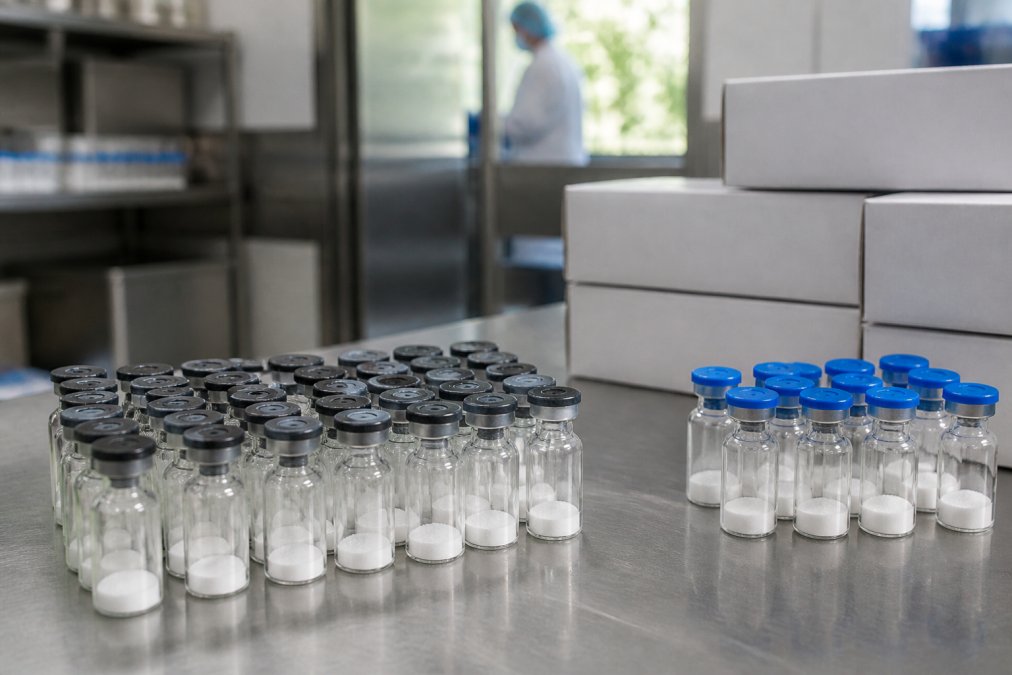
 comparison
Best Panda Peptides Alternative: 4 Vetted Sources for 2026
Table of Contents
- Why Switch From Panda Peptides? The Verification Problem
- What Makes a True Panda Peptides Alternative? Our Evaluation Criteria
- Top 4 Panda Peptides Alternatives Compared
- How to Read Peptide COA Reports Like a Lab Manager
- Peptide Sourcing Best Practices: Storage, Reconstitution, and Handling
- Which Alternative Should You Choose?
- Conclusion: Securing Your Research Supply Chain
- Frequently Asked Questions
Last Updated: September 5, 2026
Why Switch From Panda Peptides? The Verification Problem
The core issue with Panda Peptides, as with many grey-market suppliers, is the lack of verifiable, batch-specific data tied to the exact product you receive. A certificate of analysis covering a "representative sample" is not third-party validation of your specific vial.
This guide from Online Peptide Sales evaluates what separates a dependable supplier from a gamble. Purity verification is the only metric that matters.
What Makes a True Panda Peptides Alternative? Our Evaluation Criteria
A legitimate panda peptides alternative must clear four hurdles before it earns a recommendation. We evaluated each vendor against these criteria, which mirror the standards used in pharmaceutical procurement.
1. Independent Laboratory Verification The vendor must provide batch-specific testing from an independent laboratory. Janoshik is the most widely recognized name in this space, but the key is whether the report matches the batch you receive.
2. Transparent Certificate of Analysis (COA) A COA must list the testing method, such as high-performance liquid chromatography or mass spectrometry, and the purity percentage. It should also include contaminant screening for heavy metals and microbial analysis.
3. Supply Chain Integrity The vendor should clearly state where compounds are manufactured and how they are shipped. Secure export packaging and tamper-evident seals are non-negotiable for maintaining compound stability.
4. Customer Support Responsiveness A supplier that disappears after payment is a common failure point. Responsive support and clear shipping logistics, including customs documentation, separate professional operations from fly-by-night sellers.
| Criterion | What to Verify | Red Flag |
|---|---|---|
| Independent Testing | Batch-specific Janoshik report | "Representative sample" testing |
| COA Quality | HPLC or LC-MS method listed | No method or purity percentage |
| Supply Chain | Manufacturer origin, tamper-evident packaging | Vague sourcing, no shipping details |
| Support | Clear customs handling, replacement policy | No response within 48 hours |
Top 4 Panda Peptides Alternatives Compared
The four vendors below passed our evaluation criteria with distinct strengths, each serving a different research profile.
1. Online Peptide Sales: Janoshik-Verified Batch Reports
Our top pick is Online Peptide Sales, and the reason is straightforward: every identified batch comes with a Janoshik-verified report you can review before ordering. The company sources research compounds directly from manufacturers in China and packages them in 10-vial kits, which supports consistent multi-study protocols.
The verification process is not spot-checked. For identified samples, the batch report is tied to the specific product you receive, closing the gap between marketing claims and laboratory reality. Secure export packaging and express international shipping via major carriers address the logistics concerns that plague cross-border peptide procurement.
Operationally, you request the batch-specific CoA before purchase, cross-reference the batch number on the vial label upon arrival, and confirm the HPLC purity percentage matches. The 10-vial kit format also standardizes reconstitution volumes across a study.
2. Koi Peptides: Public COA Transparency
Koi Peptides' Certificate of Analysis documents are publicly accessible for each batch on their product pages. This suits laboratories that need to audit documentation before purchasing or researchers who prefer reviewing purity data without a sales conversation.
Their catalog focuses on high-demand research peptides, including GHRP-2, GHRP-6, and CJC-1295 variants, with domestic shipping within the United States that removes international customs variables. The trade-off is a higher price point per vial, reflecting the cost of maintaining a public documentation infrastructure and domestic warehousing.
For labs prioritizing documentation accessibility over cost efficiency, Koi is reliable. The public CoA model simplifies audit trails, since you can archive the PDF at the time of order.
3. Core Peptides: Community-Verified Track Record
Core Peptides has built its reputation through consistent presence in community forums like r/Peptides. Their third-party batch testing covers purity via HPLC, and their lyophilized packaging follows standardized stability protocols, including desiccant packs and moisture-barrier vials.
The catalog includes widely studied compounds such as BPC-157, TB-500, and Semaglutide, and availability tends to be consistent across restock cycles. The main drawback is pricing that fluctuates with market demand, which complicates budget planning for multi-phase studies. Community threads frequently note that prices shift quarterly, so locking in bulk orders during promotional periods is a common cost-saving tactic.
If you source common research peptides and value peer validation, Core Peptides warrants consideration. The community feedback loop surfaces real-world shipping issues faster than vendor support channels.
4. PSPeptides: Data-Backed Vendor Research
PSPeptides takes a research-first approach, publishing comparative purity and shipping reliability data from their own testing panels. They function as both vendor and data source, useful for researchers who want to see evaluation methodology before committing.
Their rigorous vendor ranking process focuses on objective purity metrics, including HPLC retention times and mass spectrometry confirmation of molecular weight. The limitation is a leaner direct retail catalog compared to primary manufacturers, you will not find every niche research compound here, but the core catalog is consistently stocked.
For researchers who want a data-backed sourcing decision, PSPeptides provides the documentation. Their published methodology also serves as a template for evaluating any vendor independently.
Side-by-Side Verification Snapshot
| Vendor | Verification Method | Catalog Breadth | Shipping Model | Price Position |
|---|---|---|---|---|
| Online Peptide Sales | Batch-specific Janoshik HPLC/LC-MS | Research kits (10-vial) | International express | Factory-direct |
| Koi Peptides | Public CoA per batch | High-demand peptides | Domestic US | Premium |
| Core Peptides | Third-party HPLC | Broad research catalog | International | Market-variable |
| PSPeptides | Published evaluation metrics | Core catalog only | International | Mid-range |
No single vendor wins all four categories, your choice depends on which trade-off your protocol can absorb.
How to Read Peptide COA Reports Like a Lab Manager
A Certificate of Analysis is only valuable if you can interpret it correctly. First, the batch number must match the label on your received vials. Cross-reference this against the report date to confirm testing was performed on your specific batch, not a prior run.
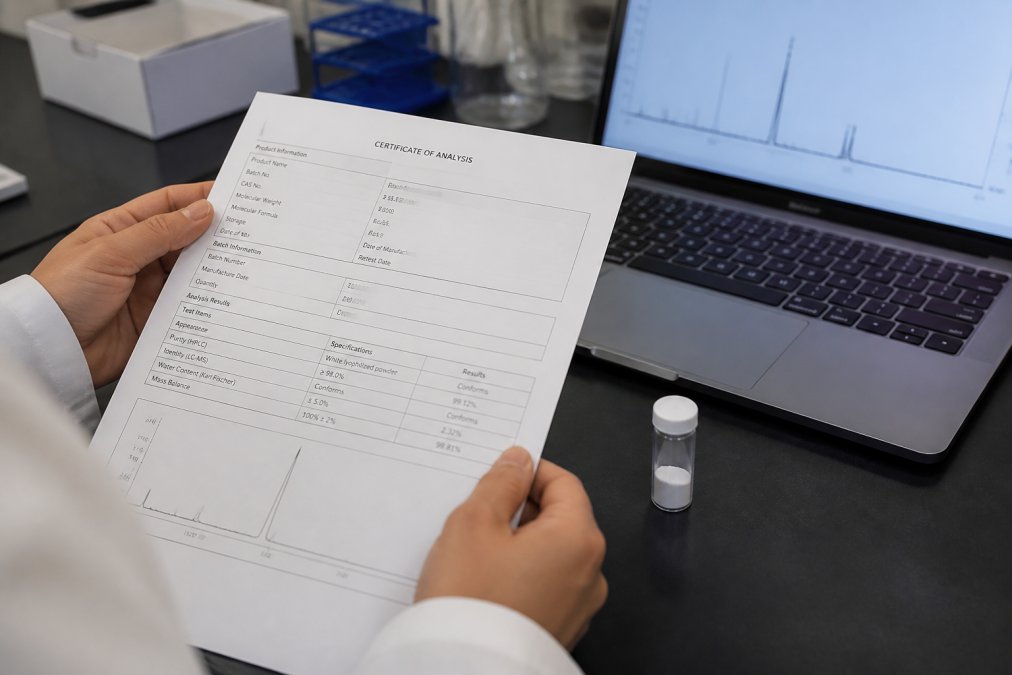
The testing method section tells you what the lab measured. HPLC is the standard for purity quantification; mass spectrometry adds molecular weight confirmation, critical for identifying the correct peptide sequence. A COA listing both methods provides stronger verification than HPLC alone.
Purity percentage is the headline number, but review the contaminant screening section for heavy metal testing and microbial analysis. Purity above 98% is common among reputable vendors, but the absence of contaminant data is a red flag regardless of the purity claim.
Peptide Sourcing Best Practices: Storage, Reconstitution, and Handling
The quality of your peptide is only as good as your handling protocol. Lyophilized powder is stable when stored correctly, but improper conditions degrade compounds quickly.
Step 1: Verify Your Batch Before Storage
Before opening the shipping box, confirm the batch number on the vial label matches the CoA you reviewed at purchase. This is the single most important step in the sourcing chain. A mismatch means you received a different production run, treat that vial as unverified and contact the vendor immediately.
If the CoA is more than 12 months old, request confirmation the batch remains within its stability window. Most lyophilized peptides maintain stability for 24-36 months when stored properly, but the clock starts at manufacture (peer-reviewed research).
Step 2: Long-Term Storage Protocols
Store lyophilized vials in a cool, dry environment away from direct light. For storage beyond 30 days, refrigeration at 2-8°C is standard for most peptides (peer-reviewed research).
Do not store vials in the freezer door; use the main body of the refrigerator or a dedicated lab fridge. Record storage temperature and humidity in your lab notebook.
Step 3: Reconstitution and Handling Safety
Reconstitution requires sterile or bacteriostatic water, depending on your protocol. Inject the solvent slowly against the vial wall, not directly onto the powder, to minimize foaming. Gently swirl, never shake, to avoid denaturing the peptide.
Use a filter needle or syringe when drawing from multi-use vials to prevent coring and glass particulate contamination. Wipe the vial septum with an alcohol swab before each puncture. These steps are critical for maintaining sterility across multiple withdrawals.
Step 4: Aliquot and Freeze for Multi-Study Protocols
Avoid repeated freeze-thaw cycles. Divide your reconstituted solution into single-use aliquots before freezing to preserve stability and prevent contamination from repeated vial access.
Use low-protein-binding microcentrifuge tubes for aliquoting; standard polypropylene tubes can adsorb peptide molecules, reducing effective concentration by 5-10% over time (PubMed). Label each aliquot with peptide name, batch number, reconstitution date, and concentration to protect reproducibility and provide an audit trail.
Step 5: Batch-Specific CoA Cross-Referencing Tutorial
Here is the verification workflow that catches counterfeit or mislabeled products:
- Locate the batch number on the vial label, usually printed on the crimp cap or side label.
- Open the CoA PDF from the vendor's website or your email confirmation.
- Confirm the batch number field matches exactly, including any prefixes or suffixes.
- Check the testing date, it should be within 90 days of the manufacture date for a fresh batch.
- Verify the testing method, HPLC purity should be listed with a percentage; LC-MS should confirm molecular weight.
- Compare the purity percentage to the vendor's claimed specification. A variance of more than 1% warrants a vendor inquiry.
- Photograph the vial and CoA together for your records before reconstitution.
This seven-step process takes less than five minutes and closes the verification gap between vendor claims and your received product. Most counterfeit issues are mislabeled batches or expired stock, this workflow catches both.
Stability Documentation for Your Lab Notebook
Maintain a dedicated peptide log for each vial: compound name, vendor, batch number, CoA date, purity percentage, receipt date, storage location, reconstitution date, solvent type, and aliquot volume. This documents chain of custody and enables rapid recall if a vendor issues a batch correction.
Unexplained assay failures often trace back to a peptide storage issue, not a protocol error. A complete log lets you identify whether affected vials shared a storage location, reconstitution date, or batch number.
Which Alternative Should You Choose?
For most laboratories, Online Peptide Sales is the strongest choice because Janoshik-verified batch reports and factory-direct pricing address the two biggest sourcing risks: purity uncertainty and cost overruns.
Koi Peptides suits labs that need public COA access for audit trails. Core Peptides works for researchers who value community feedback loops. PSPeptides is appropriate when you want comparative vendor data before committing.
| Vendor | Best For | Verification Strength | Primary Trade-off |
|---|---|---|---|
| Online Peptide Sales | Bulk research kits, global shipping | Janoshik batch reports | 10-vial minimum kit size |
| Koi Peptides | Domestic US labs, audit trails | Public COA per batch | Higher per-vial cost |
| Core Peptides | Community-validated sourcing | Third-party purity testing | Pricing fluctuates with demand |
| PSPeptides | Data-driven vendor selection | Published evaluation metrics | Limited direct catalog |
For custom quantity requirements, contact the vendor directly. Most established suppliers, including Online Peptide Sales, can discuss volume options even if standard kits are listed.
Conclusion: Securing Your Research Supply Chain
A panda peptides alternative is only as reliable as its verification chain, from manufacturer to independent laboratory report to your receiving dock. We recommend Online Peptide Sales for most research applications because Janoshik-verified batch reports, secure export packaging, and express international shipping create a transparent supply chain.
Review batch lab reports before ordering, confirm the testing method matches your requirements, and handle your lyophilized compounds with the same rigor as your experimental design.
Frequently Asked Questions
What is the most trustworthy peptide company?
Trust in a peptide vendor hinges on third-party validation. Look for suppliers offering Janoshik verified peptide vendors status, meaning an independent lab like Janoshik Analytical tested that specific batch. A truly trustworthy company publishes batch-specific COA reports openly and does not rely on generic claims. Online Peptide Sales, for instance, provides Janoshik-verified reports for identified samples, which is a stronger guarantee than a vendor that only spot-checks its inventory.
How do I verify a peptide supplier's COA?
First, confirm the COA matches the exact batch number on your vial, not a similar product. Check the testing method: high-performance liquid chromatography (HPLC) confirms purity percentage, while mass spectrometry (LC-MS) validates molecular weight. Ensure the report comes from an independent laboratory and includes a signature or unique report ID. You can also cross-reference the lab's name online to confirm the report wasn't fabricated.
What should I look for when buying research peptides?
Focus on peptide sourcing best practices: demand batch-specific certificates of analysis from an independent lab, check for lyophilized powder rather than pre-mixed liquids for better stability, and review shipping logistics for temperature control and customs documentation. A vendor that offers a delivery guarantee or replacement policy shows confidence in its supply chain. Avoid grey-market sellers who cannot provide transparent sourcing or third-party validation for the specific batch you receive.
Are Panda Peptides authentic?
Authenticity concerns about any grey-market vendor stem from inconsistent transparency. While some users report acceptable results, the lack of mandatory, publicly accessible batch reports creates risk. A superior alternative is a supplier that offers Janoshik-verified batch reports on demand. This independent verification ensures the lyophilized powder in your vial matches the stated purity and molecular structure, removing doubt about authenticity before you begin your research protocol.
This article is published by Online Peptide Sales for educational purposes. All products referenced are for legitimate laboratory and research use only, not for human consumption.
Frequently Asked Questions
Q: What is the most trustworthy peptide company?
A: Trust in a peptide vendor hinges on third-party validation. Look for suppliers offering Janoshik verified peptide vendors status, meaning an independent lab like Janoshik Analytical tested that specific batch. A truly trustworthy company publishes batch-specific COA reports openly and does not rely on generic claims. Online Peptide Sales, for instance, provides Janoshik-verified reports for identified samples, which is a stronger guarantee than a vendor that only spot-checks its inventory.
Q: How do I verify a peptide supplier's COA?
A: First, confirm the COA matches the exact batch number on your vial, not a similar product. Check the testing method: high-performance liquid chromatography (HPLC) confirms purity percentage, while mass spectrometry (LC-MS) validates molecular weight. Ensure the report comes from an independent laboratory and includes a signature or unique report ID. You can also cross-reference the lab's name online to confirm the report wasn't fabricated.
Q: What should I look for when buying research peptides?
A: Focus on peptide sourcing best practices: demand batch-specific certificates of analysis from an independent lab, check for lyophilized powder rather than pre-mixed liquids for better stability, and review shipping logistics for temperature control and customs documentation. A vendor that offers a delivery guarantee or replacement policy shows confidence in its supply chain. Avoid grey-market sellers who cannot provide transparent sourcing or third-party validation for the specific batch you receive.
Q: Are Panda Peptides authentic?
A: Authenticity concerns about any grey-market vendor stem from inconsistent transparency. While some users report acceptable results, the lack of mandatory, publicly accessible batch reports creates risk. A superior alternative is a supplier that offers Janoshik-verified batch reports on demand. This independent verification ensures the lyophilized powder in your vial matches the stated purity and molecular structure, removing doubt about authenticity before you begin your research protocol.