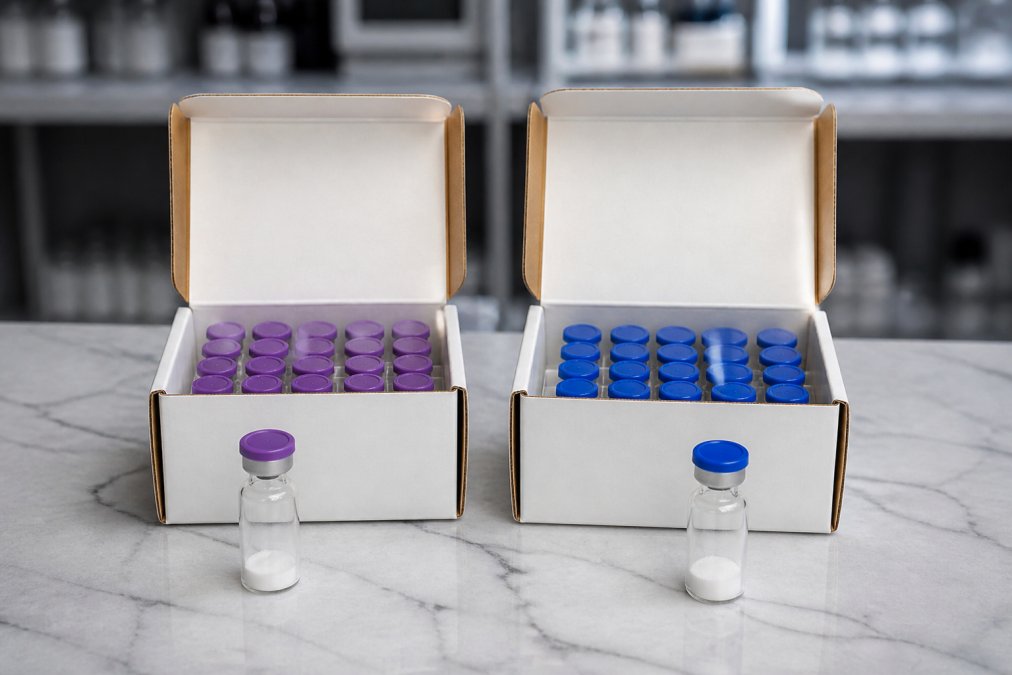
 comparison
Peptide Kit Pricing: A Value Comparison Guide for 2026
Table of Contents
- Peptide Kit Pricing: What Are You Really Paying For?
- Quick Comparison: Kit Types and Pricing Models
- How to Use a Cost per Milligram Peptide Calculator
- Why Third-Party Lab Testing for Peptides Justifies Higher Prices
- Are Bulk Peptide Kit Savings Worth the Investment?
- Hidden Costs: Storage, Reconstitution, and Shipping
- Which Peptide Kit Offers the Best Value?
- Conclusion: Building a Transparent Peptide Budget
- Frequently Asked Questions
Last Updated: September 8, 2026
Peptide kit pricing varies widely, and the difference between a cheap vial and a smart purchase often comes down to verification rather than sticker price. This guide from Online Peptide Sales breaks down the components of peptide kit pricing and value comparison, helping you build a budget that reflects the true cost of reliable research materials.
The lowest price per vial rarely represents the best value. When you account for failed batches, contamination risks, and wasted protocol time, an unverified discount becomes expensive. Below, we show how to evaluate kit pricing, what third-party testing adds, and where hidden expenses fit into your total spend.
Peptide Kit Pricing: What Are You Really Paying For?
Peptide kit pricing is the total cost of acquiring a set of research peptides, typically sold in multi-vial bundles, including the compound, verification, packaging, and shipping. A 10-vial kit price bundles manufacturing costs, quality control, secure export handling, and the supplier's overhead into one figure.
Price differences between suppliers trace to three factors: sourcing (factory-direct peptides cost less than those passing through intermediaries), verification (third-party batch analysis is priced into each vial), and logistics (tamper-evident packaging and express shipping add expense that budget options skip).
Quick Comparison: Kit Types and Pricing Models
Different purchasing models suit different research needs. The main options are per-vial purchases, pre-configured kits, and bulk arrangements, each with distinct cost implications.
| Kit Type | Pricing Model | Best For | Key Trade-off |
|---|---|---|---|
| Individual vials | Pay per unit | Small, exploratory studies | Flexible but higher per-unit cost |
| Pre-configured kits | Bundle pricing | Standardized protocols | Predictable cost, less flexibility |
| Bulk or repeat orders | Volume discounts | Ongoing research programs | Lower unit cost, larger upfront spend |
Pre-configured kits, such as 10-vial bundles, simplify procurement by standardizing the product and the paperwork. Tools like The Peptide Catalog price tracker centralize vendor comparison, while ChemVerify's vendor comparison index shows market-wide price ranges that can span from budget options to premium verified suppliers. For most labs, a structured kit balances unit cost against administrative simplicity.
How to Use a Cost per Milligram Peptide Calculator
A cost per milligram peptide calculator translates a vial price into a standardized metric for comparison across suppliers and protocols. Instead of comparing kit totals, you calculate what each milligram costs, then multiply by your dosing schedule to project a full cycle budget.
The math is straightforward: divide the vial price by the total milligrams in the vial, then multiply by your weekly dose and protocol duration. Free tools like Peptides Explorer Cost Calculator handle this automatically, letting you input dosage frequency, vial concentration, and cycle length to see total projected spend. This approach reveals why a cheaper vial can be less economical if it requires more frequent reconstitution or comes in an inconvenient concentration.
Why Third-Party Lab Testing for Peptides Justifies Higher Prices
Third-party lab testing for peptides sends samples to an independent laboratory for verification of identity, purity, and concentration, with results published in a certificate of analysis. This verification is the single largest driver of legitimate price differences between suppliers. A vendor that skips independent analysis sells cheaper but transfers the risk of a failed batch to you.
Independent verification, such as the Janoshik reports offered by Online Peptide Sales for identified samples, provides a documented chain of accountability. When a certificate of analysis accompanies a batch, you can confirm the peptide matches its label before it reaches your bench. That assurance protects your research timeline and budget from repeating failed experiments.
Are Bulk Peptide Kit Savings Worth the Investment?
Bulk peptide kit savings look compelling, volume discounts of 15-30% per vial are common when moving from a 5-vial to a 10-vial or 20-vial kit. But the discount only materializes if you use every vial before it degrades. This trade-off between upfront savings and storage risk is the calculation most pricing guides skip.
The Degradation Math: When Bulk Discounts Turn Negative
Lyophilized peptides stored at -20°C retain potency for 12-24 months from the manufacturing date, not your purchase date. A bulk kit that has spent 3-4 months in transit and warehouse storage has a shorter remaining shelf life than a fresh single-vial order.
Consider a 10-vial kit at $600 ($60 per vial) versus $75 per vial individually, a 20% discount. If your protocol uses one vial per month, the kit lasts 10 months. If remaining shelf life is only 8 months due to manufacturing and shipping delays, you lose two vials to expiration, $120 in waste, erasing the $150 discount and leaving a net loss.
Experienced researchers apply a simple rule: only buy bulk if your consumption rate uses the entire kit within 70% of its remaining shelf life. For a 10-vial kit with 12 months of stability, that means finishing within 8.4 months, roughly 1.2 vials per month or faster.
Storage Capacity as a Constraint
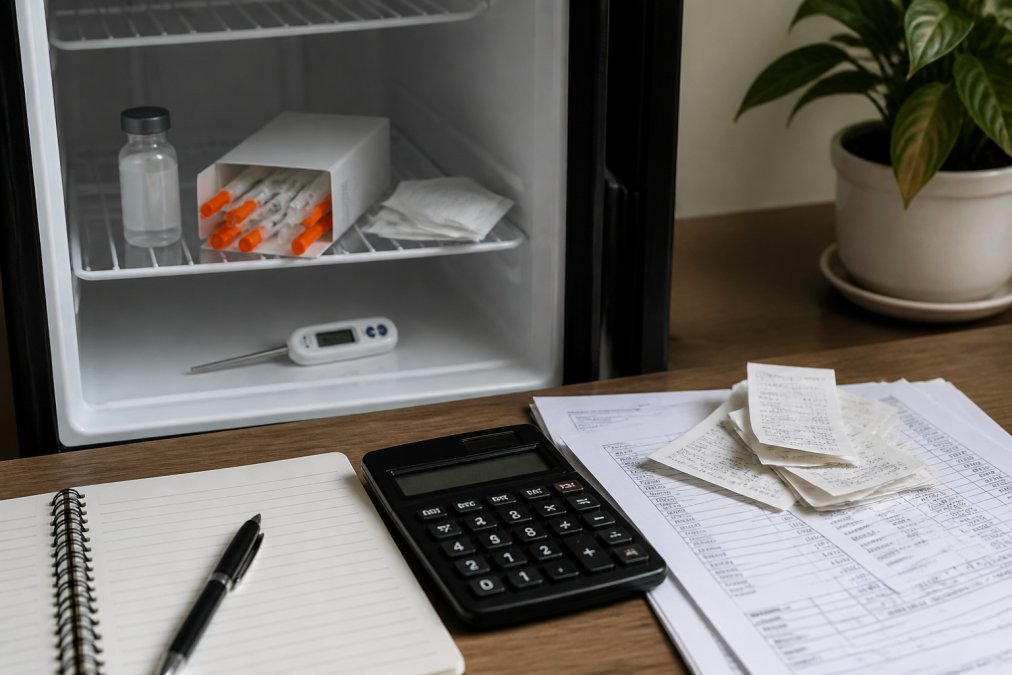
Bulk kits require bulk storage. A 20-vial order with multiple compounds needs organized, temperature-stable storage. Most standard refrigerators have inconsistent temperature zones, with door shelves fluctuating by 5-10°C during opening cycles.
A dedicated storage solution, a thermoelectric cooler or lab-grade mini-fridge with digital temperature control, costs $80-$200. For a single 10-vial kit, this adds $8-$20 per vial, potentially canceling the bulk discount. Only when scaling to multiple kits does the investment amortize below the discount threshold.
The Verification Multiplier Risk
Bulk purchasing from an unverified supplier multiplies risk. A single contaminated batch in a 10-vial kit means ten failed vials, not one, plus wasted protocol time and consumed supplies.
Verification becomes more important as order size grows. A verified bulk kit with documented batch testing, such as the Janoshik reports provided by Online Peptide Sales for identified samples, carries a higher upfront price but protects the entire volume commitment. The per-vial verification premium of 10-15% is smaller than the 20-30% loss from a spoiled batch.
A Decision Framework for Bulk Purchases
Before committing to volume pricing, run this three-step check:
- Calculate your consumption rate. Divide your total weekly dose by the vial concentration to determine vials per month. Be realistic, do not assume maximum yield.
- Verify remaining shelf life. Ask the supplier for the manufacturing date and expected stability window. If the remaining shelf life is less than 1.4 times your expected usage period, the bulk discount is not worth the expiration risk.
- Amortize storage costs. Divide the one-time storage equipment cost by the number of vials in the kit. If that per-vial cost exceeds the per-vial discount, bulk buying loses its financial advantage.
For established programs with predictable protocols and proper storage, Online Peptide Sales offers volume pricing on 10-vial kits that maintains per-batch verification. The discount rewards ongoing use without sacrificing documented quality assurance.
Hidden Costs: Storage, Reconstitution, and Shipping
The advertised kit price is only the entry point. A realistic budget must include the consumables and logistics that turn a vial into a usable dose. Most first-time buyers underestimate these line items by 15-30% of total monthly spend.
Reconstitution Supply Costs: The Per-Dose Math
Every vial of lyophilized peptide requires bacteriostatic water, a syringe, and an alcohol swab to prepare. These recur with each reconstitution and each dose drawn.
For a standard protocol using a 5 mg vial reconstituted with 2 mL of bacteriostatic water:
- Bacteriostatic water (30 mL multi-use vial): $12-$18 per vial. This yields roughly 15 reconstitutions of 2 mL each, adding about $0.80-$1.20 per vial prepared.
- Insulin syringes (0.5 mL, 31-gauge, box of 100): $18-$30 per box. At one syringe per daily dose, this adds $0.18-$0.30 per injection.
- Alcohol swabs (box of 200): $8-$12 per box. At two swabs per reconstitution and one per injection, this adds roughly $0.10-$0.15 per dose.
For a 10-vial kit used over a 30-day protocol with daily dosing, supply costs land between $85 and $140, equal to the price of an additional vial. When comparing kit prices, ask whether the supplier bundles these consumables; some premium vendors include a starter kit, budget vendors almost never do.
Storage and Shelf-Life: The Cost of Waste
Peptide stability is temperature-dependent, and improper storage is the quietest budget killer. Most lyophilized peptides remain stable for 12-24 months at -20°C (-4°F). Once reconstituted, most retain potency for only 4-8 weeks at 2-8°C, and repeated freeze-thaw cycles degrade them faster.
If your storage cannot maintain consistent temperature, you risk losing vials to hydrolysis or aggregation. A single degraded 5 mg vial at $60-$90 is a complete loss. Over a year, poor storage discipline can waste 20-30% of your inventory.
A dedicated freezer organizer with temperature logging costs $40-$80; a mini-fridge with digital temperature control runs $80-$150. These amortize to $5-$15 per month over a year, far less than replacing one spoiled kit.
Shipping, Customs, and the Landed-Cost Calculation
International suppliers typically charge $25-$60 for express shipping. Domestic suppliers may offer free shipping over a threshold, but their per-vial prices are often 20-40% higher. Customs and import fees add another $10-$30 per shipment.
The landed cost, kit price plus shipping plus supplies plus storage amortization, is the only number that matters. A kit at $450 with $50 shipping and $120 in supplies costs $620 all-in. A competitor at $520 with free shipping and $40 in bundled supplies costs $560, cheaper despite the higher sticker price.
Which Peptide Kit Offers the Best Value?
The best value peptide kit combines verified purity, transparent sourcing, and reliable logistics at a price that fits your protocol budget.
Online Peptide Sales supplies 10-vial kits sourced directly from manufacturers in China, with factory-direct pricing that removes intermediary markups. Each identified batch is verified through Janoshik reports. Kits ship in tamper-evident export packaging with express international delivery, and an optional delivery guarantee provides replacement or refund coverage.
| Factor | Why It Matters | Online Peptide Sales Approach |
|---|---|---|
| Verification | Confirms identity and purity | Janoshik-verified batch reports |
| Sourcing | Affects unit cost and quality | Factory-direct from manufacturers |
| Packaging | Protects compound integrity | Tamper-evident export packaging |
| Shipping | Determines timeline and safety | Express international carriers |
| Risk coverage | Protects your budget | Optional delivery guarantee |
Verified kits carry a higher upfront price than unverified alternatives. For researchers who value protocol integrity and want to avoid failed batches, that premium is the most economical choice over a full research cycle.
Conclusion: Building a Transparent Peptide Budget
Building a transparent peptide budget means accounting for every component: the compound, third-party verification, reconstitution supplies, storage, and shipping. The cheapest per-vial price rarely survives contact with a real protocol. Start with a cost-per-milligram calculation, add your supply needs, and evaluate suppliers on verification and reliability rather than sticker price alone.
For labs that need verified compounds with documented batch analysis, Online Peptide Sales offers a practical solution. The 10-vial kits combine factory-direct pricing with Janoshik-verified reports, secure packaging, and express shipping. View the available batch lab reports to confirm quality documentation before you commit.
Frequently Asked Questions
How do I calculate the cost-per-milligram for peptide kits?
Divide the total kit price by the total milligrams of peptide in the kit. For example, a 10-vial kit with 5 mg per vial contains 50 mg total. If the kit costs $240, the cost per milligram is $4.80. This metric lets you compare value across different vial sizes and suppliers, regardless of how they package their products.
Why is third-party lab testing critical for peptide value?
Third-party testing, such as Janoshik-verified batch reports, confirms the peptide's identity and purity level. A cheap vial that is under-dosed or impure has a higher real cost because it can ruin your research data. Verified batches protect your investment and ensure your results are reliable, making them a key component of true value.
Are 10-vial kits more cost-effective than single-vial purchases?
Usually, yes. Suppliers offering 10-vial research kits typically price them lower per vial than single-vial purchases because they reduce per-unit packaging and processing costs. This is where bulk peptide kit savings come from. However, you should only buy a larger kit if you can store it properly and use it before the expiry date.
What factors influence the price of research-grade peptides?
Several factors drive peptide kit pricing. Purity levels and third-party testing add cost but ensure quality. Vendor transparency, supply chain reliability, and secure shipping also factor in. Market fluctuations and the specific compound's complexity play a role. Always compare cost per milligram, not just the total kit price, to assess true value.
Get started with Online Peptide Sales and build a research budget that prioritizes verified quality over false savings.