 blog
How to Understand Common Reasons for Peptide Customs Delays
Last Updated: October 27, 2026
Quick Summary
Common peptide customs delays stem from incomplete or vague product descriptions, wrong or missing harmonized tariff codes, undocumented country of origin, and consolidated cartons with mixed contents. Intended-use language that raises questions can also stall a shipment, since intended use drives how the FDA evaluates a product.
- A review of peptide shipments found 23% came from facilities identified as illegitimate manufacturers, while 4% were refused entry.
- Do not treat a quiet tracking page as proof of seizure, and do not treat a cleared scan as proof goods are lawful to import.
- Mixed cartons get opened more often, and one bad line can hold the whole box.
- Personal-use claims invite scrutiny rather than avoiding it, because that framing signals the product is presented for human use.
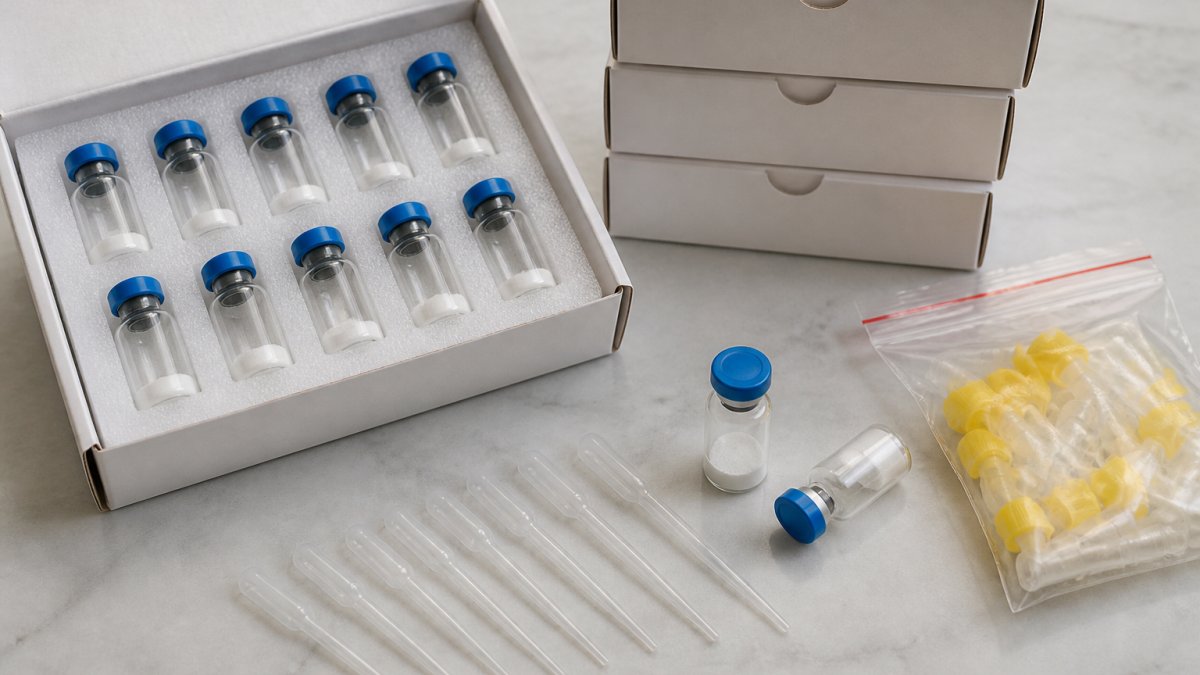
- Online Peptide Sales ships 10-vial research kits with Janoshik-verified batch reports for identified samples.
Table of Contents
- Why Peptide Customs Delays Happen: The Full Picture
- Delay, Detention, Refusal, or Seizure: What Your Tracking Status Actually Means
- Why a Peptide Shipment Held at Customs Is Often a Paperwork Problem
- Research Peptide Import Documentation: A Document-by-Document Checklist
- FDA Oversight, Drug Classification, and Import Restrictions
- How Long Do Peptides Take to Arrive? A Realistic Timeline and Status Guide
- What to Do During a Delay Without Evading Enforcement
- Ordering Research Peptides With Clear Documentation From the Start
- Frequently Asked Questions
Why Peptide Customs Delays Happen: The Full Picture
A shipment may stall because a form is incomplete, a product description is vague, or a code does not match the goods inside the box. Enforcement matters too.
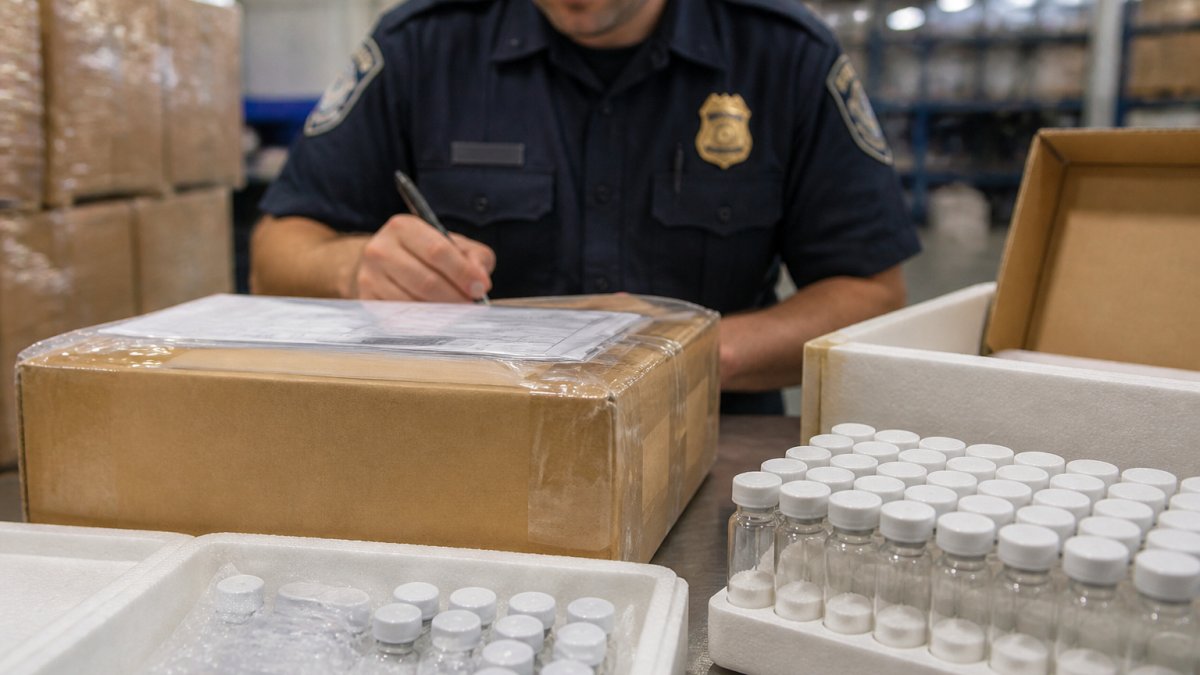
At Online Peptide Sales, every kit leaves with matching batch records, so the paperwork story starts before the parcel does. A review of peptide shipments by Safe Medicines' freight fraud analysis found that 23% came from facilities identified as illegitimate manufacturers, while 4% were refused entry. Those numbers explain why border agents look closely at this category.
Here is the short version of what drives peptide customs delays:
- Incomplete or vague product descriptions
- Wrong or missing harmonized tariff codes
- Undocumented country of origin
- Consolidated cartons with mixed contents
- Intended-use language that raises questions
Delay, Detention, Refusal, or Seizure: What Your Tracking Status Actually Means
These four words are not interchangeable. Here is how to distinguish them.
Why a Peptide Shipment Held at Customs Is Often a Paperwork Problem
A peptide shipment held at customs may involve questions about paperwork, product descriptions, codes, or origin.
Misdeclared Shipments and Incomplete Product Descriptions
A misdeclared shipment also creates a credibility problem. Once one line looks wrong, agents review the rest with more scrutiny. Accurate descriptions cost nothing and prevent most of this.
HS Codes, Country of Origin, and Consolidated Shipments
Country of origin must be stated, not implied. Consolidated shipments make this harder, because one carton can carry goods from several sources with different origins. Mixed cartons get opened more often, and one bad line can hold the whole box.
Research Peptide Import Documentation: A Document-by-Document Checklist
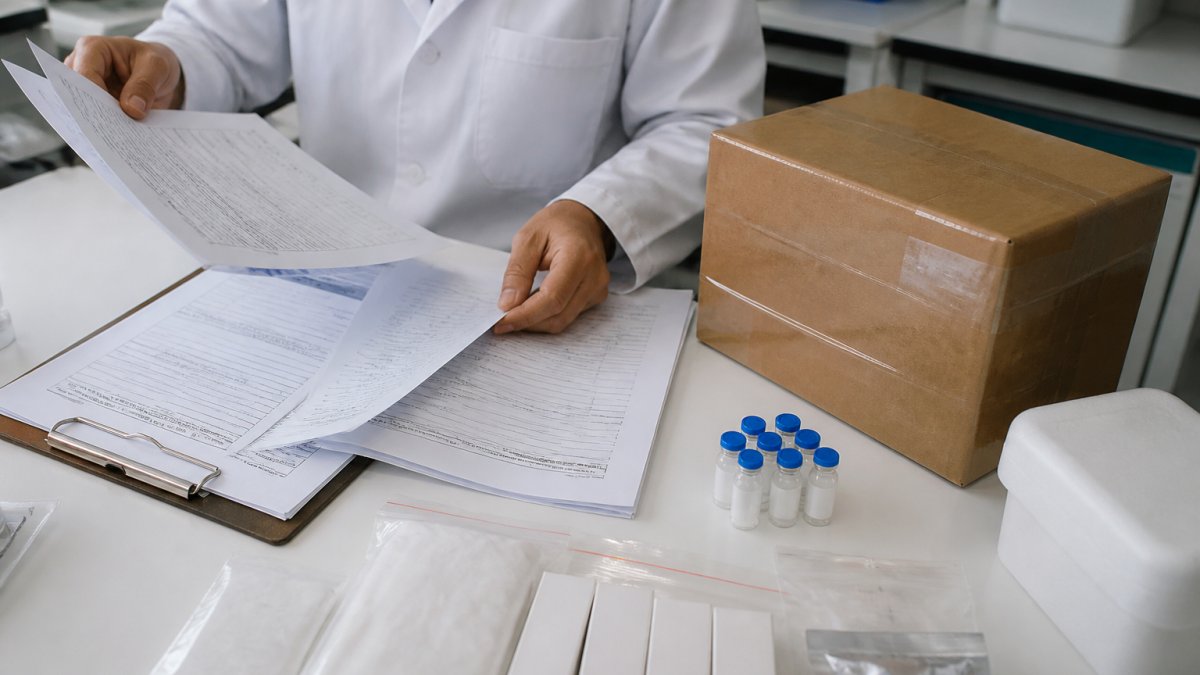
Use this checklist when reviewing research peptide import documentation:
FDA Oversight, Drug Classification, and Import Restrictions
The Food and Drug Administration oversees how drug products enter the country, and import restrictions apply to unapproved products (the FDA). Whether a peptide counts as a drug or a medicine depends on its intended use, not just its chemistry. That single sentence drives everything downstream, so it is worth understanding how the agency actually reaches that conclusion.
How Intended Use Is Actually Evaluated
That is why a product description alone cannot settle the question. A declaration that says "research material" while the surrounding materials describe therapeutic use creates a contradiction, and contradictions invite scrutiny rather than resolving it.
Why Classification Drives the Import Outcome
This is also why import restrictions are not uniform across peptide categories. Different products carry different regulatory status, and the same product can be treated differently depending on its presentation and intended use. A shipment that clears is not a ruling that the product is lawful to import in every context; it is a decision on that entry.
Intended Use, Research-Use Labeling, and Personal-Use Claims
Intended use is the deciding factor. Research-use labeling signals laboratory material. Personal-use claims point the other way, and they invite scrutiny rather than avoiding it, a personal-use framing tells the reviewer the product is being presented for human use, which is exactly the framing that triggers drug-product review.
How Long Do Peptides Take to Arrive? A Realistic Timeline and Status Guide
| Status | What It Means | Typical Next Step |
|---|---|---|
| In transit | Moving normally | Wait |
| Customs delay | Waiting on queue or paperwork | Confirm documents |
| Detention | Under active review | Respond to requests |
| Refusal of entry | Being returned | Contact carrier |
| Seizure | Goods held | Seek legal advice |
What to Do During a Delay Without Evading Enforcement
If your order is delayed or held, check what the replacement guarantee policy covers before you act.
Ordering Research Peptides With Clear Documentation From the Start
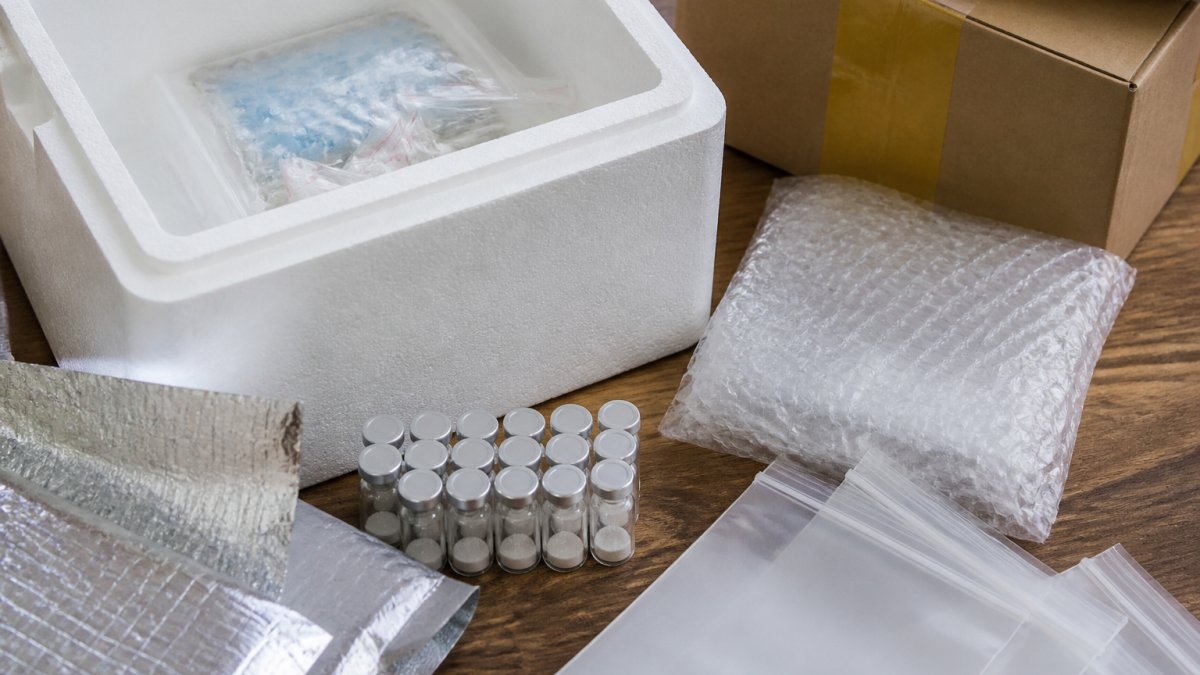
Online Peptide Sales ships 10-vial research kits with Janoshik-verified batch reports for identified samples and secure export packaging. Express international shipping options are available.
Frequently Asked Questions
Why might a peptide shipment be held at customs?
A shipment may be held for reasons that depend on its circumstances. Online Peptide Sales offers Janoshik-verified batch reports for identified samples.
What documents can customs request for a research peptide shipment?
Online Peptide Sales offers Janoshik-verified batch reports for identified samples.
How long do peptides take to arrive once they clear customs?
Online Peptide Sales offers express international shipping options. Delivery timing depends on the destination and circumstances.
Can I get in trouble for buying peptides?
Customs and FDA enforcement focuses on whether a product is an unapproved drug, how it is declared, and whether the shipment is commercial in scale. Civil penalties, refusal of entry, and seizure are the usual enforcement actions for shipment problems, and criminal penalties are reserved for cases involving intent to deceive. Misdeclaring a shipment to speed it through is the fastest way to turn a delay into a bigger problem. Buy from a supplier that provides accurate documentation and verified batch reports, and keep your records.