 blog
Order Research Peptides Express Shipping: 2026 Guide
Table of Contents
- How to Order Research Peptides With Express Shipping
- Express Shipping Methods and Delivery Times
- Janoshik Verified Peptide Reports: Why Third-Party Testing Matters
- Research Peptide Storage Guidelines After Delivery
- Research Peptide Shipping and Handling Protocols
- Return Policy, Delivery Guarantee, and International Shipping
- Conclusion
- Frequently Asked Questions
Last Updated: October 2, 2026
How to Order Research Peptides With Express Shipping
Express shipping for research peptides is a carrier-based delivery service that moves temperature-sensitive compounds from a supplier's facility to a laboratory within a compressed transit window, typically one to three business days. Online Peptide Sales built its ordering process around that reality, because a verified batch report means nothing if the shipment arrives degraded.
Most guides treat shipping as a footnote. That is backwards. For research compounds, transit conditions are part of the product.
Below, we break down how order fulfillment actually runs, what each shipping tier delivers, and where the common mistakes happen.
Order Processing and Cut-off Times
Same-day processing applies to orders placed before the daily cut-off. Orders placed after the cut-off enter the queue the next business day.
Two things slow this down more than anything else:
- Payment verification. Manual review adds hours. Suppliers that confirm payment quickly release orders faster.
- Batch documentation. If a Janoshik report must be matched to a specific batch before dispatch, that step takes time.
A common mistake is assuming "in stock" means "ships today." Those are different claims. Order confirmation tells you the order was received; a tracking number tells you it left the building.
Shipping Rates and Free Shipping Thresholds
Shipping rates for research compounds depend on three variables: destination, package weight, and transit speed. A flat-rate structure may exist for standard domestic logistics, while expedited transit is priced by carrier tier.
Some suppliers apply a shipping threshold, an order value above which standard shipping is included. Bulk orders and repeat customers may qualify for volume pricing on top of that.
A shipping calculator on the checkout page is the fastest way to see actual numbers. Online Peptide Sales publishes current rates and thresholds on its site.
| Shipping Tier | Typical Transit | Best For | Cost Structure |
|---|---|---|---|
| Standard domestic | 3-5 business days | Non-urgent restocking | Flat-rate or free above threshold |
| Expedited | 2-3 business days | Time-sensitive assays | Carrier rate by weight |
| Overnight | Next business day | Cold-chain compounds | Premium carrier rate |
| International express | 5-10 business days | Overseas laboratories | Carrier rate plus duties |
Express Shipping Methods and Delivery Times
Express shipping methods split into three practical tiers, and the right one depends on how sensitive the compound is and how tight the study timeline runs.
Delivery windows are quoted in business days, not calendar days. A Friday afternoon order does not move until Monday.
Expedited and Overnight Shipping Options
Expedited transit shaves one to two days off standard delivery by prioritizing the package within the carrier's network. Overnight delivery goes further, moving the shipment on the next available flight or dedicated route.
Carrier reliability matters more than the label. In practice, the difference between carriers shows up in how they handle a missed connection, not in their published transit times. A carrier with a strong hub network recovers faster when weather or volume disrupts a route.
For temperature-sensitive compounds, overnight shipping reduces the hours a package spends outside controlled conditions.
Tracking and Order Status
A tracking number is issued at dispatch, and it should be treated as the start of the delivery window, not the end of the process. Order status moves through four stages: order confirmation, processing, dispatch, and in transit.
What most guides miss is that tracking updates lag at handoff points. A package can sit at a sorting facility for a day with no scan. That gap is normal, not a problem.
Janoshik Verified Peptide Reports: Why Third-Party Testing Matters
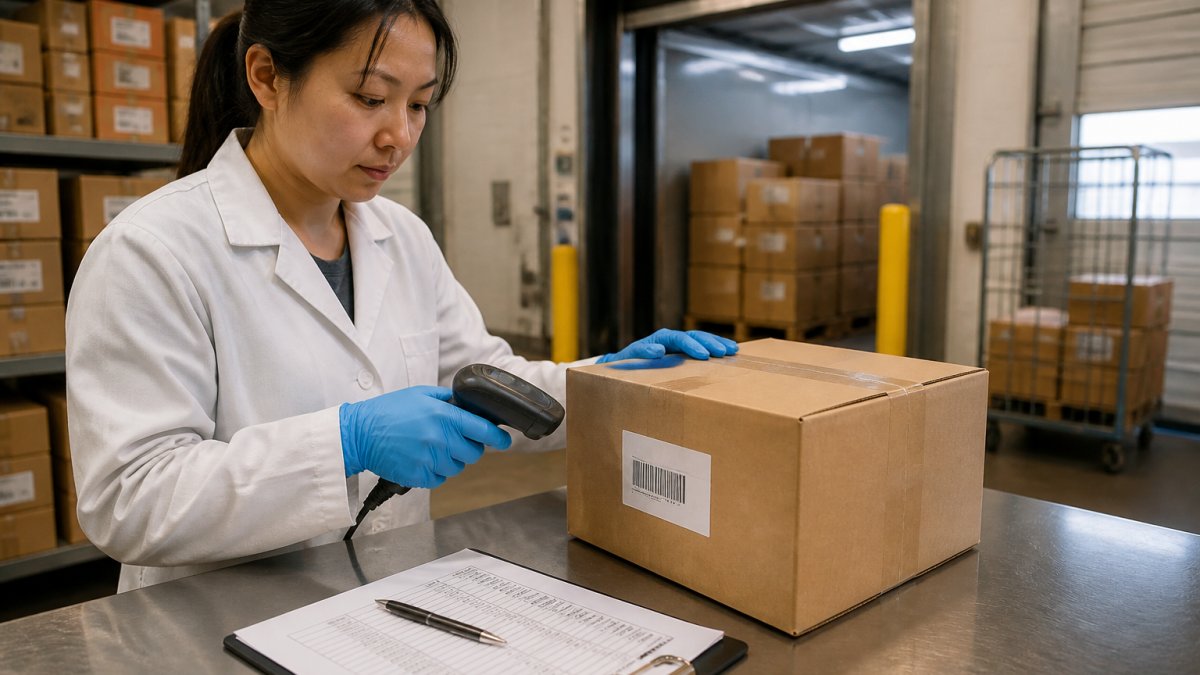
Janoshik verified peptide reports are independent analytical certificates that confirm a batch's identity and purity through third-party testing, rather than relying on a supplier's own claims. That independence is the entire point.
Batch testing also creates accountability. When a report is tied to a specific batch number, a contamination issue can be traced rather than guessed at.
For laboratories with internal quality requirements, the practical move is to request the report before the order ships, not after. FDA guidance on laboratory quality practices outlines the general expectations for documentation and traceability that research buyers should expect from any supplier.
Research Peptide Storage Guidelines After Delivery
Research peptide storage guidelines begin the moment a package is opened, because the clock on stability starts at room temperature. Most lyophilized compounds tolerate short ambient exposure during transit. Once delivered, the priority is moving them to controlled conditions quickly.
A workable default:
- Lyophilized powder: store frozen for long-term stability, refrigerated for active use.
- Reconstituted solutions: refrigerate and use within the working window for that compound.
- Light-sensitive compounds: keep in amber vials or opaque storage.
- Aliquoting: split into single-use portions to avoid repeated freeze-thaw cycles.
Research Peptide Shipping and Handling Protocols
Research peptide shipping and handling protocols cover packaging, temperature control, and documentation, and they exist because a compound can pass purity testing and still arrive unusable. Secure export packaging with tamper-evident seals protects both the product and the buyer's ability to verify it.
The handling chain runs from the supplier's cold storage to the courier to the receiving lab. Each handoff is a risk point.
Cold-Chain Requirements for Temperature-Sensitive Compounds
Cold-chain shipping requirements apply to any compound that degrades outside a defined temperature range. These shipments use insulated containers, phase-change cold packs, and sometimes dry ice, depending on the target range and transit duration.
A delivery guarantee matters here. If a cold-chain shipment arrives warm, the buyer needs a documented remedy, not a conversation.
Customs and Regulatory Compliance for Express Transit
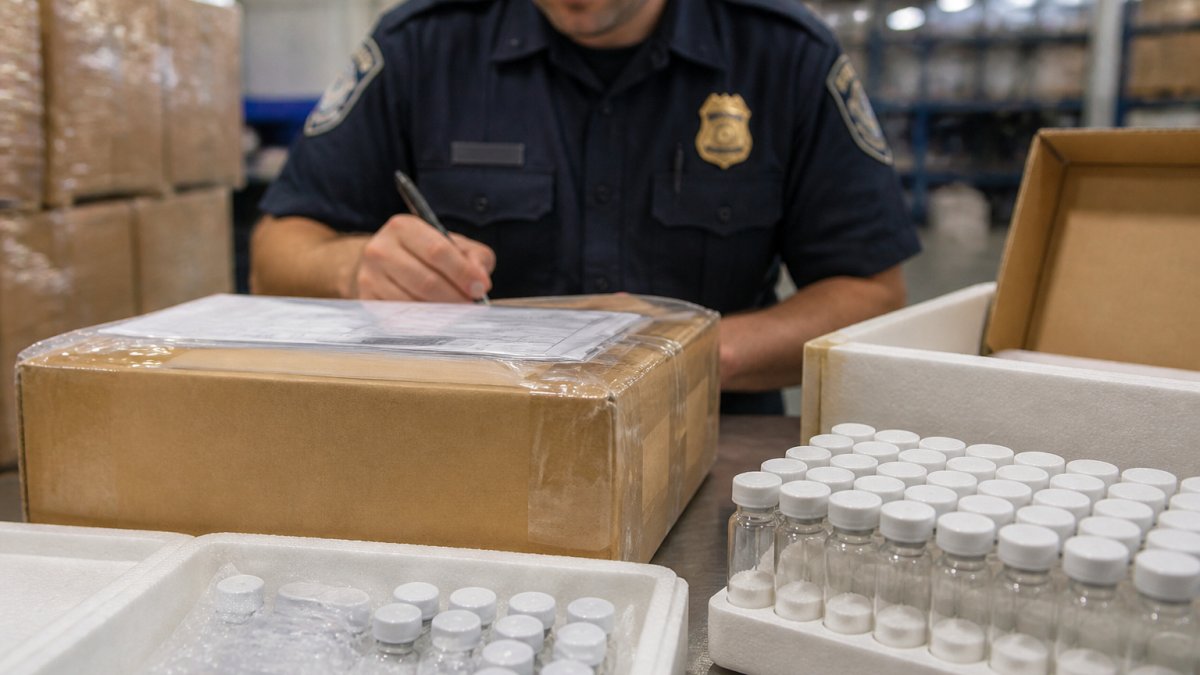
Customs compliance is where express shipments most often stall, and the fix is documentation prepared before dispatch rather than after a hold. Research compounds cross borders under specific classifications, and mislabeled paperwork invites inspection.
What most guides miss: express transit does not bypass customs. It moves through it faster when the paperwork is correct. A commercial invoice with accurate descriptions, harmonized codes, and declared values clears far quicker than a vague declaration.
Buyers should confirm three things before ordering internationally:
- Whether the supplier handles customs documentation or leaves it to the recipient
- What the destination country requires for research-use compounds
- Who absorbs the cost if a package is held or refused
U.S. Customs and Border Protection import requirements publishes the entry requirements and documentation standards that apply to imported research materials.
Return Policy, Delivery Guarantee, and International Shipping
Return and refund policies for research compounds differ from ordinary retail, because once a vial leaves controlled storage, resale is not an option.
A delivery guarantee typically covers loss, damage, or a documented cold-chain failure, offering replacement or refund. That is the mechanism that matters for express shipments, since the failure mode is usually transit-related rather than a change of mind.
International shipping availability varies by destination. Some regions accept research compounds with standard documentation; others require additional permits. Buyers should verify eligibility before ordering, not after.
The honest limitation: no guarantee replaces good packaging. A replacement shipment still has to survive the same route.
Conclusion
Express shipping for research compounds is a documentation and packaging problem more than a speed problem. The orders that arrive intact are the ones with accurate customs paperwork, packaging rated for the full transit window, and batch reports attached before dispatch. Speed helps, but it does not compensate for a weak cold chain or a vague commercial invoice.
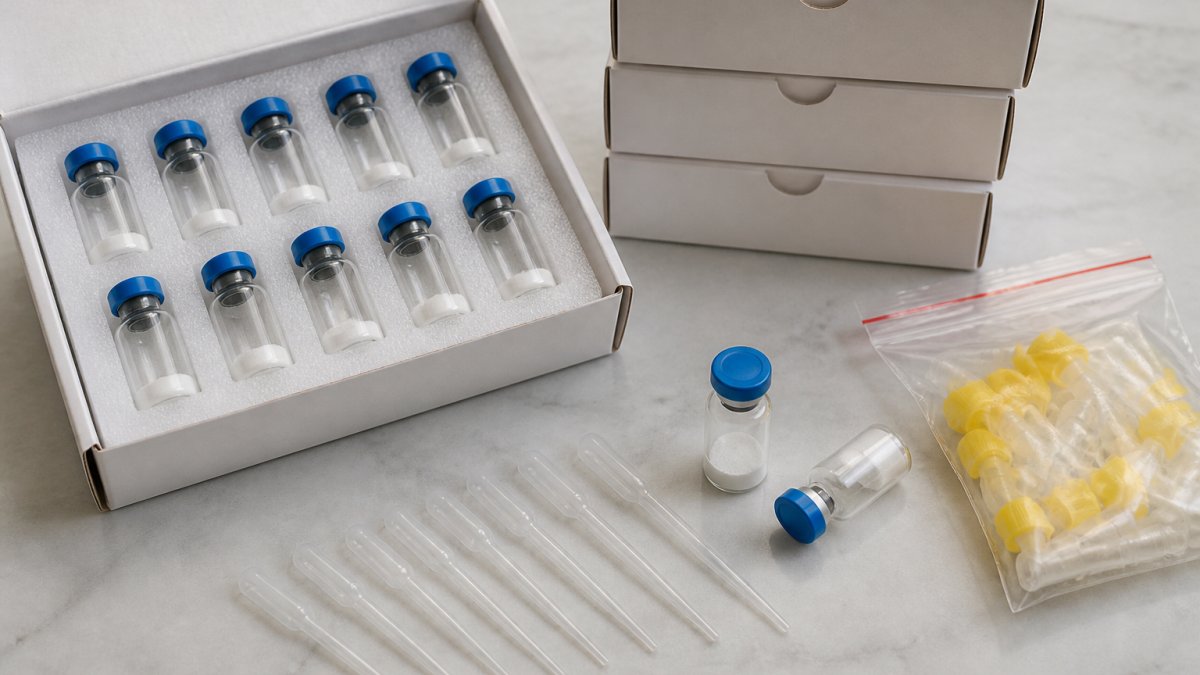
Online Peptide Sales supplies research compounds in 10-vial kits with Janoshik-verified batch reports for identified samples, secure export packaging, and an optional delivery guarantee covering replacement or refund. For laboratories weighing transit risk against study timelines, those three elements, verification, packaging, and a defined remedy, are what separate a reliable supply chain from a hopeful one.
Frequently Asked Questions
How long does express shipping take for research peptides?
Express shipping for research peptides typically takes one to three business days for expedited and overnight tiers, and five to ten business days for international express. Domestic standard shipping runs three to five business days. Actual delivery depends on carrier routing, customs clearance, and whether the order cleared the daily processing cut-off.
How does express shipping impact the integrity of research peptides?
Express shipping shortens transit time, which reduces the risk of temperature fluctuations that can degrade sensitive compounds. Online Peptide Sales uses secure export packaging with tamper-evident seals and, where needed, cold-chain elements to maintain stability. Faster delivery also means less time in uncontrolled warehouse environments. Combined with Janoshik verified peptide reports, express transit helps ensure the material arrives at the purity level confirmed at batch testing.
What should researchers look for when ordering peptides online?
Prioritize suppliers that provide third-party batch testing, such as Janoshik verified peptide reports, and that follow research peptide shipping and handling protocols. Check the order processing cut-off, available express shipping methods, tracking, and the return or delivery guarantee. Verify that packaging is tamper-evident and suitable for temperature-sensitive compounds. A clear shipping calculator and responsive customer support also indicate a reliable supply chain for laboratory materials.
How can researchers ensure secure and timely delivery of laboratory supplies?
Choose a supplier that offers express shipping with tracking and a delivery guarantee. Order before the daily processing cut-off to secure same-day dispatch. Confirm that packaging includes tamper-evident seals and, if required, cold-chain materials. Monitor the tracking number and be available to receive the package promptly. For international orders, ensure the supplier handles customs documentation to avoid delays at border control.