 how-to
Peptide Storage Best Practices: 2026 Lab Guide
Table of Contents
- Lyophilized vs. Reconstituted Peptides: Storage Rules That Differ
- Temperature Requirements: Why -20°C vs -80°C Matters
- Peptide Reconstitution Guidelines for Stable Solutions
- Aliquot Preparation: How to Avoid Freeze-Thaw Cycles
- Peptide Vial Kit Size Requirements for Lab Efficiency
- Long-Term Storage of Research Peptides: Monitoring and Troubleshooting
- Conclusion: Build a Storage Protocol That Protects Your Research
- Frequently Asked Questions
Last Updated: September 7, 2026
Improper storage is the leading cause of failed experiments involving research peptides, yet it remains the most overlooked variable in the lab. Effective peptide storage is a critical, non-negotiable component of any research protocol, as temperature, light, and moisture fluctuations can degrade samples before they ever reach an assay. This guide from Online Peptide Sales outlines the specific handling protocols that protect your investment and ensure the integrity of your data.
The core principle is simple: you are managing a race against degradation. Best practices for peptide storage require a clear understanding of the physical state of your compound, whether it is a lyophilized powder or a reconstituted solution, as each demands a distinct environmental strategy. Below, we will outline how to structure a storage workflow, from initial receipt to long-term monitoring, to prevent common mistakes that ruin samples.
Lyophilized vs. Reconstituted Peptides: Storage Rules That Differ
The physical form of your peptide dictates its storage requirements. Lyophilized (freeze-dried) peptides are in their most stable state, designed to resist degradation when stored properly (peer-reviewed research). Reconstituted peptides, now in a liquid solution, are significantly more vulnerable to hydrolysis and microbial growth (PubMed).
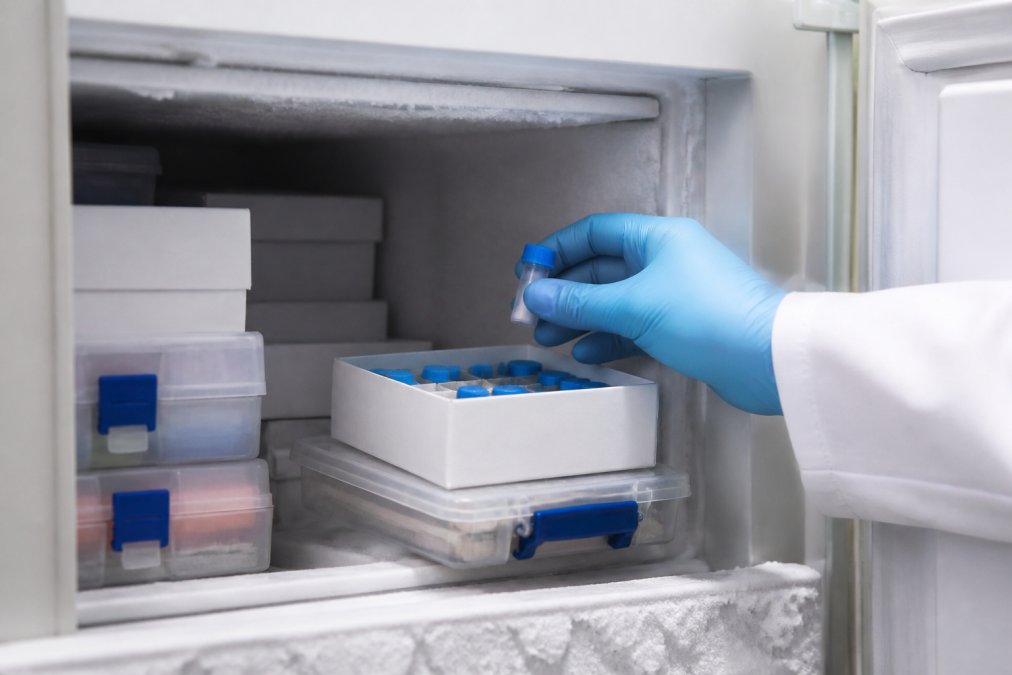
For lyophilized powders, the primary threats are moisture and heat. These samples should be stored in a desiccator cabinet at or below -20°C. Conversely, reconstituted peptides are highly susceptible to chemical breakdown and contamination, requiring storage at -80°C to slow degradation, though this is not a universal rule and depends heavily on the peptide sequence and solvent used.
Temperature Requirements: Why -20°C vs -80°C Matters
Choosing between -20°C and -80°C storage depends on your timeline and the peptide's characteristics. Standard freezers are suitable for short-term storage of lyophilized peptides, while ultra-low temperature freezers are essential for the long-term preservation of reconstituted solutions.
The colder temperature effectively halts most chemical and physical degradation processes. For long-term stability, storing your lyophilized peptide at -80°C is a safer choice, as it provides a greater margin of error against temperature spikes. To maintain these conditions, it is crucial to use a monitoring system which provides NIST-traceable calibration and alarm settings to document that your storage unit remained within the required range.
Peptide Reconstitution Guidelines for Stable Solutions
Peptide reconstitution guidelines begin with selecting the correct solvent. Many hydrophobic peptides require a small volume of a solvent like DMSO or acetic acid to dissolve initially, which is then diluted with a sterile buffer to reach the desired concentration. This two-step process is critical for peptides that do not dissolve directly in aqueous solutions.
The choice of buffer is also a factor in the stability of the final solution. For most research applications, sterile water or a standard phosphate-buffered saline is sufficient. However, for peptides prone to oxidation, a buffer containing reducing agents may be necessary. Always use sterile techniques and a laminar flow hood to prevent contamination, and consider the peptide's isoelectric point to avoid precipitation during dissolution.
Aliquot Preparation: How to Avoid Freeze-Thaw Cycles
Freeze-thaw cycles are a primary cause of peptide degradation. Each cycle can cause the peptide to denature, precipitate, or hydrolyze, reducing its activity. The most effective way to prevent this is to aliquot your reconstituted peptide into single-use volumes immediately after dissolution.
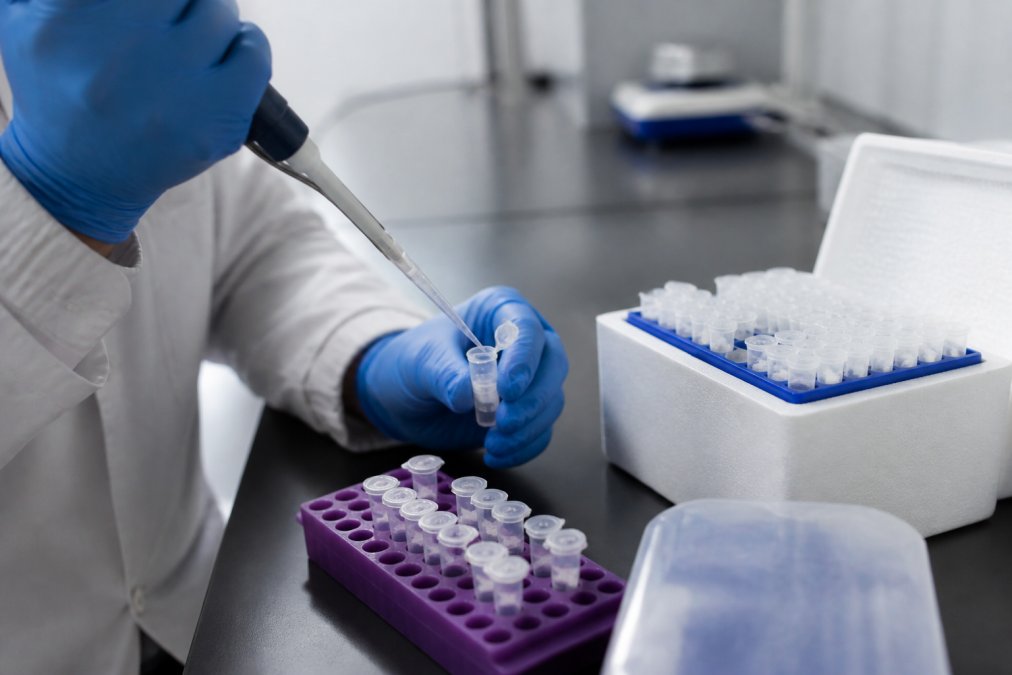
To do this, use a precision pipette to dispense the solution into sterile, low-binding vials. This process ensures that you only thaw the amount needed for a single experiment, preserving the integrity of the remaining stock. This practice is fundamental to best practices for peptide storage.
- Label each cryogenic vial with the peptide name, concentration, and date.
- Using an aseptic technique, pipette the calculated volume into each sterile vial.
- Immediately flash-freeze the vials in liquid nitrogen or on dry ice before transferring to the -80°C freezer.
- Never re-freeze a thawed aliquot; discard any unused portion.
Peptide Vial Kit Size Requirements for Lab Efficiency
Understanding your peptide vial kit size requirements is essential for balancing experimental needs with storage capacity. Purchasing peptides in bulk kits can be cost-effective, but it requires the lab space and equipment to store them properly. If your research protocol requires varying quantities, a standard 10-vial kit format offers flexibility without overwhelming your storage capacity.
For labs with high throughput, maintaining a stock of different peptides in a standardized kit format simplifies inventory management. Online Peptide Sales provides research compounds in 10-vial kits, which are well-suited for labs that need to manage multiple studies without committing to excessive single-batch quantities. This approach, combined with proper aliquoting, minimizes waste and ensures you have the right amount of material for each phase of your study.
Long-Term Storage of Research Peptides: Monitoring and Troubleshooting
Long-term storage of research peptides is not a "set and forget" process; it requires routine monitoring and a plan for troubleshooting. A key aspect of this is verifying that your equipment is calibrated and functioning correctly. According to National Institute of Standards and Technology guidelines on thermometer calibration, regular calibration of your monitoring equipment is essential for data integrity and reproducibility.
If you suspect a peptide has degraded, the first step is a visual inspection. A clear solution that has become cloudy or contains a precipitate has likely undergone aggregation or hydrolysis. Troubleshooting degraded peptides often involves re-evaluating your storage conditions. If a lyophilized peptide has clumped or changed color, it has absorbed moisture and should be discarded, as its purity and solubility are compromised.
Conclusion: Build a Storage Protocol That Protects Your Research
Establishing a rigorous storage protocol is a fundamental step in safeguarding your research results. By understanding the distinct needs of lyophilized versus reconstituted peptides, strictly controlling temperature, and preventing freeze-thaw damage through aliquoting, you can significantly extend the shelf life and maintain the biological activity of your compounds. This diligence ensures that the data you generate is a true reflection of your experimental design, not an artifact of sample degradation.
Managing the logistics of sourcing and storing high-quality research compounds is a challenge. At Online Peptide Sales, we support your research by offering verified compounds with Janoshik-verified batch reports and tamper-evident packaging, ensuring you receive a quality product ready for proper storage. View Batch Lab Reports to see the verification behind our products.
Frequently Asked Questions
What is the correct way to store lyophilized peptides?
Store lyophilized peptide powders in a desiccator cabinet at -20°C, protected from light and moisture. Keep them sealed with desiccant packs in the original vial. For long-term storage of research peptides exceeding several months, move them to a -80°C freezer. Always allow vials to reach ambient temperature in a sealed container with desiccant before opening to prevent condensation and subsequent degradation.
How long can reconstituted peptides stay unrefrigerated?
Reconstituted peptides should remain at ambient temperature only for the minimum time needed to prepare aliquots, typically under 30 minutes total. Prolonged exposure accelerates hydrolysis and microbial growth. After reconstitution, immediately aliquot and return the main stock to refrigerated or frozen storage as your peptide reconstitution guidelines specify. Never leave a reconstituted peptide on the benchtop for extended handling periods.
Does light exposure affect peptide stability?
Yes, light exposure causes photo-degradation in many peptide sequences, particularly those containing aromatic residues like tryptophan or tyrosine. Store all peptides in amber glass vials or opaque containers and minimize light exposure during handling. Standard clear vials offer no UV protection. For light-sensitive peptides, this protection is as critical as temperature control for maintaining purity and biological activity.
Which peptides should not be refrigerated?
Some peptides with a high content of hydrophobic amino acids can precipitate or form aggregates when refrigerated at 4°C after reconstitution. These peptides may stay more stable at controlled ambient temperatures or require specific buffer conditions as noted in their stability data. Always follow the manufacturer's specific storage instructions. When in doubt, consult the peptide's sequence-specific stability profile rather than applying a universal rule.