 ultimate-guide
Research Chemical Procurement: 7 Best Practices for Labs
Table of Contents
- Why Research Chemical Procurement Needs Its Own Playbook
- Research Chemical Procurement Checklist: 7 Steps Before You Order
- Supplier Qualification and Documentation Review
- Research Peptide Batch Report Verification Beyond the PDF
- Research Chemical Order Documentation and Recordkeeping
- Research Peptide Storage and Handling After Delivery
- Red Flags, Fraud Prevention, and Ethical Sourcing
- Measuring Procurement Performance and Improving Continuity
- Frequently Asked Questions
Last Updated: October 17, 2026
Why Research Chemical Procurement Needs Its Own Playbook
Research chemical procurement is the controlled process of specifying, qualifying, ordering, receiving, and documenting research compounds so every vial traces to a verified source.
The stakes are practical. A reagent with a mismatched batch number can stall an entire study, and a supplier who cannot produce a current Certificate of Analysis leaves the lab with no defensible record of what was tested.
Below, the seven-step checklist covers specification, supplier qualification, document review, independent verification, recordkeeping, storage, and performance tracking. Each step maps to a document a lab can actually file.
Research Chemical Procurement Checklist: 7 Steps Before You Order
The research chemical procurement checklist is a seven-stage gate: define the specification, qualify the supplier, review documentation before payment, verify the batch independently, log the order, plan receipt and storage, and measure supplier performance. Each stage produces a record, and skipping any one creates a gap that surfaces later, usually during an audit or a failed assay.
The table below summarizes what each step produces and how often it should run.
| Step | Output | Frequency |
|---|---|---|
| Define specification | Written spec sheet per compound | Every new compound |
| Qualify supplier | Approved supplier file | Annually, or on any change |
| Review documents | Signed document checklist | Every order |
| Verify batch | Independent analytical record | Every batch received |
| Log the order | Purchase and receipt record | Every order |
| Plan storage | Storage and handling log | On receipt |
| Measure performance | Supplier scorecard | Quarterly |
Step 1: Define the Specification
Write the specification before contacting any supplier. It states the compound identity, expected purity range, quantity per unit, kit configuration, packaging format, and required analytical documentation. Vague specifications invite substitutions, the most common source of downstream confusion in research chemical procurement.
Step 2: Qualify the Supplier
Supplier qualification is the documented assessment of whether a vendor can consistently meet the specification. It covers business identity, sourcing model, documentation practices, shipping and customs handling, and replacement terms. Qualification is a file, not a feeling. Keep it current.
Step 3: Review Documentation Before Payment
Never release payment before reviewing the documentation package. At minimum, confirm the Certificate of Analysis matches the batch number on the order, check the analysis date, and confirm the testing laboratory is named. A supplier who cannot produce a batch-specific CoA before payment may not have one after.
Supplier Qualification and Documentation Review
Supplier qualification is the documented, repeatable assessment of whether a vendor can consistently meet the specification from Step 1.
A workable qualification file answers five questions, each with a document behind it:
- Legal identity and operating history. Confirm the supplier's registered business name, jurisdiction of registration, and how long it has operated under that name, and record the source used. A supplier that cannot be tied to a registered entity is a stop condition.
- Sourcing model. Establish whether the supplier manufactures, contracts manufacturing, or resells. Online Peptide Sales, for example, sources directly from manufacturers in China and provides Janoshik-verified batch reports for identified samples, both recordable facts. The sourcing model determines which documentation the supplier can produce and which it can only relay.
- Documentation practices. Ask for a sample documentation package before ordering: a batch-specific Certificate of Analysis, a Safety Data Sheet, and any shipping or export documentation the destination requires. Review it for the same defects you would flag on a live order.
- Shipping, customs, and replacement terms. Record the carrier, packaging format, stated handling of temperature-sensitive shipments, and the written policy for damaged, delayed, or non-conforming material. Verbal assurances do not belong in the file.
- Communication and escalation. Note the documented channel for order changes, the response time observed during qualification, and the named contact for quality issues. Informal channels create a recordkeeping gap the moment a dispute arises.
Score each question as met, partially met, or not met, and date the assessment. Any "not met" on items 1, 3, or 4 blocks approval.
Documentation review has three layers, each answering a different question:
- Safety Data Sheet (SDS): confirms hazard classification, handling, and storage guidance. It describes the material class, not the specific batch, so it never substitutes for a CoA.
- Certificate of Analysis (CoA): ties a specific batch to specific analytical results, including identity and purity. The batch number, named testing laboratory, and analysis date are the three fields that make it usable.
- Compliance certificates: cover shipping classification, packaging, and any export documentation the destination requires. These protect the shipment, not the science, but a missing certificate can hold a delivery at customs long enough to ruin a temperature-sensitive order.
Run the review as a signed checklist on every order. The reviewer confirms the CoA batch number matches the purchase order, the analysis date falls within an accepted window, and the testing laboratory is named.
Research Peptide Batch Report Verification Beyond the PDF
Research peptide batch report verification confirms that an analytical report genuinely describes the material received rather than trusting the document at face value. A PDF is a claim; verification is the evidence behind it.
Three checks separate real verification from paperwork theater:
- Match the batch identifier. The batch code on the report must match the code on the vial label and the packing slip. Any mismatch is a stop condition.
- Confirm the testing laboratory. Reports should name the analytical lab that performed the work. Janoshik-verified batch reports, which Online Peptide Sales provides for identified samples, name the lab and the sample submitted.
- Check the analysis date against the order date. A report dated well before the order may describe a different production run.
Where institutional policy allows, independent testing of a retained sample adds a second layer. This is the angle most purchasing guides skip entirely: supplier documents establish what the supplier claims, and independent analysis establishes what the lab actually holds.
Research Chemical Order Documentation and Recordkeeping
Research chemical order documentation connects a purchase request to a received, verified, and stored item. It should be complete enough that a colleague unfamiliar with the order can reconstruct the entire chain without asking questions.
A workable order file contains:
- The approved specification sheet
- The supplier qualification record and approval date
- The purchase order with quantity, kit configuration, and shipping terms
Retention periods vary by institution, so follow the lab's own records policy rather than a generic rule. The principle is consistent: if a study is later questioned, the order file is the defense.
Research Peptide Storage and Handling After Delivery
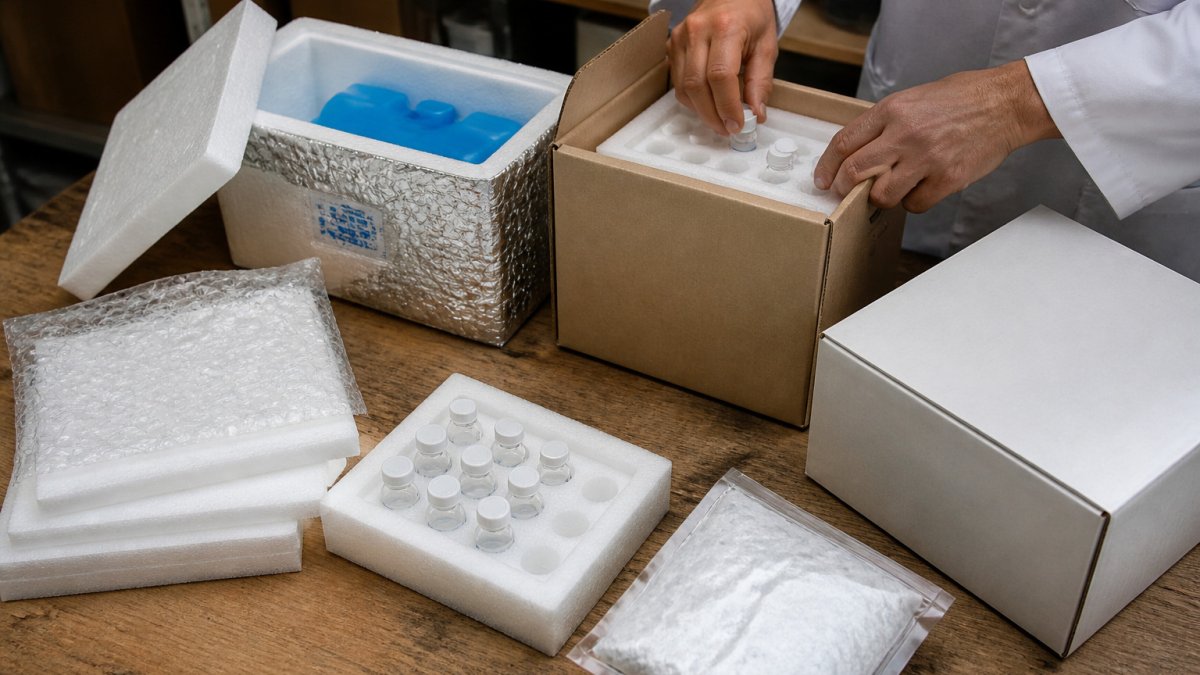
Storage begins at the loading dock. Inspect the shipment for tamper evidence and temperature excursion before signing, photograph the packaging if anything looks wrong, and move compounds to controlled storage immediately.

Record three things at receipt: storage location, date and time of placement, and packaging condition.
Red Flags, Fraud Prevention, and Ethical Sourcing
Fraud in this market rarely looks dramatic. It looks like a supplier who answers questions quickly but cannot produce a batch-specific report, or a listing advertising a purity figure with no named laboratory behind it.
Red flags worth documenting:
- A CoA with no batch number, no lab name, or no analysis date
- Reluctance to share documentation before payment
- Prices that sit far below the rest of the market with no stated reason
Ethical sourcing runs alongside fraud prevention. Confirm compounds are sold for legitimate laboratory and research purposes, keep purchases inside institutional policy, and decline any request outside the lab's approved scope.
Measuring Procurement Performance and Improving Continuity
Procurement performance is measured with a small set of metrics a lab can collect without new software.
A workable scorecard uses five metrics:
| Metric | Definition | Review threshold |
|---|---|---|
| On-time-in-full delivery | Orders received on the promised date and at the ordered quantity, divided by total orders | Below 90% in a quarter triggers a supplier review |
| Documentation completeness at first submission | Orders whose CoA, SDS, and compliance certificates were complete and correct on first review, divided by total orders | Any repeat failure triggers re-qualification |
| Batch match rate | Received vials whose batch code matches the CoA and packing slip, divided by vials received | Any mismatch is a stop condition, not a rate |
| Nonconformance rate | Receipts with a documented defect (damage, temperature excursion, wrong configuration), divided by total receipts | Rising trend across two quarters triggers a sourcing review |
| Stockout frequency | Study days a required compound was unavailable, counted per quarter | Any stockout tied to a study is reviewed individually |
Calculate each metric from the order files you already keep.
Continuity planning follows directly from the scorecard. Three practices carry most of the weight:
- Qualify a second source for any compound the lab cannot afford to be without. The second source goes through the same qualification file as the primary. A backup supplier who was never qualified is not a backup.
- Set a documented minimum stock level per compound. Base it on the study schedule and the observed lead time, not on shelf space. Record the level in the storage log so reordering is triggered by a number rather than by memory.
- Record lead times from actual receipts. Promised and observed lead times diverge, and the observed number is the one that prevents stockouts. Update the figure each quarter from the on-time-in-full data.
Online Peptide Sales supports continuity planning with 10-vial research kits, volume pricing for repeat and bulk orders, express international shipping via major carriers, and an optional delivery guarantee with replacement or refund.
The takeaway is straightforward.
Frequently Asked Questions
What are the best practices for procuring research chemicals?
Start with a written specification, then qualify the supplier through documentation review rather than reputation alone. Require a Certificate of Analysis and Safety Data Sheet for every batch, verify the CoA against an independent report when available, and keep purchase records tied to the batch number. Confirm the supplier ships in tamper-evident packaging and provides tracking. A research chemical procurement checklist that covers specification, supplier qualification, documentation, shipping terms, and storage planning prevents most ordering errors before they happen.
What should researchers verify before ordering a research peptide?
Verify four things: the stated identity and purity on the batch report, the testing laboratory named on that report, the supplier's shipping and replacement terms, and whether the packaging is tamper-evident. Ask whether reports are issued per batch or only spot-checked. For research peptide batch report verification, confirm the report matches the lot number you will receive, not just the product name. If any of these answers is vague, treat it as a reason to request more detail before payment.
How should research peptides be stored after delivery?
Inspect the shipment on arrival, record the condition and lot number, then move vials to the storage condition stated on the supplier documentation, typically refrigerated or frozen and protected from light. Keep the original packaging and desiccant until the vial is in use. Log storage temperature and any excursions. Research peptide storage and handling records should be kept with the batch report so that any later question about stability can be traced to a specific lot and date.
What documentation should accompany a research chemical order?
A complete research chemical order documentation set includes the purchase order or invoice, the Certificate of Analysis for the specific lot, the Safety Data Sheet, shipping and tracking records, and an internal receiving record noting condition on arrival. Store these together by lot number. If the supplier provides a third-party verification report, attach it to the same file. This record supports audit requests, repeat orders, and any investigation if a batch behaves unexpectedly in the lab.
How can a laboratory document research chemical purchases?
Assign a unique internal reference to each order and link it to the supplier lot number, the CoA, and the receiving date. Keep a central log of who ordered, what quantity, and where the material is stored. Restrict purchasing to approved suppliers under a written purchasing policy so records stay consistent across the team. Review the log quarterly to spot duplicate orders, expired stock, and suppliers with repeated delivery problems. Digital procurement systems make this easier but a shared spreadsheet works for small labs.
What should researchers check about packaging and shipping?
Check that packaging is tamper-evident and that the shipment includes temperature control appropriate to the material. Confirm the carrier and tracking number before dispatch, and ask who handles customs documentation for international orders. On arrival, photograph the exterior before opening and note any damage. Delivery reliability and shipping terms belong in your supplier qualification record, because a supplier that cannot explain its logistics is a supply continuity risk regardless of product quality.