 ultimate-guide
Essential Criteria for Evaluating Peptide Vendor Reliability
Last Updated: October 23, 2026
Quick Summary
Peptide vendor reliability depends on batch-specific certificates of analysis, independent third-party testing, transparent sourcing from registered manufacturers, secure export packaging, and explicit replacement guarantees. Evaluating these criteria systematically protects research integrity and ensures compounds match their specifications.
- Batch-specific COAs with lot numbers and testing dates prove traceability better than generic product sheets.
- Independent third-party laboratories like Janoshik provide more credible testing results than in-house vendor testing.
- Reliable vendors name their manufacturers and provide facility registration and compliance documentation.
- Secure export packaging with tamper-evident seals and temperature controls protect peptide integrity during transit.
- Vendors offering replacement or refund guarantees demonstrate confidence in quality control and accountability.
Table of Contents
- Why Peptide Vendor Reliability Matters for Research
- Understanding Peptide Certificate of Analysis and What It Proves
- Batch-Specific Peptide Testing: Beyond Purity Claims
- Critical Peptide Vendor Due Diligence Questions to Ask
- Research Peptide Shipping and Packaging Standards
- Supply Chain Traceability and Storage Controls
- Building Your Vendor Scorecard: A Practical Framework
- Conclusion: Making Your Vendor Decision
- Frequently Asked Questions
Why Peptide Vendor Reliability Matters for Research
Peptide vendor reliability directly impacts research integrity, data reproducibility, and project timelines. A supplier that delivers inconsistent products, missing documentation, or delayed shipments can compromise months of laboratory work.
At Online Peptide Sales, vendor reliability is treated as non-negotiable.
Research teams face a fundamental question before ordering: How do you know a vendor's peptides match their claims? The answer lies in systematic evaluation across multiple criteria, from certificate authenticity to shipping security to post-delivery accountability.
Understanding Peptide Certificate of Analysis and What It Proves
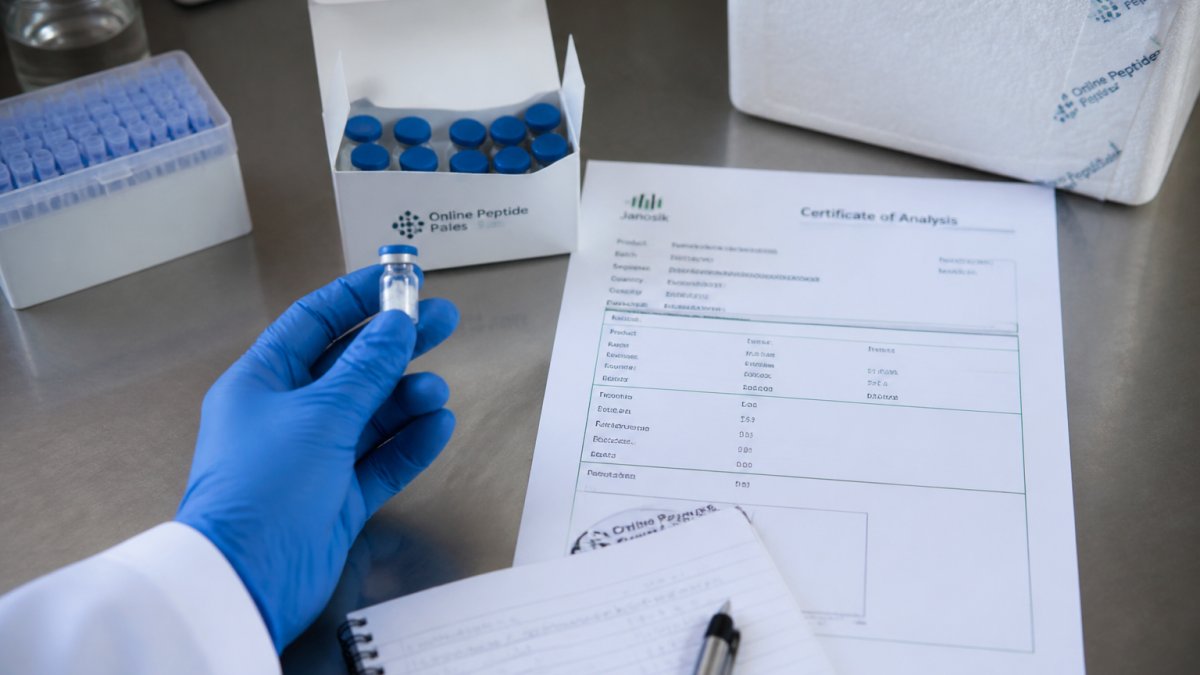
A certificate of analysis (COA) is the primary document establishing what a peptide sample contains. It reports analytical test results, purity percentage, identity confirmation, and contamination screening, performed by a laboratory. However, a COA alone does not prove reliability. The document's origin, the testing scope, and batch-specific traceability determine its actual value.
The role of batch-specific COAs in vendor assessment
Batch-specific COAs tie analytical results to the exact vial you receive, not to a generic product formulation. This specificity matters because peptide synthesis introduces batch-to-batch variability.
Reliable vendors provide batch-specific documentation as standard practice. Each vial ships with its own COA referencing the lot number, synthesis date, and testing date. This traceability prevents substitution and allows researchers to correlate their results to the exact material tested.
FDA guidance on pharmaceutical testing and documentation
Batch-Specific Peptide Testing: Beyond Purity Claims
Purity percentage alone is insufficient for vendor assessment. Two peptides both labeled "95% pure" may contain different contaminants, degradation products, or synthetic byproducts. The analytical methods used and the scope of testing reveal what "purity" actually means in each case.
HPLC and mass spectrometry in identity confirmation
High-performance liquid chromatography (HPLC) separates peptide components by molecular properties and quantifies each peak. This method establishes purity but does not confirm molecular identity.
Mass spectrometry measures molecular weight directly, providing definitive identity confirmation. When a vendor's COA includes both HPLC (for purity) and mass spectrometry (for identity), the testing scope is comprehensive.
Reliable vendors list the specific analytical methods on their COAs.
Testing scope: sterility, endotoxins, and contamination
Beyond purity and identity, research-grade peptides require screening for sterility and endotoxin levels, depending on the intended use. Sterility testing detects bacterial and fungal contamination. Endotoxin testing measures bacterial lipopolysaccharide, which triggers immune responses even in minute quantities.
A COA that omits these tests suggests the vendor either did not perform them or did not consider them necessary.
USP standards for peptide purity and testing protocols
Critical Peptide Vendor Due Diligence Questions to Ask
Evaluating peptide vendor reliability requires direct questions about sourcing, testing independence, and accountability. A vendor's willingness to answer these questions, and the specificity of the answers, reveals their commitment to transparency.
Sourcing transparency and manufacturer verification
Ask: "Where are your peptides manufactured, and can you provide documentation of the manufacturer's registration and compliance status?"
Reliable vendors can name their manufacturers and provide verification. Online Peptide Sales sources directly from manufacturers in China, a practice that reduces intermediaries and improves traceability.
Request documentation showing the manufacturer's facility registration, quality certifications, and any third-party audits.
Testing independence and third-party laboratory credentials
Ask: "Are your COAs generated by an independent third-party laboratory, or by your own in-house facility?"
Independent testing carries more weight than internal testing because the laboratory has no financial incentive to report inflated purity or overlook contamination.
When a vendor offers Janoshik-verified reports, that represents external validation. Researchers can cross-reference the batch number and lot information directly with Janoshik's records, adding another layer of verification.
Liability, replacement guarantees, and complaint handling
Ask: "What happens if I receive a peptide that does not match the COA specifications? Do you offer replacement or refund guarantees?"
Reliable vendors stand behind their products with explicit replacement or refund policies. This commitment signals confidence in quality control.
Additionally, ask how the vendor handles complaints and corrective actions. A mature vendor tracks issues, investigates root causes, and communicates findings to customers.
Best practices for supplier quality management in research institutions
Research Peptide Shipping and Packaging Standards
Shipping conditions directly impact peptide stability and integrity. Improper packaging can introduce contamination, temperature damage, or physical degradation before the vial reaches the laboratory.
Secure export packaging and tamper-evidence controls
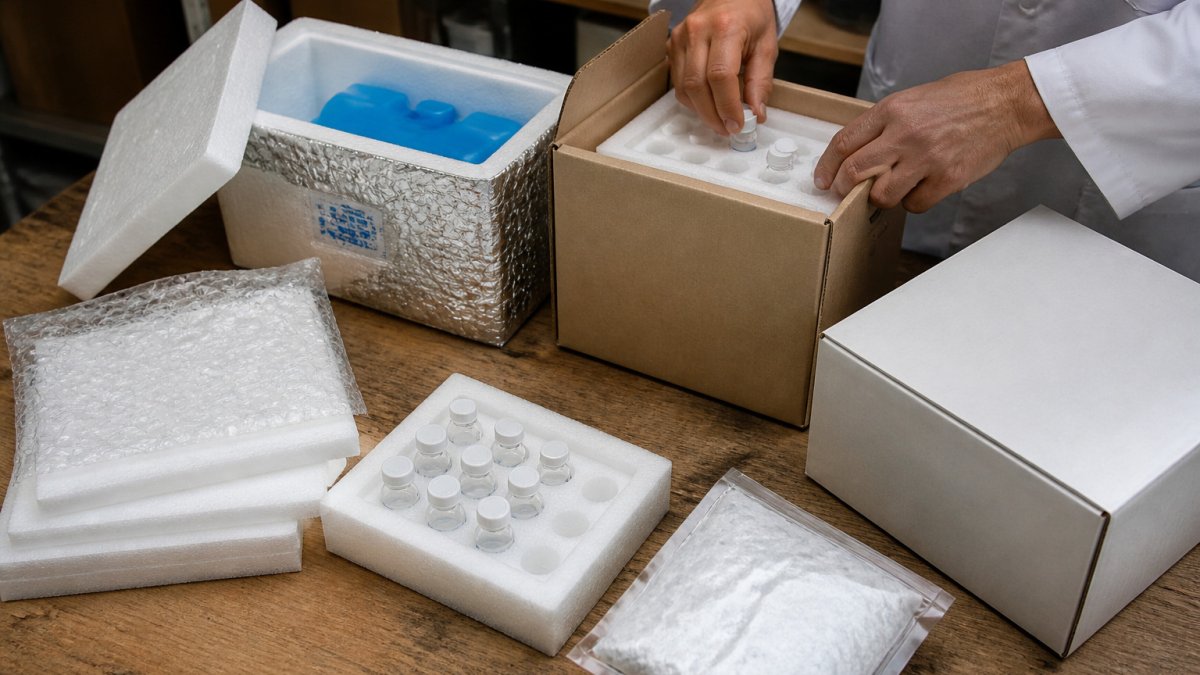
Reliable vendors use secure export packaging designed for international transit. This includes tamper-evident seals, protective padding, and climate-controlled containers when appropriate.
Online Peptide Sales provides secure export packaging as standard, a practice that protects both the product and the customer's import compliance.
Ask vendors: "What packaging materials do you use, and how do you ensure tamper-evidence during international transit?"
Customs documentation and delivery timeline transparency
Ask: "What customs documentation do you provide, and what is your typical delivery timeline to my location?"
Reliable vendors prepare accurate customs paperwork that accurately describes the shipment contents and intended research use. Vague or misleading documentation can cause delays or confiscation at border control.
Delivery timelines vary by destination, carrier, and customs processing. A vendor should provide realistic estimates based on your location and offer tracking information.
Supply Chain Traceability and Storage Controls
A reliable vendor maintains temperature-controlled storage, uses inert packaging to prevent oxidation, and documents storage conditions on the COA or shipping paperwork. This information allows researchers to assess whether the peptide arrived in optimal condition or may have been compromised during transit.
Temperature, light, and moisture controls
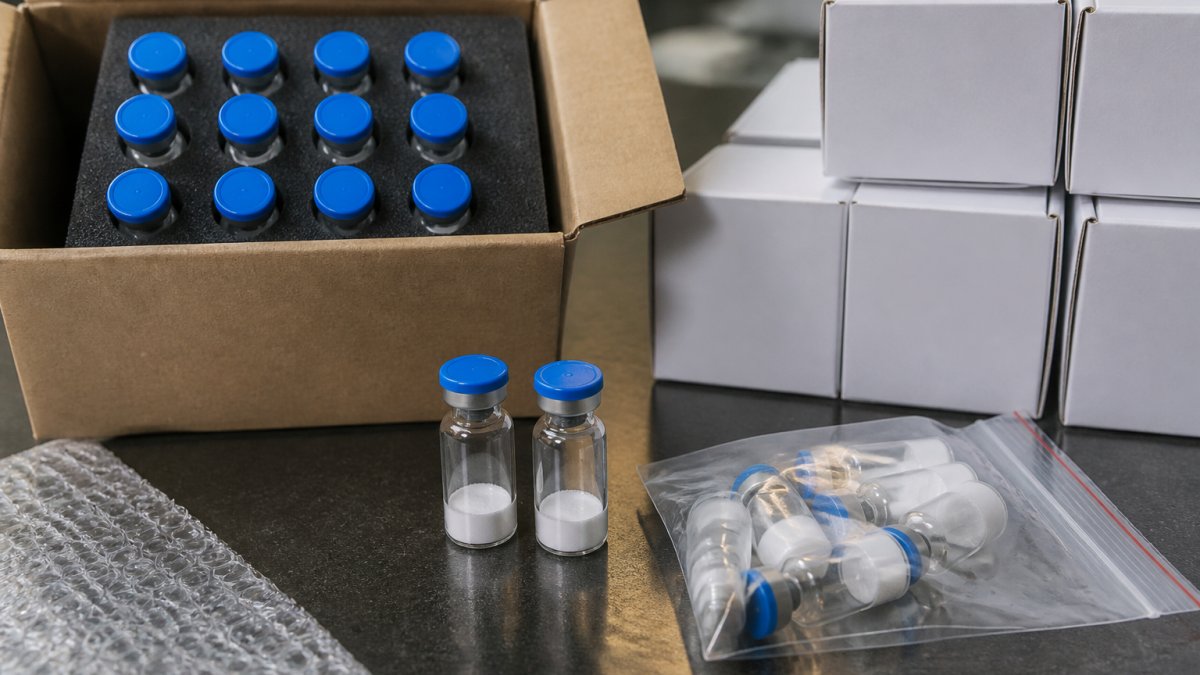
Lyophilized (freeze-dried) peptides are generally more stable than solutions, but they are not indestructible. Common practice is to store lyophilized material cold and dry, protected from light, with desiccant to limit moisture uptake.
Ask vendors about their storage protocols: the temperature range they maintain, humidity control, light protection, and how long peptides remain stable under their storage conditions.
Cold-chain and shipping controls that protect integrity
Shipping is where storage discipline is most often lost. Ask how the vendor manages temperature during transit: whether cold packs or insulated containers are used where appropriate, how long the packaging holds temperature, and what happens if a shipment is delayed in transit or held at customs.
Packaging should also protect against physical and environmental damage, tamper-evident seals, protective padding, and containers that resist accidental opening during handling. Online Peptide Sales provides secure export packaging as standard, a practice that protects both the product and the customer's import compliance.
Traceability after testing
A COA documents a sample at a point in time. Traceability means you can connect that tested sample to the vial you receive and to the conditions it experienced in between. Look for documentation that links the lot number to storage and shipping records, and keep your own receiving records, arrival condition, packaging integrity, and any temperature indicators, so you can distinguish a material problem from a handling problem if results later look off.
Peptide stability and storage guidelines for research laboratories
Building Your Vendor Scorecard: A Practical Framework
Systematic vendor evaluation requires a weighted scoring approach. Different criteria carry different importance depending on your research needs, but a consistent framework ensures objective comparison.
Create a scorecard addressing these categories:
| Criterion | Weight | Assessment Method | Red Flags |
|---|---|---|---|
| Batch-specific COAs | 25% | Request sample COA; verify lot number and testing date | Generic product sheets only; missing lot numbers |
| Testing independence | 20% | Verify third-party laboratory credentials | In-house testing only; no ISO certification |
| Sourcing transparency | 20% | Request manufacturer documentation | Cannot name manufacturer; no facility verification |
| Shipping security | 15% | Review packaging standards and customs procedures | Standard mail packaging; vague delivery timelines |
| Accountability | 10% | Confirm replacement/refund policy and complaint process | No written guarantee; dismissive of quality concerns |
| Communication responsiveness | 10% | Email vendor with detailed questions; measure response time | Delayed or evasive responses; unwillingness to answer |
Score each vendor 1-5 on each criterion (1 = unacceptable, 5 = excellent), multiply by weight, and sum the total. Vendors scoring above 4.0 typically meet research-grade standards.
Vendor evaluation frameworks for pharmaceutical and research supply chains
Conclusion: Making Your Vendor Decision
Peptide vendor reliability is not a single attribute, it's the sum of transparent sourcing, independent testing, secure shipping, and genuine accountability.
Online Peptide Sales makes traceability and verification central to their operations. They provide Janoshik-verified batch reports, source directly from registered manufacturers, and offer secure export packaging with clear delivery timelines.
Your vendor scorecard becomes a reusable tool for future peptide procurement.
Frequently Asked Questions
What should researchers check before ordering research peptides?
Before placing an order, verify that the vendor provides batch-specific certificates of analysis, confirms direct sourcing from legitimate manufacturers, and offers independent third-party laboratory testing. Ask about their replacement guarantee, customs handling, and whether they can provide traceability documentation for your batch. Check how long they have been operating and review their complaint handling process. Confirm the testing scope includes identity verification (HPLC and mass spectrometry), not just purity percentage.
How can a researcher assess a peptide batch report?
Review the batch-specific certificate of analysis for lot number, analytical methods used (HPLC, mass spectrometry), molecular weight confirmation, purity percentage, and test date. Verify the testing laboratory is independent and credentialed. Cross-check that the reported lot number matches your shipment documentation. Look for test scope details: does it include sterility and endotoxin testing, or only purity? Confirm the COA includes the sample identification method and explains any out-of-specification results. Request clarification if results lack detail or use vague language.
Why does batch-specific testing matter for research peptides?
Batch-specific peptide testing ensures that the exact vials you receive have been analyzed individually, not assumed to match a generic product specification. Each batch may have different manufacturing conditions, and contamination or identity issues can occur at any stage. Batch-specific testing with lot number traceability proves that your peptide meets stated specifications and has not been substituted or degraded. This is critical for reproducible research and regulatory compliance. A vendor offering only general product certifications rather than batch-specific documentation cannot guarantee what you actually received.
What information should a peptide certificate of analysis include?
A complete peptide certificate of analysis must include: batch/lot number, product name and molecular weight, analytical methods (HPLC, mass spectrometry), purity percentage and identity confirmation, test date and expiration, testing laboratory name and credentials, sample identification method, test scope (sterility, endotoxins, contamination screening), any out-of-specification results with explanations, and reference standards used. It should also include the vendor's contact information and a statement confirming research-use-only classification. Batch-specific COAs should reference the exact vials received, not generic product data.
How should research peptides be packaged and shipped?
Research peptides should arrive in secure export packaging with tamper-evident seals to prevent tampering during transit. Vendors should use major carriers with tracking and provide customs documentation to avoid border delays. Packaging should protect peptides from temperature extremes and light exposure during transport. Verify the vendor's timeline estimates are realistic for your destination and that they handle customs clearance proactively. Ask whether they offer delivery guarantees (replacement or refund if shipment is lost or damaged). Confirm that storage instructions are included and that the vendor tracks temperature exposure during shipping when applicable.
What does research use only mean for peptide products?
Research use only indicates that the peptide is intended for laboratory investigation and controlled scientific studies, not for human consumption, clinical application, or in vivo use. This classification is essential for regulatory compliance and distinguishes legitimate research supply from unauthorized medical or commercial use. Vendors selling research-use-only peptides should clearly state this restriction in product documentation and require customers to confirm their intended use. This protects both the supplier and the researcher by establishing the proper legal and ethical framework for the transaction.
What questions should researchers ask about peptide storage and handling?
Ask the vendor for detailed storage instructions: temperature range (typically 2-8°C or -20°C), light protection requirements, humidity controls, and shelf life after receipt. Inquire whether they provide storage recommendations specific to your climate or facility type. Ask if they track temperature exposure during shipping and whether they use cold-chain packaging. Request information on stability data and whether the batch report includes stability testing results. Clarify whether the vendor offers guidance on proper handling procedures to maintain peptide integrity, and ask how long they stand behind the product's specifications after delivery if storage conditions are followed.