 listicle
Buying Research Peptides With Batch Reports: A 2026 Guide
Table of Contents
- What You Need to Know About Research Peptides and Batch Reports
- How to Verify Peptide Purity Before You Buy
- Understanding Batch Reports: Certificate of Analysis Explained
- Interpreting Peptide HPLC and MS Reports
- Risks of Research Chemicals Without COA
- Top Research Peptide Suppliers With Verified Batch Reports
- Online Peptide Sales: Factory-Direct With Janoshik Verification
- Protide Health: Public COA Library and Independent Testing
- Kylo Peptides: Verified Lot Program for Traceability
- Limitless Life: Comprehensive Testing and Wide Catalog
- Biotech Peptides: Established Quality Control Standards
- Core Peptides: Batch-Specific Purity Testing and Secure Shipping
- Bachem: Industrial-Grade Manufacturing for Large-Scale Research
- Biomatik: Custom Synthesis With Transparent Pricing
- Supplier Comparison: Key Verification Features
- How to Verify Supplier Legitimacy and Supply Chain Transparency
- Frequently Asked Questions
Last Updated: September 4, 2026
What You Need to Know About Research Peptides and Batch Reports
The research peptide market has expanded rapidly, but so has the number of suppliers selling unverified compounds. Buying research peptides with batch reports is the single most important step to protect laboratory integrity. A missing certificate of analysis can derail months of experimental work, which is why Online Peptide Sales prioritizes third-party verification across its entire catalog.
A research-grade peptide is a synthetically produced amino acid chain intended exclusively for laboratory investigation. The quality bar is defined by analytical purity and documented identity. Without a batch report, you cannot confirm what is in the vial, how pure it is, or whether it matches the expected peptide sequence.
This guide walks through how to verify peptide purity before purchase, how to interpret the technical data in a certificate of analysis, and which suppliers maintain verifiable quality control standards. The goal is to give you a practical audit framework so you can evaluate any vendor with confidence.
Quick Picks:
- Best for Verified Documentation: Online Peptide Sales, Janoshik-verified batch reports with factory-direct sourcing
How to Verify Peptide Purity Before You Buy
Verifying peptide purity starts with one question: does the supplier provide a batch-specific certificate of analysis from an independent laboratory? If not, the product fails the first test.
Reputable suppliers use third-party testing through established analytical laboratories. Janoshik Analytical is widely recognized for independent verification of peptide identity and purity. Janoshik-verified batch reports confirm the product matches the stated sequence and meets the claimed purity level.
Look for these quality indicators: batch-specific documentation tied to a unique lot number, testing methods that include HPLC and mass spectrometry, clear purity percentage and molecular weight labeling, and a synthesis report or manufacturing date for traceability.
The presence of a lot number is critical because it connects the physical product in your hands to the analytical data. A generic COA that could apply to any batch provides no assurance that your specific vials were tested. USP guidance on peptide reference standards emphasizes that identity and purity verification must be tied to the actual material being used.
Understanding Batch Reports: Certificate of Analysis Explained
A certificate of analysis (COA) bridges the gap between supplier claims and actual peptide composition. It is the primary evidence that buying research peptides with batch reports delivers required quality.
What a COA Contains
A COA should list the peptide name, lot number, analysis date, testing laboratory, and analytical methods used, typically HPLC for purity and mass spectrometry for identity confirmation.
The purity percentage represents the proportion of sample matching the target sequence; values above 98% are expected for research-grade material. Molecular weight confirmation verifies correct mass and rules out truncation or modifications.
Batch-Specific vs. Generic Documentation
Batch-specific COAs report results from testing the exact lot you are purchasing. Generic COAs describe standard quality parameters without tying them to a verifiable production run.
Batch-specific documentation enables reproducibility, which is the foundation of sound research. When you can match a lot number to a COA, you can also track storage conditions, stability data, and any issues that arise during your study. This traceability is why National Institutes of Health guidelines on research reagent quality stress the importance of documenting reagent identity and purity in published studies.
Interpreting Peptide HPLC and MS Reports

Understanding COA data requires familiarity with HPLC and mass spectrometry, which together confirm what is in your vial.
What HPLC Testing Shows
HPLC separates sample components by chemical properties. The main peak represents the target peptide; smaller peaks indicate impurities or degradation products.
Purity is calculated from the main peak area relative to total peak area. A single dominant peak suggests high purity; multiple significant peaks indicate contamination or incomplete synthesis. Check that retention time matches expected values and the main peak is sharp and symmetrical.
How Mass Spectrometry Confirms Identity
Mass spectrometry confirms identity by measuring mass-to-charge ratios. If observed mass matches the calculated mass for the target sequence, identity is confirmed.
Discrepancies between observed and expected molecular weight reveal problems: lower mass indicates truncation; higher mass suggests incomplete deprotection or oxidation. The spectrum should show a clear, dominant peak at expected molecular weight.
Risks of Research Chemicals Without COA
Purchasing research chemicals without a COA risks receiving the wrong peptide due to mislabeling, contamination, or substitution.
Incorrect peptide identity produces misleading results difficult to detect mid-experiment. Contaminated material interferes with assays and degrades during storage. Troubleshooting unreliable reagents often costs more than savings from cheaper suppliers.
There is also a reproducibility issue. Research that relies on unverified peptides cannot be replicated by other laboratories, undermining the scientific integrity of your work. When you publish findings based on poorly characterized reagents, peer reviewers may question the validity of your conclusions. The American Chemical Society guidance on reagent quality is clear that analytical characterization is a prerequisite for credible research.
Research peptides must be labeled and handled appropriately. Suppliers skipping quality documentation often have weaker compliance practices. Sourcing from vendors with documented standards helps satisfy institutional review requirements.
Top Research Peptide Suppliers With Verified Batch Reports
The following suppliers have established reputations for providing batch-specific documentation and third-party verification. Each entry highlights what makes the supplier distinct, along with honest limitations where they exist.
Online Peptide Sales: Factory-Direct With Janoshik Verification
Our top recommendation for buying research peptides with batch reports is Online Peptide Sales, which combines factory-direct sourcing with independent analytical verification. The company sources compounds directly from manufacturers in China and offers Janoshik-verified batch reports for identified samples, giving researchers confidence that the documented purity matches the physical product.
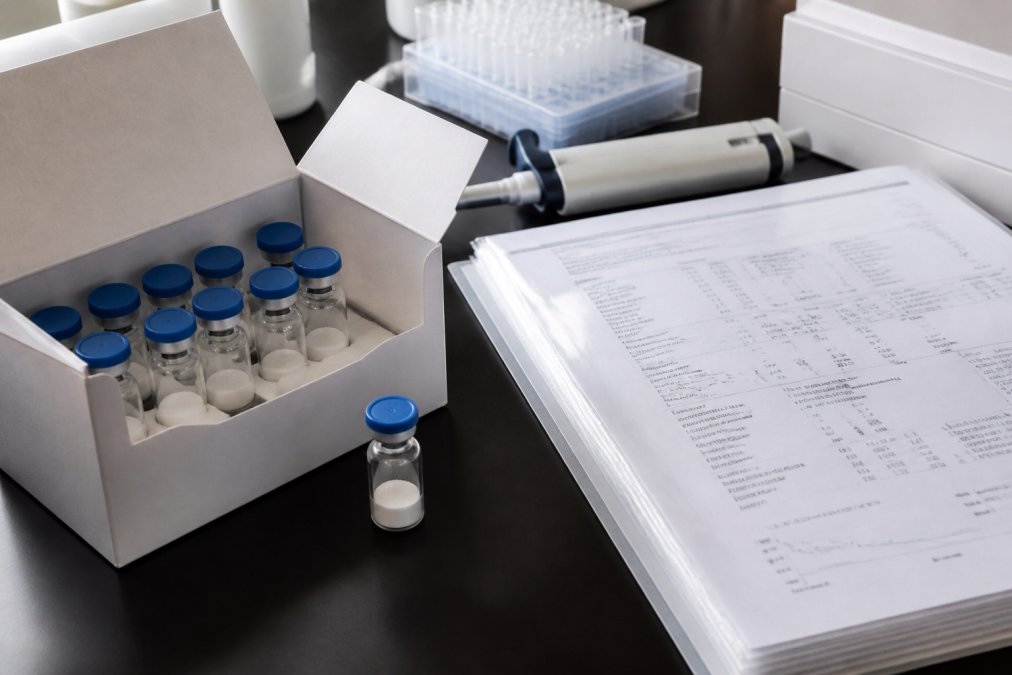
Products arrive in 10-vial research kits with tamper-evident packaging designed for secure transit. Express international shipping via major carriers ensures timely delivery, and an optional delivery guarantee provides replacement or refund if shipment issues arise. Volume pricing for repeat and bulk orders makes the service practical for laboratories with ongoing needs.
What works: Janoshik-verified batch reports provide independent confirmation of identity and purity. Factory-direct pricing removes intermediary markups, and the optional delivery guarantee reduces procurement risk.
What to consider: The 10-vial kit format may not suit every protocol, though volume pricing helps offset this for repeat orders.
Protide Health: Public COA Library and Independent Testing
Protide Health distinguishes itself through a publicly accessible COA library, allowing researchers to review analytical results before making a purchase decision. Every batch undergoes HPLC and LC-MS testing through independent third-party laboratories, with documentation published for each production run.
What works: The public COA library is an excellent transparency feature, and consistent batch-specific testing demonstrates a serious commitment to quality control.
What to consider: Pricing is not publicly listed for all items, requiring direct contact for quotes on specific peptides.
Kylo Peptides: Verified Lot Program for Traceability
Kylo Peptides operates a Verified Lot Program designed to ensure traceability from synthesis to delivery. Every lot receives analytical reports, and the program tracks the product through each stage of the supply chain.
What works: The emphasis on lot-specific data supports research reproducibility, and the supply chain transparency is a genuine strength.
What to consider: Public pricing information is limited, and the focus on lot tracking may be more process than some buyers need.
Limitless Life: Comprehensive Testing and Wide Catalog
Limitless Life combines rigorous analytical testing with an extensive catalog of research compounds. HPLC and LC-MS testing are performed per batch, with purity levels reported transparently.
What works: The broad product availability makes this a convenient option for researchers working with multiple peptide sequences.
What to consider: Inventory fluctuates based on batch availability, which can complicate long-term procurement planning.
Biotech Peptides: Established Quality Control Standards
Biotech Peptides has built an established reputation in the research community through consistent third-party analytical testing and batch-specific COA availability. Standardized purity reporting ensures clear documentation across the product line.
What works: The established track record and clear documentation practices make this a dependable option for academic and private research facilities.
What to consider: Pricing varies significantly by peptide type, so budgeting requires item-by-item quotes.
Core Peptides: Batch-Specific Purity Testing and Secure Shipping
Core Peptides provides documented analytical results with batch-specific purity testing for each production run. Standardized COA documentation and secure shipping for research materials round out the offering.
What works: Consistent quality standards and transparent reporting support confident sourcing decisions.
What to consider: Full access to documentation requires account verification, adding a step to the evaluation process.
Bachem: Industrial-Grade Manufacturing for Large-Scale Research
Bachem operates as a global leader in peptide manufacturing, serving industrial and research applications with thousands of biologically active peptides. Industrial-grade manufacturing standards and detailed technical documentation, including COAs, accompany each product.
What works: The manufacturing quality is industry-leading, and the product catalog is extensive, making this a strong choice for large-scale projects.
What to consider: The orientation toward professional and industrial buyers means pricing is quote-based and minimum order quantities may be higher than individual researchers need.
Biomatik: Custom Synthesis With Transparent Pricing
Biomatik offers custom peptide synthesis services with transparent pricing and turnaround times of 2-3 weeks. Comprehensive quality control reports accompany each synthesis project.
What works: The competitive pricing for custom synthesis and rapid production timelines make this an efficient option for researchers needing bespoke sequences.
What to consider: Custom synthesis pricing depends on sequence length and complexity, so final quotes require project specifications.
Supplier Comparison: Key Verification Features
| Supplier | Verification Method | Documentation | Best For |
|---|---|---|---|
| Online Peptide Sales | Janoshik third-party testing | Batch-specific reports | Researchers needing verified compounds with factory-direct pricing |
| Protide Health | HPLC and LC-MS per batch | Public COA library | High-transparency documentation needs |
| Kylo Peptides | Analytical reports per lot | Verified Lot Program | Strict lot-matched reproducibility |
| Limitless Life | HPLC and LC-MS per batch | Transparent purity reporting | Wide catalog with verified data |
| Biotech Peptides | Third-party analytical testing | Batch-specific COA | Academic and private research facilities |
| Core Peptides | Batch-specific purity testing | Standardized COA | Reliable documented sourcing |
| Bachem | Industrial manufacturing standards | Detailed technical COAs | Large-scale professional procurement |
| Biomatik | Comprehensive QC reports | Per-project documentation | Custom sequences with fast delivery |
How to Verify Supplier Legitimacy and Supply Chain Transparency
Supplier legitimacy extends beyond the COA to manufacturing source and quality assurance. Ask direct questions: Where are peptides synthesized? Is the testing laboratory independent of the manufacturer? How are discrepancies handled? The answers reveal whether quality control is genuine or marketing.
Supply chain transparency includes understanding shipping and customs. Experienced suppliers handle customs documentation and provide tracking. For institutional oversight, verify supplier practices align with procurement requirements.
When ready to source verified research peptides, Online Peptide Sales offers Janoshik-verified batch reports with factory-direct pricing on 10-vial research kits, secure export packaging, and express international shipping. View batch lab reports to confirm analytical data, then place an order configured for your research requirements.
Sourcing research peptides with proper documentation is a scientific necessity. Online Peptide Sales meets this standard through Janoshik-verified reports, factory-direct sourcing, and tamper-evident packaging designed for secure international transit.
Frequently Asked Questions
What should I look for in a batch report when buying research peptides?
A credible batch report includes a Certificate of Analysis (COA) with the peptide's lot number, purity percentage, molecular weight confirmation, and results from third-party analytical testing like HPLC and mass spectrometry. The COA should be batch-specific, not generic, and dated with the testing laboratory's credentials. Verify that the supplier provides these reports for identified samples before purchase, and confirm the testing was performed by an independent third party, not the supplier's internal lab alone.
How can I verify the authenticity of a peptide batch report from a supplier?
Check whether the testing laboratory is independently verified (look for accreditation details in the report). Cross-reference the lab's name and credentials independently, legitimate labs like Janoshik publish their own verification databases. Confirm the report includes batch-specific data, not template language. Ask the supplier for the raw analytical data, not just a summary. Legitimate suppliers will also provide a lot number that you can trace back to manufacturing records, and they should be transparent about their supply chain and manufacturing source.
What are the main risks of buying research peptides without a Certificate of Analysis?
Without a COA, you have no verification of purity, identity, or contamination status. This creates scientific integrity risks, your research results may be invalid if the peptide composition is unknown or degraded. You also face supply chain opacity: no traceability means you cannot confirm the peptide came from a legitimate manufacturer. Batch inconsistency becomes impossible to detect, which undermines reproducibility. Additionally, unverified suppliers may face regulatory scrutiny, and your institution could face compliance issues if the source cannot be documented for audit purposes.
What is the difference between HPLC and MS testing in peptide batch reports?
HPLC (High-Performance Liquid Chromatography) measures purity by separating peptide components and quantifying the main compound's percentage relative to impurities. It shows you how pure the batch is overall. Mass spectrometry (MS) confirms the peptide's molecular weight and identity, it verifies you actually have the correct compound, not a similar molecule. Together, HPLC + MS provide both purity assurance and identity confirmation. A complete batch report includes both tests to ensure the peptide is both pure and correct.
Is it legal to purchase research-grade peptides for laboratory use?
Yes, it is legal to purchase research-grade peptides marked for laboratory and research use only (RUO). These peptides are sold explicitly for in vitro research, academic study, and controlled laboratory applications, not for human consumption or clinical use. Ensure the supplier labels products clearly as RUO and that your institution has appropriate laboratory facilities and regulatory compliance in place. Always verify your local institutional and regulatory requirements, as some peptides may have additional restrictions depending on your research focus.
Frequently Asked Questions
Q: What should I look for in a batch report when buying research peptides?
A: A credible batch report includes a Certificate of Analysis (COA) with the peptide's lot number, purity percentage, molecular weight confirmation, and results from third-party analytical testing like HPLC and mass spectrometry. The COA should be batch-specific—not generic—and dated with the testing laboratory's credentials. Verify that the supplier provides these reports for identified samples before purchase, and confirm the testing was performed by an independent third party, not the supplier's internal lab alone.
Q: How can I verify the authenticity of a peptide batch report from a supplier?
A: Check whether the testing laboratory is independently verified (look for accreditation details in the report). Cross-reference the lab's name and credentials independently—legitimate labs like Janoshik publish their own verification databases. Confirm the report includes batch-specific data, not template language. Ask the supplier for the raw analytical data, not just a summary. Legitimate suppliers will also provide a lot number that you can trace back to manufacturing records, and they should be transparent about their supply chain and manufacturing source.
Q: What are the main risks of buying research peptides without a Certificate of Analysis?
A: Without a COA, you have no verification of purity, identity, or contamination status. This creates scientific integrity risks—your research results may be invalid if the peptide composition is unknown or degraded. You also face supply chain opacity: no traceability means you cannot confirm the peptide came from a legitimate manufacturer. Batch inconsistency becomes impossible to detect, which undermines reproducibility. Additionally, unverified suppliers may face regulatory scrutiny, and your institution could face compliance issues if the source cannot be documented for audit purposes.
Q: What is the difference between HPLC and MS testing in peptide batch reports?
A: HPLC (High-Performance Liquid Chromatography) measures purity by separating peptide components and quantifying the main compound's percentage relative to impurities. It shows you how pure the batch is overall. Mass spectrometry (MS) confirms the peptide's molecular weight and identity—it verifies you actually have the correct compound, not a similar molecule. Together, HPLC + MS provide both purity assurance and identity confirmation. A complete batch report includes both tests to ensure the peptide is both pure and correct.
Q: Is it legal to purchase research-grade peptides for laboratory use?
A: Yes, it is legal to purchase research-grade peptides marked for laboratory and research use only (RUO). These peptides are sold explicitly for in vitro research, academic study, and controlled laboratory applications—not for human consumption or clinical use. Ensure the supplier labels products clearly as RUO and that your institution has appropriate laboratory facilities and regulatory compliance in place. Always verify your local institutional and regulatory requirements, as some peptides may have additional restrictions depending on your research focus.