 how-to
Can You Mix Different Peptides in One Vial? Safety Guide
Table of Contents
- Can You Mix Different Peptides in One Vial? The Short Answer
- Vial Mixing vs. Syringe Mixing: Why They Are Not the Same
- Peptide Compatibility: What Determines Whether Two Compounds Can Share a Vial
- Peptide Stability After Reconstitution: How Mixing Changes the Clock
- Sterility and Contamination Risks When Combining Peptides
- Research Peptide Storage Guidelines for Multi-Peptide Protocols
- Peptide Vial Labeling Best Practices for Mixed or Separate Vials
- What to Do After Accidental Mixing and When to Discard a Vial
- Frequently Asked Questions
Last Updated: October 13, 2026
Can You Mix Different Peptides in One Vial? The Short Answer
The short answer is no. Can you mix different peptides in one vial? For research purposes, the safe default is one peptide per vial. Combining compounds in a single vial creates real problems with stability, sterility, and dosing accuracy.
This matters because peptide research is growing fast. A 2023 review in the Journal of Peptide Science noted that interest in multi-peptide protocols has climbed sharply, yet published compatibility data for most pairings simply does not exist. Journal of Peptide Science review on peptide stability
Without that data, a researcher has no way to know whether two peptides will stay stable together. Degradation can start within hours, and once mixed, the vial is compromised for both compounds.
Below, this guide breaks down the difference between vial mixing and syringe mixing, what drives compatibility, and what to do after an accidental mix.
Vial Mixing vs. Syringe Mixing: Why They Are Not the Same
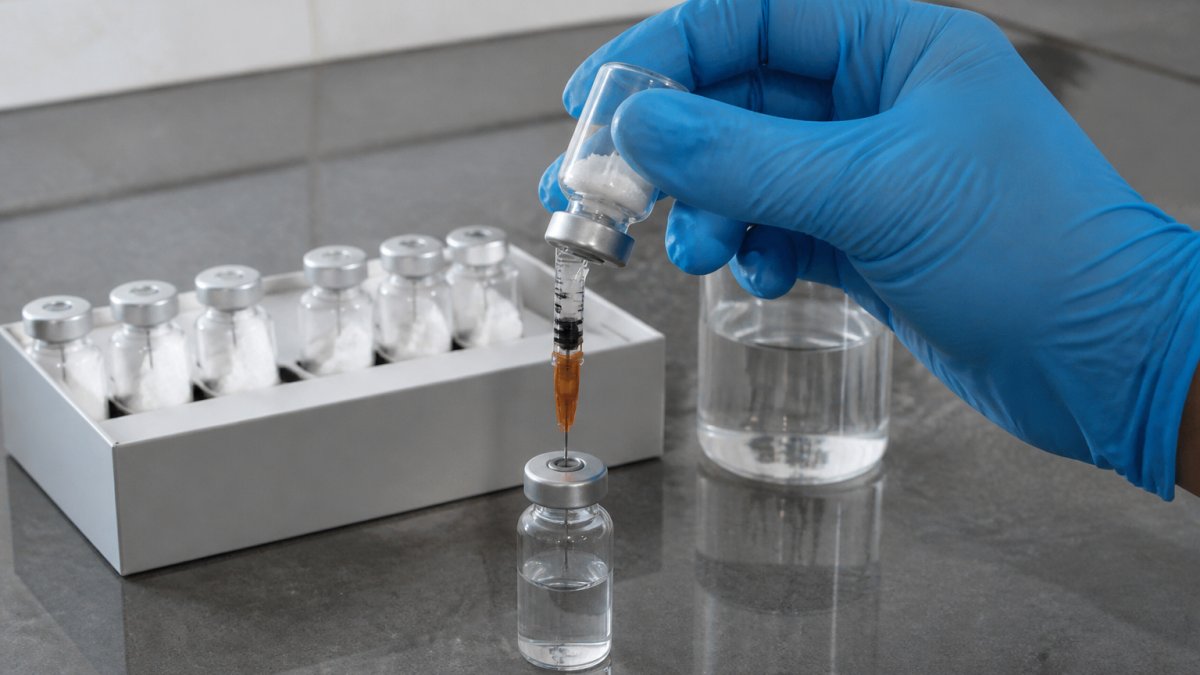
Vial mixing means combining two peptides into one container for storage. Syringe mixing means drawing two peptides into one barrel for a single injection.
These are not equivalent. A syringe mix is a one-time event. A vial mix changes the entire container's chemistry for its full shelf life.
Here is the key distinction:
| Factor | Vial Mixing | Syringe Mixing |
|---|---|---|
| Duration | Weeks to months | Seconds to minutes |
| Reversibility | Permanent | One-time only |
| Contamination risk | Affects whole vial | Affects one dose |
| Dosing control | Lost for both peptides | Still separate until drawn |
A common mistake is assuming that because two peptides are safe to inject on the same day, they are safe to store together. The two questions are unrelated.
Peptide Compatibility: What Determines Whether Two Compounds Can Share a Vial
Peptide compatibility is not a simple yes-or-no property. It is product- and formulation-specific, depending on factors that vary from one compound to the next.
Peptide compatibility is the degree to which two compounds can coexist in solution without reacting, degrading, or destabilizing each other. There is no universal rule or chart that applies to all peptides.
The main factors that decide this include:
- pH requirements. Each peptide has an ideal pH range. Mixing two peptides with different ranges pushes at least one out of its stable zone.
- Isoelectric point. When pH nears a peptide's isoelectric point, it becomes less soluble and can precipitate.
- Charge interactions. Oppositely charged peptides can bind to each other and form aggregates.
- Preservatives and buffers. Some formulations contain agents that react poorly with other peptides.
- Concentration. Higher concentrations raise the odds of aggregation and precipitation.
- Excipients and stabilizers. Sugars, salts, and surfactants added to keep one peptide stable can destabilize another.
How Compatibility Is Actually Verified
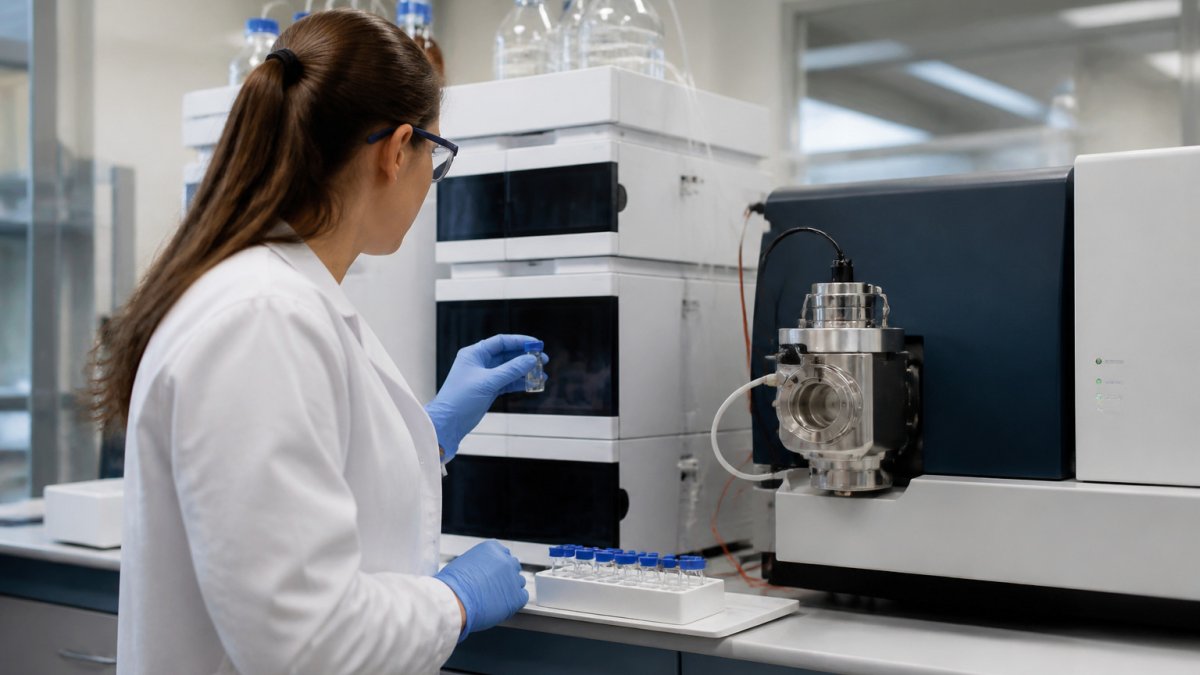
Compatibility is confirmed through formulation testing, not appearance or assumption. In pharmaceutical development, that testing typically includes reversed-phase high-performance liquid chromatography (RP-HPLC) to measure purity loss, size-exclusion chromatography (SEC) to detect aggregation, and mass spectrometry to identify degradation products.
That testing is formulation-specific. Results for one peptide pair, at one concentration, in one buffer, at one temperature, do not transfer to a different pair or even to the same pair under different conditions. This is why published compatibility data for most research peptide pairings does not exist.
Where to Look for Compatibility Evidence
When you need to know whether two compounds can share a vial, work from documented sources rather than guesswork:
- Prescribing information and product labeling. For approved medicines, the manufacturer's labeling is the authoritative source on whether a product may be combined with another.
- A licensed pharmacist. A pharmacist can review formulation data and flag known incompatibilities.
- The product's manufacturer or supplier. For research compounds, ask whether any compatibility or stability testing has been performed on the specific pairing.
- Peer-reviewed formulation literature. Published stability-indicating studies exist for some drug combinations, but they are written about specific formulations, not about consumer peptide products generally.
A common pattern in the literature is that compatibility findings from one formulation are overgeneralized to unrelated products. Vaccine-formulation research, for example, studies specific adjuvants and antigens under tightly controlled conditions. Those results do not describe how two unrelated research peptides will behave in a shared vial.
Why Visual Appearance Cannot Establish Safety
A clear, colorless solution does not prove that a mixture is sterile, stable, or potent. Aggregation, hydrolysis, and oxidation can all progress while the solution still looks normal. Visual inspection is not an analytical method and cannot substitute for testing.
In practice, verifying compatibility requires lab testing, not guesswork. There is no shortcut. Even peptides with similar structures can behave differently once combined.
Peptide Stability After Reconstitution: How Mixing Changes the Clock
Peptide stability after reconstitution is already a moving target. Mixing two peptides makes it worse.
Once a peptide is reconstituted, its stability clock starts. Temperature, light, and pH all affect how fast it degrades.
Stability data for single peptides does not transfer to mixtures. A peptide that holds up well alone may break down quickly when paired with the wrong compound.
Signs of degradation to watch for:
- Cloudiness or haze in the solution
- Visible particles or precipitate
- Color change from the original
- A gel-like texture
These signs are unreliable on their own, since a peptide can degrade with no visible change at all. Storage conditions and time matter more than appearance.
Sterility and Contamination Risks When Combining Peptides
Sterility and contamination risks rise every time a vial is opened. Combining two peptides doubles the number of puncture events and handling steps.
Mixing two peptides into one vial means:
- Two reconstitution steps instead of one
- More needle punctures through the septum
- More handling by the researcher
- A larger volume that takes longer to draw
A single contaminated vial can compromise weeks of work.
If a protocol truly requires two peptides on the same day, use separate vials and separate syringes. This keeps each vial sterile and each dose measurable. It also preserves the option to store one peptide while the other is in use.
Research Peptide Storage Guidelines for Multi-Peptide Protocols
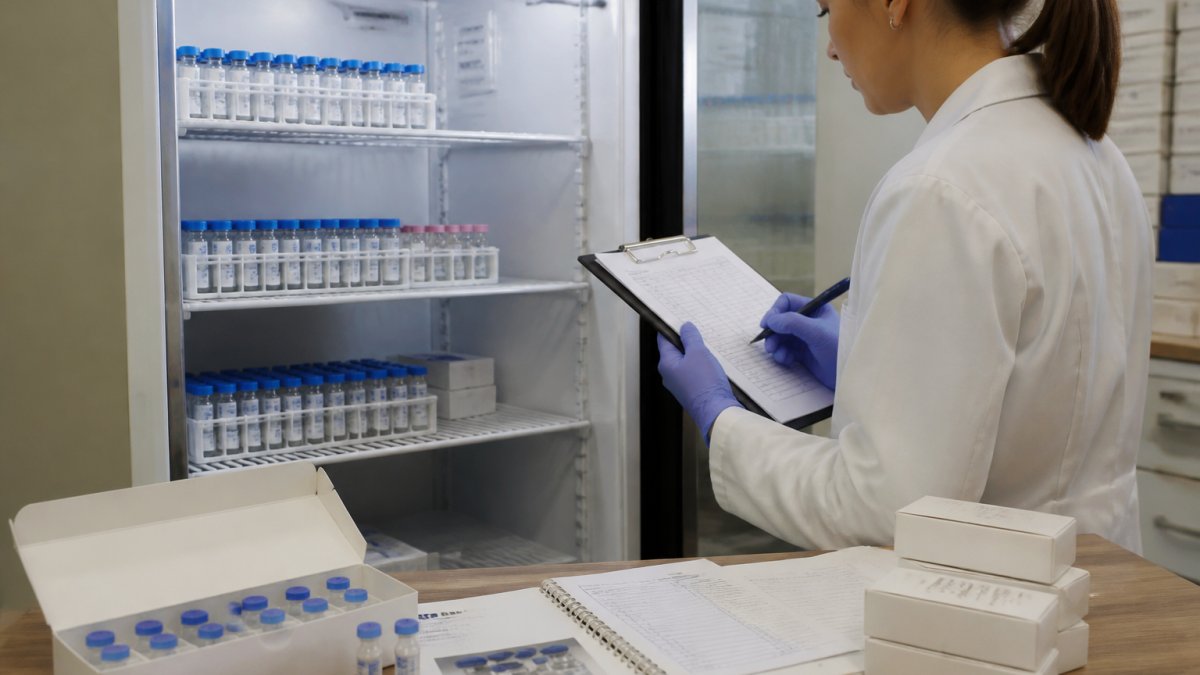
Research peptide storage guidelines are built around one principle: keep each peptide in its own optimal environment.
What Actually Drives Degradation
Peptide stability is governed by a handful of physical and chemical pathways:
- Hydrolysis. Water breaks peptide bonds over time. This is the primary reason reconstituted peptides degrade faster than lyophilized powder, and why reconstituted vials are typically kept refrigerated and used within a defined window.
- Oxidation. Oxygen, light, and trace metals can oxidize susceptible residues such as methionine, cysteine, and tryptophan. Amber glass and foil wrapping reduce light exposure.
- Aggregation. Peptides can self-associate into dimers, oligomers, or fibrils. Aggregation is often irreversible and can be accelerated by heat, agitation, and high concentration.
- Deamidation. Asparagine and glutamine residues can convert to other forms over time, especially at neutral to basic pH.
- pH drift. Buffer choice and concentration affect how well pH holds steady during storage.
Each pathway responds differently to temperature, light, and pH, so a single storage rule cannot cover every peptide.
Storage Rules for Separate Vials
Store each peptide separately and follow these rules:
- Temperature. Most reconstituted peptides need refrigeration. Lyophilized powder is generally more stable and may tolerate short periods at room temperature, but follow the supplier's guidance for the specific compound.
- Light. Keep vials out of direct light. Amber glass or foil wrapping helps.
- Labeling. Mark every vial with the peptide name, concentration, and reconstitution date.
- Inventory. Track reconstitution dates so older vials get used first.
- Handling. Use a fresh needle for every draw, and avoid vigorous shaking, which promotes aggregation.
- Freeze-thaw. Repeated freeze-thaw cycles can damage some peptides. Aliquot before freezing when the protocol allows.
Why Mixed Vials Break These Rules
A mixed vial cannot satisfy the storage requirements of both compounds at once. If one peptide needs a slightly acidic pH and the other a neutral pH, no single buffer serves both. If one is sensitive to oxidation and the other is not, the shared headspace still exposes both to the same oxygen. The mixture inherits the stricter requirement, and often neither compound is fully protected.
Regulatory and Product-Quality Context
Approved medicines are reviewed for identity, strength, purity, sterility, and stability, and their labeling reflects that review. Research-use products are not held to the same standard, so stability and handling guidance may be limited or absent.
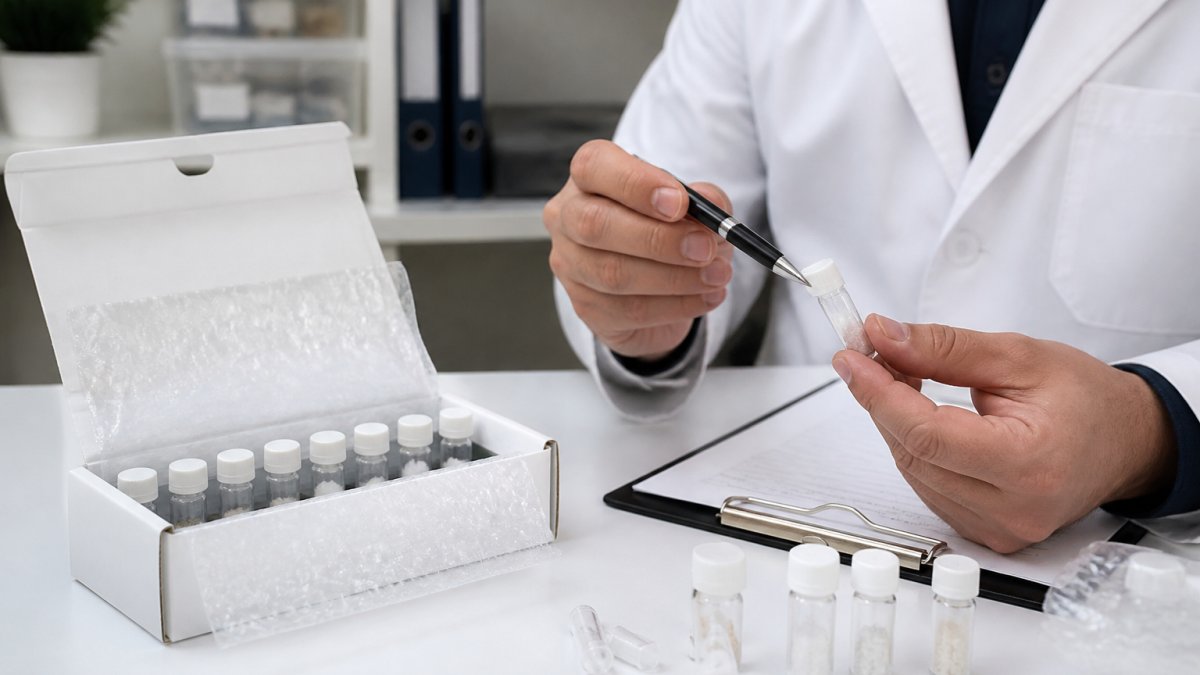
Online Peptide Sales ships research compounds in 10-vial kits with tamper-evident packaging. Each kit includes Janoshik-verified batch reports for identified samples, so researchers can confirm identity and purity before storage. Those reports describe the individual compound; they do not establish compatibility between different peptides.
Peptide Vial Labeling Best Practices for Mixed or Separate Vials
Peptide vial labeling best practices prevent mix-ups, the real danger in multi-peptide work. A clear label is the difference between a clean study and a wasted one.
Every vial label should include:
- Peptide name and any lot number
- Concentration and total volume
- Reconstitution date and diluent used
- Storage conditions
- Researcher initials or lab code
If a vial ever does contain a mixture, label it as a mixture. Note both peptides, the ratio, and the time of mixing. Never leave a mixed vial unlabeled. An unlabeled vial is a future error waiting to happen.
The single best way to avoid mixing errors is to never combine peptides in one vial in the first place. Clear labels and separate storage remove the guesswork entirely.
What to Do After Accidental Mixing and When to Discard a Vial
Accidental mixing happens. Stop, label, and assess.
If two peptides end up in one vial by mistake:
- Stop using the vial. Do not draw from it again.
- Label it clearly as a mixture with both peptide names and the time of mixing.
- Set it aside from your clean stock.
- Check the data. Look for any published compatibility information on the pairing.
- Discard if unsure. Without compatibility data, the safe choice is to discard.
Discard any vial whose contents are unknown, contaminated, or past their stable window, or that shows cloudiness, particles, or a color shift.
No appearance check can confirm safety. When in doubt, throw it out, a lost vial costs far less than a ruined study.
Frequently Asked Questions
Can you mix different peptides in one vial?
In most cases, no. Combining different peptides in a single vial creates compatibility and stability unknowns that are difficult to resolve without compound-specific testing. Without documented compatibility data, mixing risks degradation, reduced potency, and contamination. The safer approach is to reconstitute each peptide in its own vial, use separate syringes, and follow a defined treatment protocol one at a time unless a prescriber or pharmacist confirms otherwise.
Can peptides be mixed in the same syringe instead of the same vial?
Syringe mixing is a different scenario from vial mixing. Combining doses in one syringe means the compounds meet briefly during injection rather than sitting together for days or weeks. Even so, chemical compatibility, dosing accuracy, and sterility still matter. If a healthcare professional has approved a combined injection, follow their instructions exactly. Never assume that because two peptides are safe individually, they are safe combined in one syringe.
Why should peptides be stored separately?
Storage conditions vary by peptide. Some require refrigeration after reconstitution, others tolerate short room-temperature windows, and freeze-thaw cycles affect each compound differently. Keeping peptides in separate vials lets you match storage to each product's requirements, protects shelf life, and reduces the chance that one unstable compound degrades the others. It also keeps labeling clear so dosing calculations stay accurate.
What should I do if I accidentally mix two peptides in one vial?
Stop using the vial and label it clearly as mixed, with the date and both compound names. Do not inject it. Check the certificate of analysis and any Janoshik-verified batch reports for storage and handling notes, and contact the supplier for guidance. Visual appearance alone cannot confirm whether the mixture is safe.