 how-to
Peptide Purity Testing Methods Explained (2026)
Table of Contents
- Peptide Purity Testing Methods Explained: What Each Test Actually Measures
- What You'll Need Before You Test or Order
- Step 1: Run an HPLC Peptide Purity Test and Read the Chromatogram
- Step 2: Confirm the Sequence With Peptide Mass Spectrometry Testing
- Step 3: Separate Identity From Purity With Peptide Identity Testing
- Step 4: How to Read a Peptide COA Line by Line
- Common Mistakes That Invalidate a Purity Result
- Conclusion: Match the Test to the Question
- Frequently Asked Questions
Last Updated: October 12, 2026
Peptide Purity Testing Methods Explained: What Each Test Actually Measures
Peptide purity testing methods explained simply come down to two questions: how much of the sample is the target peptide, and is that peptide actually the one on the label? This guide from Online Peptide Sales walks through each test, what it measures, and how to read the results.
A peptide purity test tells you the percentage of your sample that is the intended peptide. It does not tell you the sequence is correct. That job belongs to a separate test. Confusing the two is the most common error in reading a certificate of analysis.
Below, we break down four tests: HPLC, mass spectrometry, identity testing, and the COA itself. Each answers a different question. Match the test to the question and the report becomes easy to read.
What You'll Need Before You Test or Order
Before any test, gather four things: a batch number, a certificate of analysis, a reference standard, and a calibrated instrument log. Without a batch number, a purity result means nothing.
Here is a simple pre-test checklist:
- Batch or lot number from the supplier
- Certificate of analysis for that exact batch
- Reference standard for the target peptide
- HPLC system with a recent calibration record
- Mass spectrometer with a current calibration log
- A written record of storage conditions since arrival
A common mistake is testing a sample with no batch link. The number on the vial must match the number on the report. If they do not match, the result proves nothing about your material.
At Online Peptide Sales, every identified batch ships with a Janoshik-verified report so the batch number on the vial matches the report. That single detail removes most of the confusion before testing even starts.
Step 1: Run an HPLC Peptide Purity Test and Read the Chromatogram
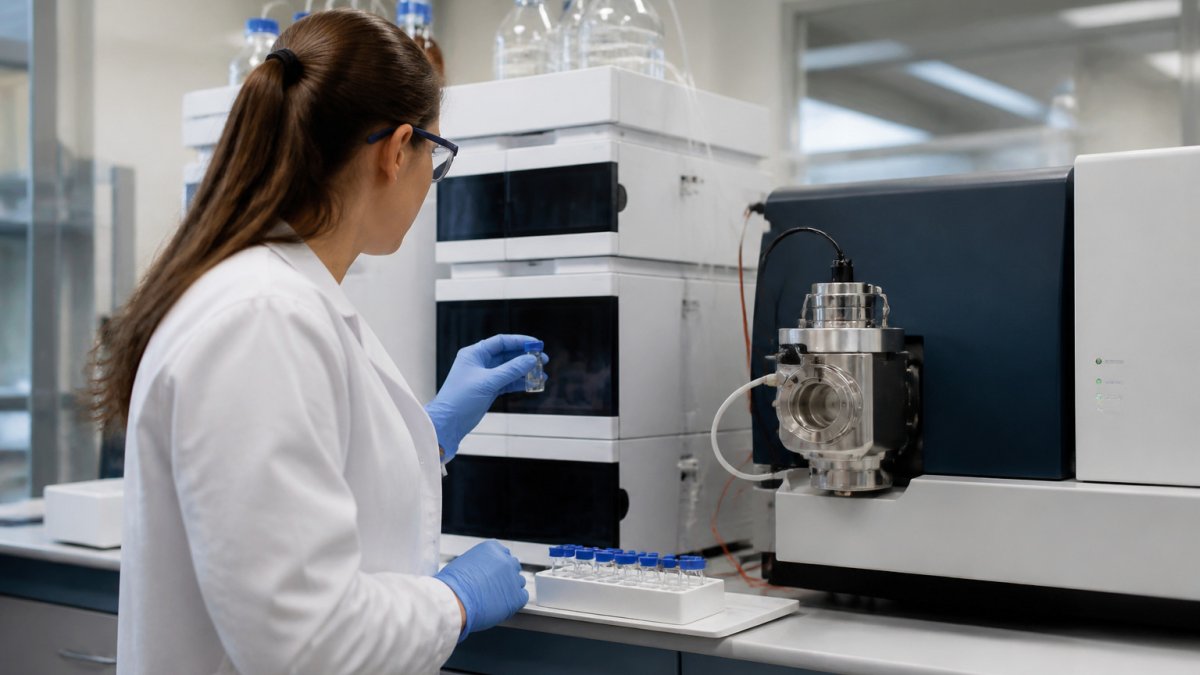
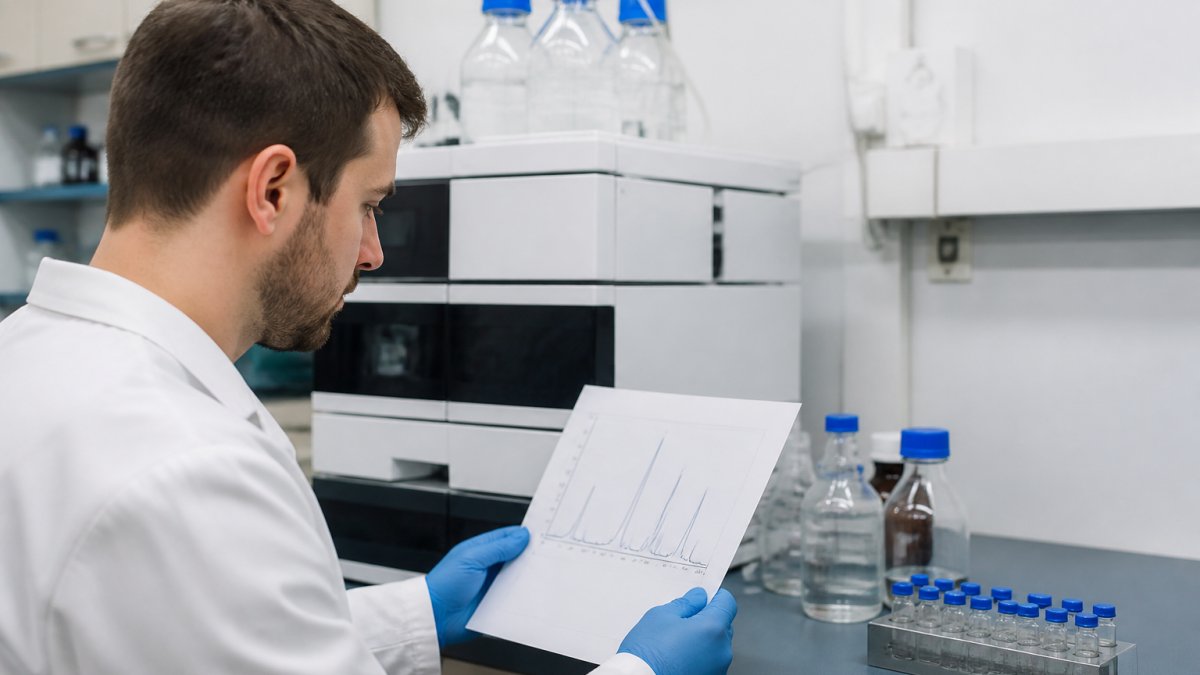
An HPLC peptide purity test separates the components in a sample by how they travel through a column. The main peak is your target peptide. Everything else is impurity.
The result is reported as a percentage. A reading of 98% means 98% of the detected material is the target peak. The remaining 2% is a mix of related substances, counter-ions, and water.
Reading the chromatogram takes three steps:
- Find the main peak. It should be the tallest and sharpest.
- Check the baseline. A flat, steady line means a clean run.
- Add up the smaller peaks. These are your impurities.
A sharp peak with a flat baseline is a good sign. A broad or split peak suggests a problem with the column or the sample. That is a method issue, not a purity issue.
Step 2: Confirm the Sequence With Peptide Mass Spectrometry Testing
Peptide mass spectrometry testing measures the mass of the molecule. It confirms the peptide has the correct sequence and the right molecular weight.
The instrument ionizes the sample and sorts the ions by mass-to-charge ratio. The result is a spectrum with a main peak at the expected mass. If the measured mass matches the theoretical mass, the sequence is likely correct.
Here is how to read the spectrum:
- Expected mass: the number your sequence should produce
- Observed mass: the number the instrument measured
- Match: the two numbers agree within a small tolerance
A match confirms identity. It does not confirm purity. A sample can be 70% pure and still show a perfect mass match. That is why HPLC and mass spectrometry are used together, not as substitutes.
The two tests answer two different questions. HPLC says how much. Mass spectrometry says what.
Step 3: Separate Identity From Purity With Peptide Identity Testing
Peptide identity testing confirms the sample is the peptide you ordered, not a similar one. It is the check that catches mix-ups.
Purity and identity are not the same thing. A sample can be 99% pure and still be the wrong peptide. Purity measures how clean the sample is. Identity measures whether the sample is the correct molecule.
Identity testing uses several methods:
- Mass confirmation to check the molecular weight
- Amino acid analysis to check the building blocks
- Sequence analysis to check the order of those blocks
A supplier that reports purity but never reports identity is only doing half the job. Ask for both. A complete report shows a purity percentage and an identity confirmation side by side.
Step 4: How to Read a Peptide COA Line by Line
Knowing how to read a peptide COA means checking four things: batch number, test method, result, and specification. If any one is missing, the report is incomplete.
A certificate of analysis is the document that ties a test result to a specific batch. Here is what each line tells you:
| COA Line | What It Tells You | What to Check |
|---|---|---|
| Batch number | Which batch was tested | Matches your vial |
| Test method | How it was tested | HPLC or MS named |
| Result | The measured value | Meets the spec |
| Specification | The pass/fail limit | Stated clearly |
| Date | When it was tested | Recent and relevant |
Start at the top. Confirm the batch number matches your vial. Then read the method. If the method is not named, the result is hard to trust. Next, compare the result to the specification. A result only means something against a stated limit.
FDA guidance on analytical procedures and methods validation outlines how method validation supports a reliable result. A report that names its method and its limit follows that same logic.
Common Mistakes That Invalidate a Purity Result
Most bad results come from process errors, not bad products. Here are the mistakes that void a purity reading:
- Testing a sample with no batch number linked to a report
- Trusting a purity percentage with no chromatogram attached
- Skipping identity testing and assuming purity equals identity
- Using an instrument with an expired calibration record
- Storing the sample wrong before testing, which changes the result
- Comparing results across labs that used different methods
The last one trips up a lot of people. Two labs can report different purity numbers for the same sample if their methods differ. Always compare results from the same method.
USP standards for peptide analysis sets widely used reference methods for this kind of testing. Matching your method to a published standard makes results comparable across labs.
A second opinion from an independent lab is worth the effort when a result looks off.
Conclusion: Match the Test to the Question
Each test answers one question. HPLC tells you how much of the sample is the target peptide. Mass spectrometry confirms the sequence. Identity testing confirms it is the right molecule. The COA ties every result to a batch.
Start with the question, then pick the test. If the question is purity, run HPLC. If the question is identity, run mass spectrometry and identity testing. If the question is trust, read the COA line by line and confirm the batch number matches the vial.
Online Peptide Sales supplies research compounds in 10-vial kits with Janoshik-verified batch reports for identified samples, plus tamper-evident packaging and express international shipping. That combination gives researchers a clear batch-to-report link before any test begins.
Frequently Asked Questions
How is peptide purity tested?
Two methods do most of the work. An HPLC peptide purity test separates the main peptide from related impurities and reports the percentage of the main peak, usually measured at 214 nm. Peptide mass spectrometry testing then confirms the molecular weight matches the expected sequence. A complete result pairs both: a purity percentage from HPLC and an identity confirmation from mass spectrometry. Neither test alone proves a sample is what the label claims, so a batch report should include both.
What does HPLC measure in a peptide purity test?
HPLC measures how much of the sample elutes as the target peak versus everything else. The result is reported as a percentage, such as 98%. It does not identify what the peptide is, only how much of the material is the main component. A sample can read 99% pure on HPLC and still be the wrong sequence, which is why peptide identity testing is a separate step. The chromatogram also shows peak shape and retention time, useful for spotting degradation.
What is the difference between peptide identity and purity?
Purity tells you how much of the sample is the main compound. Identity tells you what that compound actually is. A batch can be 98% pure and still be the wrong peptide if the synthesis or labeling failed. Peptide identity testing, typically by mass spectrometry, confirms the molecular weight matches the expected sequence. Both numbers belong on a certificate of analysis, and reading them together is how you verify a batch before use.
How do you read a peptide certificate of analysis?
Start with the sample ID and batch number, confirm they match the vial you received, then check the HPLC purity percentage and the mass spectrometry result. Look for the testing date and the method used. A report without a sample identifier proves nothing about your batch. Online Peptide Sales provides Janoshik-verified batch reports for identified samples, so you can match the report to the kit in hand before running any assay.