 how-to
Why Peptides Degrade at Room Temperature
Table of Contents
- Why Peptides Degrade at Room Temperature
- How to Store Lyophilized Peptides Properly
- How Long Can Peptides Stay Unrefrigerated
- Reconstituted Peptide Storage Guidelines
- Measuring Peptide Stability and Potency
- Practical Storage Decision Framework
- Frequently Asked Questions
Last Updated: October 10, 2026
Why Peptides Degrade at Room Temperature
Peptides are fragile molecules. Temperature directly controls how fast they break down. Understanding why peptides degrade room temperature is essential for anyone handling research compounds. Online Peptide Sales serves researchers who depend on stable, verified peptide samples, and proper storage knowledge protects your investment and research integrity.
The core issue is simple: heat accelerates chemical reactions. At room temperature, peptide molecules lose their structure faster than they do when frozen or refrigerated. This degradation happens through several overlapping mechanisms. Each one matters for how you store and handle your samples.
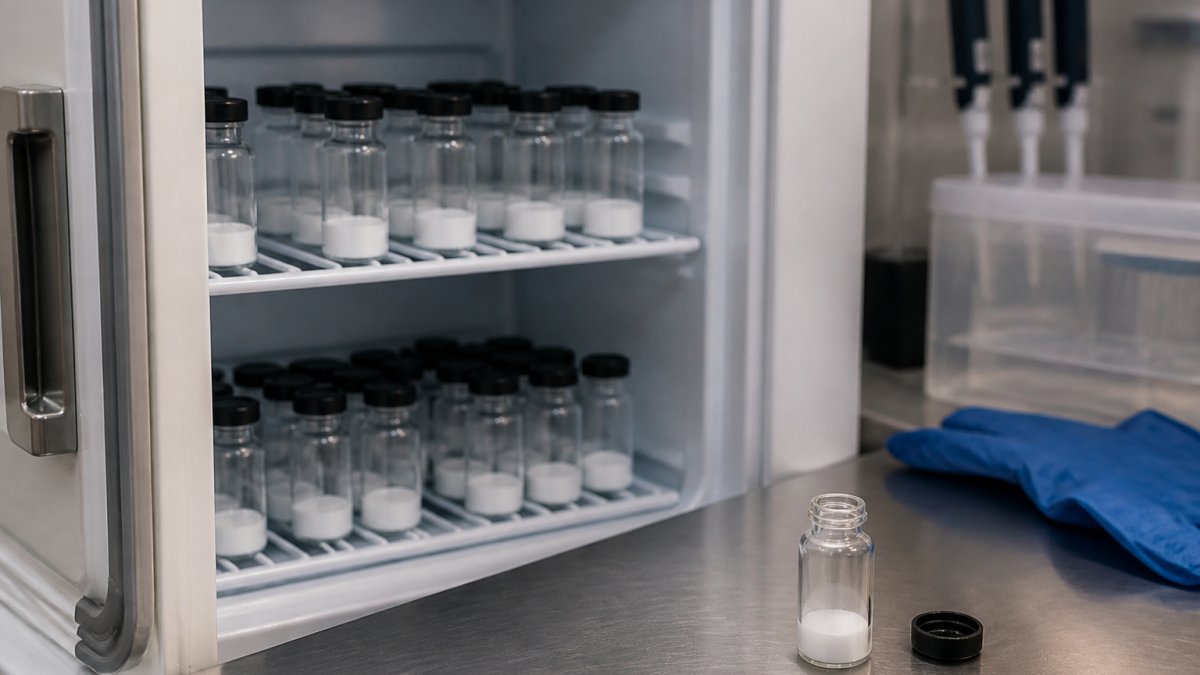
How Kinetic Energy Accelerates Chemical Breakdown
Temperature is molecular motion. Higher temperatures mean atoms and molecules move faster. This kinetic energy increases the rate of chemical reactions inside your peptide solution or powder.
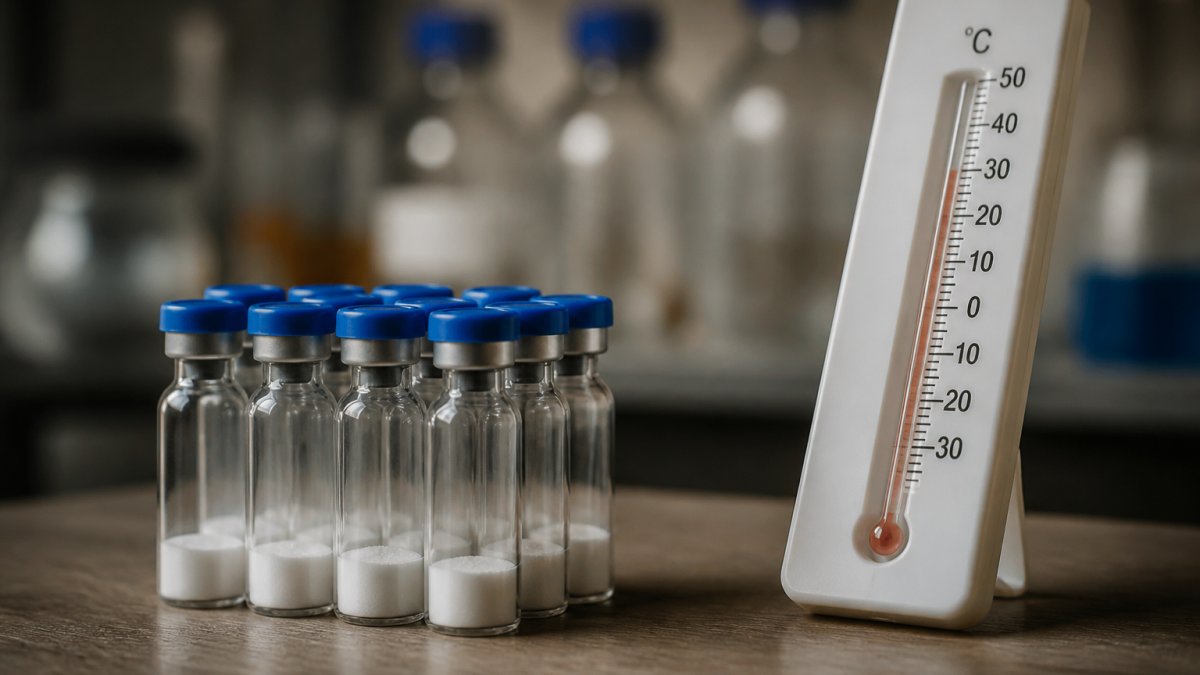
Peptides are chains of amino acids linked by peptide bonds. These bonds can break when molecules collide with enough force. Room temperature (around 70°F) provides enough energy to start breaking these bonds. Cold temperatures slow molecular motion dramatically. Freezing nearly stops the reaction entirely.
The relationship between temperature and reaction speed is not linear. A common rule in chemistry is that reaction rates double for every 10°C increase. This means a peptide stored at 77°F degrades roughly twice as fast as one stored at 68°F. Small temperature differences create large differences in shelf life.
The Role of Moisture and Humidity in Degradation
Water accelerates peptide breakdown. Moisture in the air can enter a container and trigger hydrolysis, the chemical process where water molecules break peptide bonds.
Lyophilized peptides are freeze-dried powders with almost no water. This dry state is why they last longer than reconstituted solutions. However, if moisture reaches the powder, degradation speeds up dramatically. Humidity in your storage environment matters. A humid room (60% relative humidity or higher) will introduce water vapor into containers over time.
Desiccant packets inside vials absorb moisture and protect the powder. When you open a vial, moisture from the air enters immediately. This is why you should work quickly when handling lyophilized peptides and reseal containers tightly.
Reconstituted peptide solutions already contain water. These solutions degrade faster than dry powder because hydrolysis is already happening. The water in the solution is the medium for chemical breakdown.
Oxidation and Air Exposure
Oxygen in the air reacts with peptides. This oxidation damages the molecular structure, especially at amino acids like methionine and tryptophan, which are vulnerable to oxidative attack.
Sealed vials protect peptides from oxygen. When you open a container, air enters. The longer a vial stays open, the more oxygen contacts the peptide. Room temperature speeds up oxidation reactions. Refrigerated or frozen peptides oxidize much more slowly.
This is why inert gas (like nitrogen) is sometimes used in peptide packaging. It displaces oxygen and slows oxidation. If your vials are sealed with nitrogen or an inert gas, keep them sealed until use.
How to Store Lyophilized Peptides Properly
Lyophilized peptides are your most stable form. Proper storage extends their usable life significantly. The goal is to minimize exposure to heat, moisture, and oxygen.
Dry Storage and Desiccant Containers
Lyophilized peptides should stay dry and cold. A freezer (below 32°F, ideally below 5°F) is ideal. Desiccant containers keep moisture out. These are sealed vials or bottles with desiccant packets inside.
When you receive peptides from Online Peptide Sales, they arrive in sealed vials designed for long-term storage. Keep them sealed until you need them. Store them in a freezer, not a refrigerator. Freezer storage extends shelf life far longer than refrigeration.
If you must store peptides in a refrigerator (around 39°F), use sealed desiccant containers and expect shorter stability. Never store lyophilized peptides at room temperature for extended periods. Even a few days at room temperature can degrade peptides noticeably.
Temperature Control and Freeze-Thaw Cycles
Consistency matters more than one perfect storage temperature. Fluctuating temperatures damage peptides more than stable cold storage.
Freeze-thaw cycles are particularly harmful. Each time a peptide sample thaws and refreezes, ice crystals form and damage the molecular structure. Minimize freeze-thaw events by:
- Storing peptides in a freezer that maintains stable temperature
- Using smaller aliquots so you thaw only what you need
- Avoiding repeated opening and closing of containers
- Planning your experiments to minimize the number of times you access stored peptides
A stable freezer at 5°F is better than a fluctuating refrigerator at 39°F. Temperature swings cause more damage than a consistently cold environment.
How Long Can Peptides Stay Unrefrigerated
Room-temperature exposure is temporary, not permanent. The timeline depends on the peptide, the form, and environmental conditions.
Room-Temperature Exposure Timelines
Lyophilized peptides can tolerate brief room-temperature exposure. A few hours (typically under 8 hours) at room temperature causes minimal degradation. A few days at room temperature causes noticeable loss of potency. A few weeks at room temperature causes significant degradation.
Reconstituted peptide solutions degrade faster. A solution at room temperature loses potency over days, not weeks. Within 24 hours at room temperature, many peptide solutions show measurable degradation.
These timelines are rough. The actual rate depends on:
- The specific peptide sequence (some are more stable than others)
- The buffer or solvent used
- Humidity and light exposure
- Whether the container is sealed or open
If you need to transport peptides, use insulated containers with ice packs. This keeps them cool during transit. Once you arrive at your destination, return them to proper storage immediately.
Assessing Peptide Degradation
You cannot always see degradation. A peptide sample may look fine but have lost potency. How do you know if your peptides have degraded?
The most reliable way is testing. Janoshik reports provide baseline data on peptide purity and potency. If you store peptides improperly and suspect degradation, you can request a new Janoshik test to compare against the original report. Online Peptide Sales provides Janoshik-verified batch reports for identified samples, giving you a reference point.
Visual signs of degradation are limited. Discoloration, cloudiness in a solution, or visible particles suggest problems. But many degradation processes leave no visible trace.
If peptides were stored at room temperature for extended periods, assume some degradation occurred. Use them cautiously in experiments and monitor your results carefully. If results are inconsistent or lower than expected, improper storage may be the cause.
Reconstituted Peptide Storage Guidelines
Reconstituted peptides are solutions, not powders. They require different storage strategies.
Hydrolysis and Water Exposure in Solutions
Reconstituted peptides are dissolved in water or buffer. Water is the medium for hydrolysis, the chemical reaction that breaks peptide bonds. This is why solutions degrade faster than lyophilized powder, and why peptides degrade room temperature more rapidly in solution form.
Hydrolysis happens at all temperatures but accelerates at room temperature. In a refrigerator, hydrolysis slows. In a freezer, it nearly stops. This is why reconstituted peptides should be refrigerated or frozen, not stored at room temperature.
The pH of the solution matters. Extreme pH (very acidic or very basic) accelerates hydrolysis. Neutral pH (around 7) is safer. Many peptide solutions use buffered water to maintain stable pH and slow degradation.
Reconstituted peptides stored in a refrigerator at 39°F typically last 1-2 weeks. Frozen solutions at 5°F or below last months. Room-temperature solutions degrade noticeably within days.
Container Selection and Surface Adsorption
The container affects peptide stability. Peptides can stick to plastic or glass surfaces, reducing the amount of active peptide in solution. This is called surface adsorption.
Glass vials are often preferred for peptide storage because peptides adhere less to glass than to some plastics. However, peptides can still stick to glass. Polypropylene and polystyrene containers may cause more adsorption than glass.
The size of the container matters too. A peptide solution in a large container has more surface area for adsorption. Smaller vials minimize this effect. This is another reason to use small aliquots: less surface area means less adsorption loss.
Keep reconstituted peptides in sealed containers. Exposure to air increases oxidation and allows water to evaporate, concentrating the solution and changing its properties.
Measuring Peptide Stability and Potency
Knowing your peptides are stable requires data. Janoshik testing provides this data. When you receive peptides from Online Peptide Sales, Janoshik-verified batch reports document the initial purity and potency.
If you store peptides for extended periods or under uncertain conditions, you can request a follow-up test. Comparing the original report to a new test shows how much degradation occurred. This is especially useful if you suspect improper storage.
The cost and logistics of testing vary. For critical research, periodic testing validates that your storage methods are working. For routine work, proper storage (freezer for lyophilized, refrigerator for solutions) is usually sufficient.
Practical Storage Decision Framework
Choose storage based on your peptide form and timeline.
| Peptide Form | Storage Location | Expected Stability | When to Use |
|---|---|---|---|
| Lyophilized powder | Freezer (below 5°F) | 1-2 years or longer | Long-term storage, infrequent use |
| Lyophilized powder | Refrigerator (39°F) | 3-6 months | Short-term, frequent access needed |
| Reconstituted solution | Freezer (below 5°F) | 3-6 months | Long-term solution storage |
| Reconstituted solution | Refrigerator (39°F) | 1-2 weeks | Active experiments, frequent use |
If you are storing peptides for longer than a few weeks, freezer storage is strongly recommended. If you need frequent access, refrigeration is acceptable but expect shorter stability. Room-temperature storage should be temporary only.
Plan your experiments to minimize freeze-thaw cycles. Use small aliquots. Keep containers sealed. Return peptides to proper storage immediately after use.
Frequently Asked Questions
Why do peptides degrade at room temperature?
Peptides degrade at room temperature because heat increases kinetic energy, accelerating chemical reaction rates. Elevated temperatures also promote hydrolysis (water-mediated breakdown), oxidation (air exposure), and moisture absorption. Lyophilized peptides are particularly vulnerable because room-temperature conditions trigger these degradation pathways simultaneously. Refrigeration and freezing slow these reactions dramatically, extending shelf life and preserving potency.
How long can peptides stay unrefrigerated?
Lyophilized peptides can remain stable at room temperature for hours to a few days, depending on humidity, light exposure, and the peptide's chemical structure. Reconstituted peptide solutions degrade much faster, typically within hours to days, because water accelerates hydrolysis. To minimize loss of potency, store unrefrigerated peptides in sealed, desiccant-containing vials away from light and moisture. For research requiring high purity and potency, refrigeration or freezing is strongly recommended.
How should I store reconstituted peptide solutions?
Reconstituted peptides should be stored in sterile, sealed containers in a refrigerator or freezer to slow hydrolysis and oxidation. Use amber or opaque containers to block light, which accelerates degradation. Avoid repeated freeze-thaw cycles, which can cause precipitation and loss of potency. Always verify your specific peptide's stability data before storage.
Do lyophilized peptides need to be refrigerated?
Lyophilized peptides are more stable than reconstituted solutions and can be stored at room temperature for short periods if kept dry and sealed. However, refrigeration or freezing significantly extends shelf life and maintains potency over months or years. Moisture and heat are the primary threats to dry peptides. For research requiring verified potency and minimal degradation, refrigerated or frozen storage is the industry standard. Online Peptide Sales provides Janoshik-verified batch reports so you can assess baseline potency before storage.