 how-to
What Happens If Peptide Solution Freezes: Storage Guide
Table of Contents
- What Happens When a Peptide Solution Freezes
- Peptide Freeze Thaw Stability: How Repeated Cycles Affect Your Sample
- How to Thaw Frozen Peptide Solution Without Causing Further Damage
- What to Do Immediately After a Peptide Solution Freezes
- How Long Do Peptides Last in Solution?
- Peptide Aliquoting Best Practices to Avoid Accidental Freezing
- Recommended Freezer and Refrigerator Conditions for Peptide Storage
- Conclusion
- Frequently Asked Questions
Last Updated: October 17, 2026
What Happens When a Peptide Solution Freezes
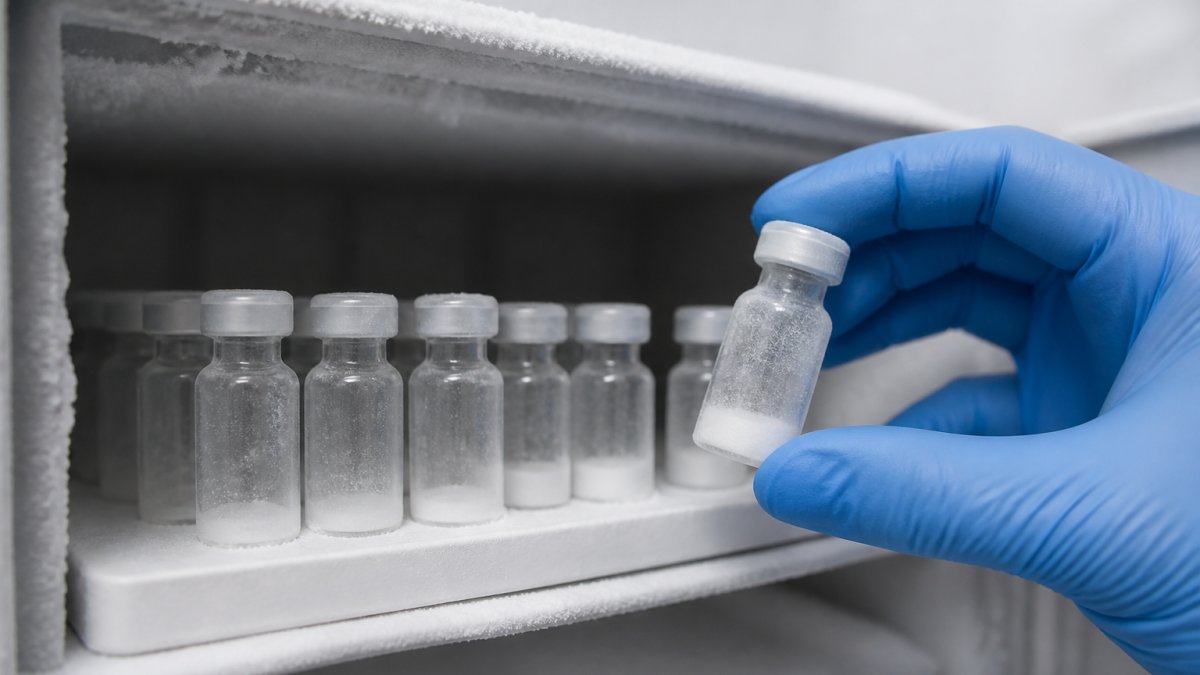
When a peptide solution freezes, water expands and forms ice crystals that can physically damage the peptide and reduce its activity. The damage is not always visible, which is why a frozen vial can look normal and still be compromised. This guide from Online Peptide Sales covers what actually happens inside the vial, how to thaw a frozen peptide solution safely, and how to prevent the problem in the first place.
Peptide freeze thaw stability depends on three things: how cold the sample got, how long it stayed frozen, and how many times it has cycled. A single accidental freeze is usually survivable. Repeated cycles are where samples fail.
Ice-Crystal Formation and Physical Damage
Ice crystals are the first problem, and they start forming fast. As an aqueous solution drops below its freezing point, water molecules lock into a lattice. That lattice takes up more space than liquid water, and the expansion pushes against everything dissolved in it.
The damage comes in two forms:
- Mechanical stress on the peptide structure as crystals grow and press against it
- Concentration spikes as solutes get pushed into the shrinking unfrozen pockets between crystals
That second effect matters more than most people realize. A peptide sitting in a tiny pocket of highly concentrated buffer can aggregate or precipitate. Once peptide molecules clump together, they rarely come apart again.
Peptide Degradation and Loss of Biological Activity
Peptide degradation is the chemical side of the same story. Freezing slows most chemical reactions, but it does not stop them at the boundaries where ice and liquid meet.
The practical result is a drop in potency. A sample that has been frozen and thawed may show:
- Lower activity in a binding or functional assay
- Visible aggregation or cloudiness
- Altered behavior on chromatography
What most guides miss is that visible change and activity loss are not the same thing. A clear solution can have lost measurable potency, and a slightly cloudy one can still perform. Judging sample integrity by eye alone is unreliable.
Peptide Freeze Thaw Stability: How Repeated Cycles Affect Your Sample
Each freeze-thaw cycle compounds the damage from the one before it. The first cycle may cost you little. The fifth cycle is a different story.
Here is why repeated cycles are so punishing:
- Every thaw creates a new chance for ice crystals to form at different sites
- Each freeze concentrates the remaining solutes further
- Aggregates formed in one cycle seed more aggregation in the next
Peptide freeze thaw stability is therefore a numbers game. Fewer cycles means a better-preserved sample. This is the single strongest argument for aliquoting, which we cover below.
Risk also varies by peptide. Short peptides with simple sequences tend to tolerate freezing better than long, complex ones. Formulations with stabilizing buffers or cryoprotectants hold up better than plain aqueous solutions. There is no universal rule, which is why handling records matter as much as handling technique.
How to Thaw Frozen Peptide Solution Without Causing Further Damage
How to thaw frozen peptide solution: thaw slowly on ice or in a refrigerator, never in a hot water bath or microwave. Rapid thawing creates the same thermal shock that freezing did.
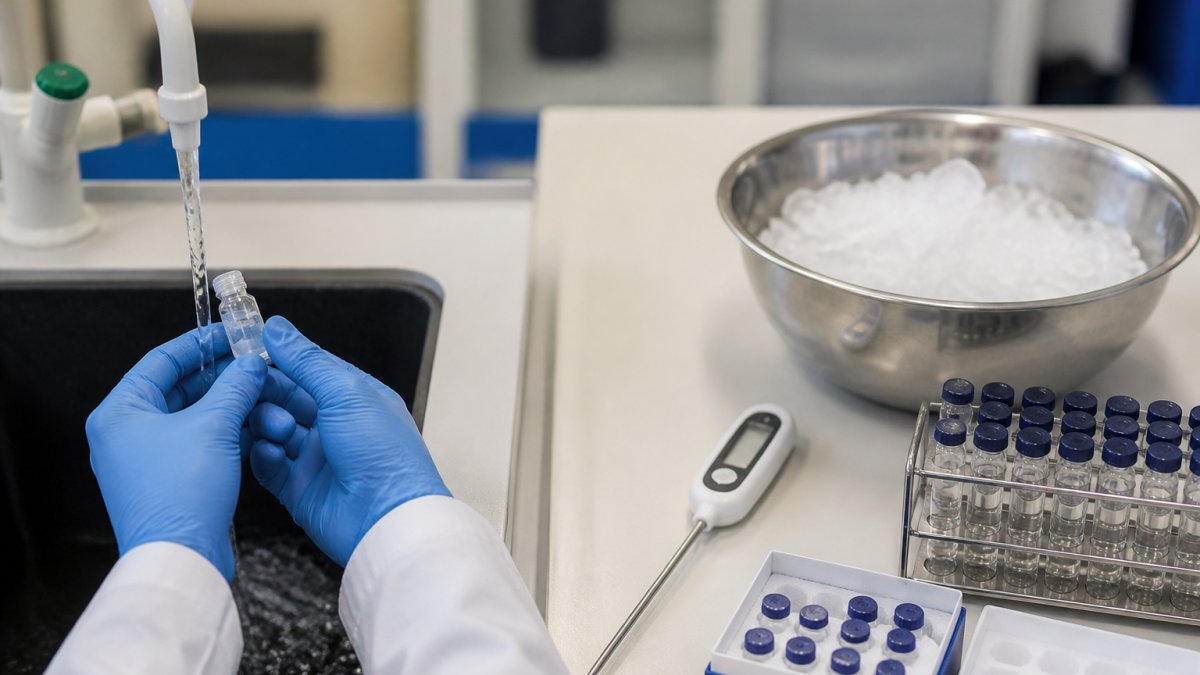
A workable thawing sequence:
- Move the vial from the freezer to a refrigerator and let it thaw overnight
- For faster work, place the vial on wet ice in a cold room
- Swirl gently; never vortex or shake vigorously
- Inspect for particles or cloudiness once fully liquid
- Keep the thawed sample cold and use it promptly
Avoid repeated warming and cooling during the thaw. Once the sample is liquid, keep it that way until use.
What to Do Immediately After a Peptide Solution Freezes
The first hour matters less than people fear, but the first decision matters a lot. Do not panic-thaw, and do not refreeze blindly. What separates a recoverable sample from a lost one is usually the sequence of decisions you make in the next few hours, not the freeze itself.
A practical response, in order:
- Leave it frozen until you have a plan. Opening the freezer door repeatedly to check on the vial adds temperature swings on top of the freeze event.
- Record the conditions. Note how long the vial was frozen, the freezer setpoint, whether it was a frost-free unit, and whether the container was upright or on its side. These details determine how much confidence you can place in the sample later.
- Inspect the container while still cold. A cracked vial, a loose cap, or frost inside the seal means the sample is compromised regardless of how the peptide itself fared. Set it aside.
- Thaw slowly using the cold method described in the thawing section, refrigerator first, wet ice if you need it faster. Never a hot water bath, never a microwave.
- Inspect and document any visible change: cloudiness, particles, color shift, or a ring of material at the meniscus. Photograph the vial against a dark background if you can; a photo is more useful than a memory when you compare against a fresh vial later.
- Decide based on intended use. This is the step most guides skip.
A simple triage framework:
| Situation | Reasonable Action |
|---|---|
| Single freeze, short duration, vial intact, solution clear after slow thaw | Use for non-critical work; note the freeze in your records |
| Single freeze, but visible particles or cloudiness after thaw | Treat as compromised; do not use for quantitative assays |
| Multiple freeze-thaw cycles or unknown history | Treat as compromised until verified by testing |
| Cracked vial, compromised seal, or evidence of moisture ingress | Discard; do not attempt recovery |
| Critical assay or reference standard | Do not assume recovery; verify before use or replace the aliquot |
The honest answer is that a single accidental freeze is often recoverable, but you cannot know without testing. Treat the sample as suspect and let the data decide. If the sample is part of a batch you ordered from Online Peptide Sales, check the batch documentation you received with the kit before making assumptions, the handling and storage information tied to that batch is more specific than any general rule.
One more habit worth building: write the freeze event into your sample log the same day. A note like "frozen 14 hours at -20 C, frost-free unit, thawed on wet ice, clear after thaw" is the kind of record that lets you or a colleague interpret later assay results instead of guessing.
How Long Do Peptides Last in Solution?
How long peptides last in solution depends on the peptide, the buffer, the concentration, and the storage temperature. There is no single shelf life that applies across the board.
General guidance that holds up in practice:
- Reconstituted solutions are less stable than dry lyophilized powder
- Refrigerated solutions typically outlast room-temperature ones
- Solutions held for long periods carry more risk than freshly prepared ones
- Light exposure and air exposure both shorten usable life
For most research work, the safer habit is to prepare what you need and store the rest dry. When a solution must be kept, keep it cold, protected from light, and documented with a preparation date.
Peptide Aliquoting Best Practices to Avoid Accidental Freezing
Peptide aliquoting best practices solve most freeze-thaw problems before they start. Split the sample into single-use portions so no vial is ever thawed twice.
The essentials:
- Divide reconstituted solution into small, single-use volumes
- Label each aliquot with peptide, concentration, buffer, and date
- Freeze aliquots individually, not as a cluster
- Store at a consistent temperature without fluctuation
- Pull one aliquot per use and never refreeze the remainder
Container choice matters too. Low-binding tubes reduce peptide loss to the walls, and tight caps limit moisture and air exposure. Keep aliquots protected from light, especially for light-sensitive sequences.
Recommended Freezer and Refrigerator Conditions for Peptide Storage
Storage conditions should be cold, stable, and documented. Temperature fluctuations do more harm than a steady cold temperature, because each swing is a mini freeze-thaw event.
For lyophilized peptide, dry powder stored cold and protected from moisture holds up best. For reconstituted peptide, refrigeration is the usual short-term choice, with freezing reserved for longer holds in aliquoted form.
A simple comparison of the two storage states:
| Storage State | Typical Condition | Key Risk | Best Practice |
|---|---|---|---|
| Lyophilized powder | Cold, dry, dark | Moisture and light | Keep sealed and desiccated |
| Reconstituted solution | Refrigerated, short-term | Degradation over time | Use promptly, label date |
| Frozen aliquots | Consistent freezer temp | Repeated thawing | Single-use portions only |
Two habits protect any storage setup: keep a log of what went in and when, and avoid opening the freezer more than needed. Frost-free cycles and door openings cause the temperature swings that drive damage.
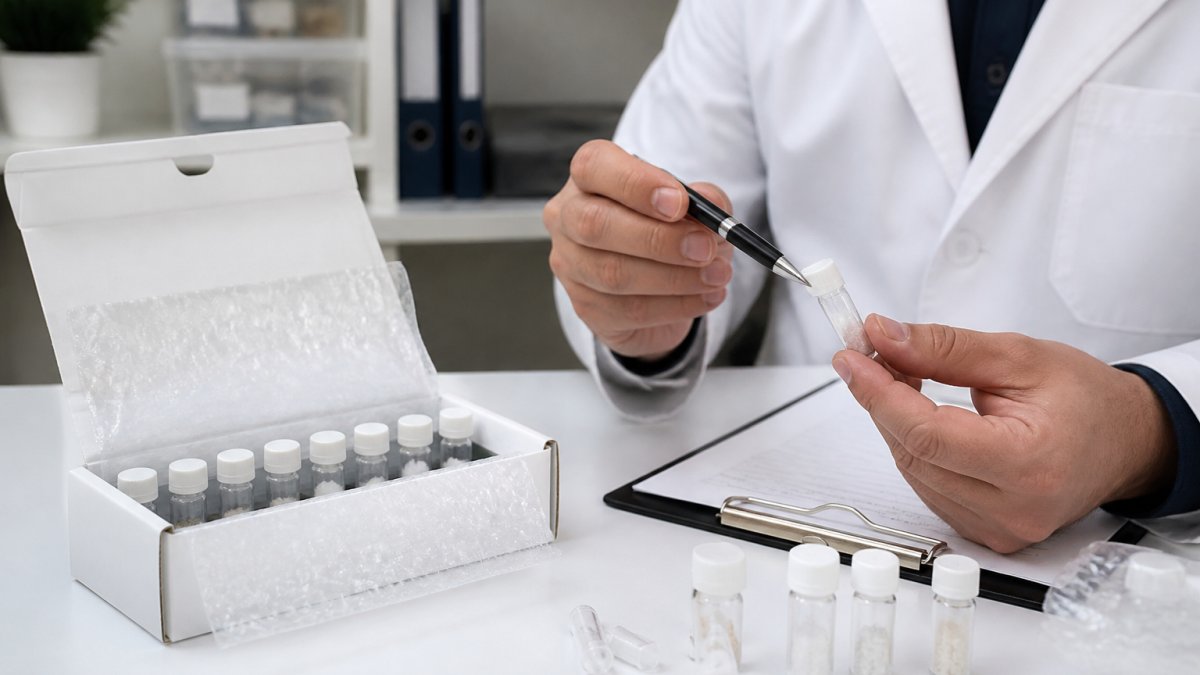
Online Peptide Sales ships research compounds in 10-vial kits with tamper-evident packaging, and Janoshik-verified batch reports are available for identified samples. Those reports help researchers confirm what arrived before storage decisions are made.
Conclusion
A frozen peptide solution is not automatically a ruined one, but it is a sample with a question mark attached. Slow thawing, honest inspection, and a note of the conditions give you the best chance of recovering it. The stronger fix is prevention: aliquot into single-use portions, store cold and stable, and keep dry powder dry until you need it. Handle the sample as if its history matters, because it does.
Frequently Asked Questions
What do I do if my peptide solution freezes?
Move the vial to a refrigerator and let it thaw slowly overnight. Avoid room-temperature thawing or warm water baths, which can accelerate aggregation. Once thawed, inspect for cloudiness or particles; if present, the sample may have degraded. For future storage, aliquot the solution into single-use volumes to prevent a repeat freeze. If the freeze was accidental and brief, the peptide may retain most of its activity, but always verify visually and consider a functional check before critical experiments.
Can freezing damage a reconstituted peptide?
Yes, freezing can damage a reconstituted peptide. As water turns to ice, it expands and forms ice crystals that can disrupt the peptide's structure, leading to aggregation or precipitation. The concentration of solutes in the remaining liquid also increases, which may promote degradation. However, damage depends on the specific peptide sequence, concentration, and buffer. Some peptides tolerate a single freeze-thaw cycle with minimal loss, while others lose significant activity. Using peptide aliquoting best practices reduces this risk.
How long do peptides last in solution?
How long peptides last in solution depends on the peptide, concentration, buffer, and storage temperature. Refrigerated solutions are typically used within days to a few weeks, while frozen aliquots can remain stable for months. Peptides in solution are more prone to degradation than lyophilized powders, so follow storage guidelines from your supplier. For Online Peptide Sales products, check the Janoshik report for specific recommendations. Always record reconstitution dates and inspect for visible changes before use.
Should a frozen peptide solution be thawed in a refrigerator?
Thawing in a refrigerator is the safest method. Place the vial in the fridge and allow it to thaw slowly, which minimizes temperature fluctuations and reduces the risk of aggregation. Avoid thawing at room temperature or using a microwave, as rapid warming can cause uneven heating and degrade the peptide. Once thawed, keep the solution cold and use it promptly. If you must thaw at room temperature, do so only briefly and monitor closely, but refrigerator thawing remains the recommended approach for peptide freeze thaw stability.