 how-to
Risks of Untested Research Peptides: A Safety Guide
Table of Contents
- Why Untested Research Peptides Pose Serious Risks
- Contamination, Adulteration, and Product Quality Failures
- How to Read a Peptide Lab Report Before You Buy
- Peptide Identity Testing: Confirming What Is Actually in the Vial
- Why Batch-Specific Peptide Testing Matters
- Research Peptide Storage Guidelines That Protect Sample Integrity
- What to Do After Suspected Exposure or an Adverse Reaction
- Conclusion
- Frequently Asked Questions
Last Updated: October 20, 2026
Why Untested Research Peptides Pose Serious Risks
Untested research peptides are compounds sold for laboratory use without independent proof of identity, purity, or sterility. The risks of using untested research peptides start with a simple problem: nobody can confirm what is actually in the vial.
That gap matters because research peptides sit outside the approved drug supply. The FDA's framework for compounded and unapproved drugs makes clear that products without an approved application carry no verified safety, dose, or manufacturing review.
Research-use-only is not a medicine
The single most important distinction for a buyer is between a research-use-only product and a medicine approved for human use. They are not the same category, and the labeling reflects it.
- Approved medicines carry an FDA-approved application, a reviewed manufacturing process, established dosing, and a labeled safety profile based on clinical trials.
- Research-use-only products are labeled for laboratory research and are not intended for human use. They carry no approved dose, no reviewed safety data, and no guarantee of manufacturing consistency.
A research-use-only label is not a marketing formality. It signals that the product has not been evaluated for human safety or effectiveness, and that any human use is outside the product's intended purpose.
The four failure categories
The core risks fall into four groups:
- Contamination with microbes, endotoxins, or heavy metals
- Adulteration with cheaper or unrelated compounds
- Mislabeling of strength or identity
- Dosing errors during reconstitution
Each one is preventable with documentation. None is preventable with trust alone.
Risk differs by route of exposure
Not every route carries the same hazard, and lumping them together hides the most serious ones.
- Injection adds infection, abscess, and sterility risks on top of the compound itself. A non-sterile vial that would be low-risk as a powder becomes a direct bloodstream exposure when injected.
- Topical or intranasal use avoids needle risk but still exposes tissue to contaminants and to unverified identity.
- Oral exposure subjects the compound to digestion, which changes absorption but does not remove contamination risk.
Injection is the route where quality failures convert most directly into medical events, which is why sterility and endotoxin data matter most for injectable products.
Higher-risk populations and interactions
Some buyers face more risk than others from the same vial. Pregnancy, immune compromise, known allergies, and underlying heart, liver, or kidney conditions all change how a contaminated or mislabeled product may affect a person.
Online Peptide Sales publishes Janoshik-verified batch reports for identified samples, which is one way to close the documentation gap. The rest of this guide explains what can go wrong, how to read test data, and what to do after a suspected exposure.
Contamination, Adulteration, and Product Quality Failures
Contamination is the most common quality failure in unregulated peptide supply. Sterility testing checks for bacteria and fungi.
Adulteration is different. It means the vial contains something other than what the label claims, or the claimed compound plus a filler.
A 2026 warning from the FDA on unapproved peptide products noted that some marketed peptides have never been evaluated for human safety.
Practical signs of a quality failure include:
- No batch number on the vial or the report
- A certificate of analysis with no lab name or date
- Reports that show purity only, with no identity test
- Vials that arrive cloudy, discolored, or with loose powder
How to Read a Peptide Lab Report Before You Buy
A peptide lab report is only useful if it ties a specific test result to a specific batch. Most buyers read the purity number and stop.
Read the report in this order:
- Lab name and accreditation. A third-party lab should be named, not described as "in-house." Look for an accreditation identifier you can verify independently.
- Batch or lot number. It must match the vial label exactly, character for character.
- Date of analysis. Old reports do not describe a current batch.
- Test methods. HPLC for purity, mass spectrometry for identity, and separate assays for sterility and endotoxin.
- Identity result. The measured mass must match the expected mass for the stated sequence.
- Purity figure. A single dominant peak on the chromatogram, not a cluster of near-equal peaks.
- Sterility and endotoxin results. Often missing, and often the most important.

What the numbers actually mean
A purity percentage is a ratio, not a guarantee. A report showing 98% purity means roughly 98% of the detected signal came from the target peak. It says nothing about what the remaining percentage is, whether the sample is the right molecule, or whether the vial is sterile. Two failure modes hide behind a clean purity number:
- The wrong peptide, cleanly made. A vial can be 98% pure and still contain a different sequence than the label claims. Only mass spectrometry catches this.
- The right peptide, contaminated. Purity by HPLC does not detect bacteria, endotoxins, or heavy metals. Those require separate assays that budget suppliers routinely skip.
A common pattern in weak reports is a single purity figure with no chromatogram, no peak table, and no method description. That is a summary, not a result.
How to spot a fabricated or recycled report
- The lab name is generic or missing, and no accreditation number appears.
- The batch number on the report does not match the vial.
- The analysis date predates the batch it claims to describe.
- The chromatogram is a stock image with no retention time or peak table.
- The same report appears across multiple unrelated products.
Grade the evidence, not just the claim
Not every risk carries the same weight of evidence. Treat claims in three tiers:
- Established: contamination and mislabeling are documented quality failures in unregulated supply, and sterility and endotoxin testing directly address them.
- Plausible but variable: injection-site reactions and immune responses depend on the compound, the dose, and the individual.
- Unknown: long-term effects of most research peptides have not been characterized in controlled human studies, so absence of reported harm is not evidence of safety.
A report that shows identity, purity, sterility, and endotoxin results for a matched batch clears the first tier. It cannot clear the third. Buyers should read a lab report as a floor on quality, not a ceiling on safety.
Peptide Identity Testing: Confirming What Is Actually in the Vial
Peptide identity testing confirms that the molecule in the vial matches the molecule on the label. Purity testing alone cannot do this.
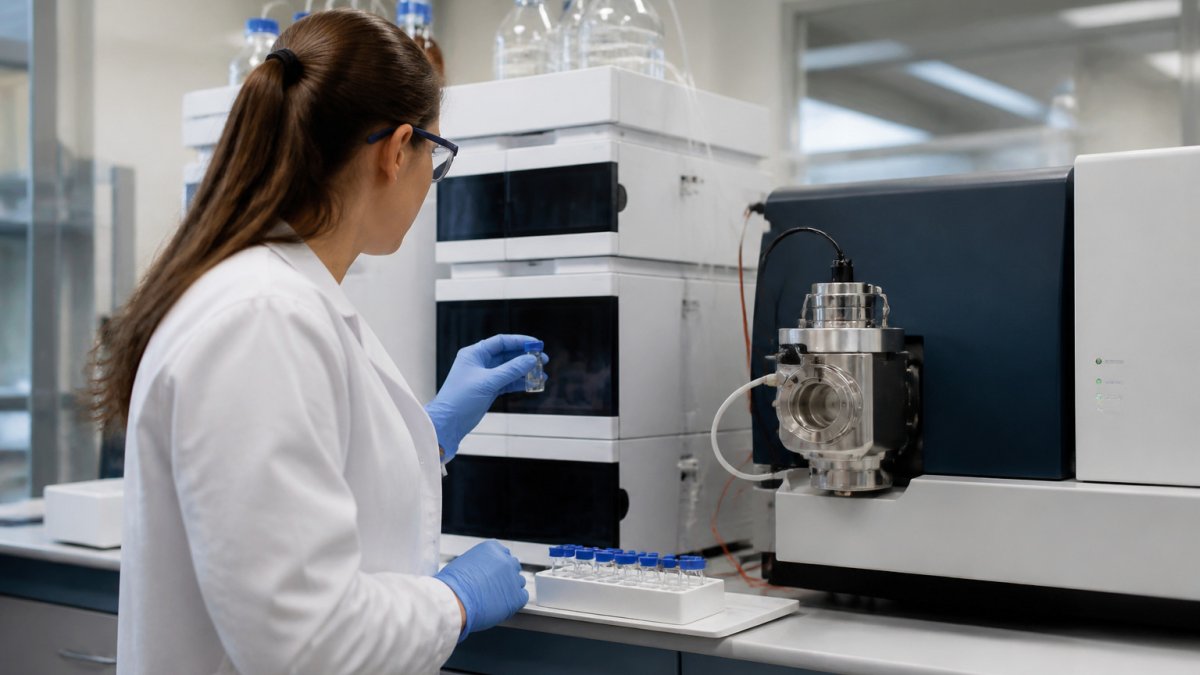
Mass spectrometry is the standard method. The lab measures the molecular weight of the sample and compares it to the expected weight for that sequence.
This is where most quality claims fall apart.
Online Peptide Sales provides Janoshik-verified batch reports for identified samples, which include identity confirmation alongside purity.
Three questions to ask any supplier:
- Does the report include mass spectrometry results?
- Is the tested sample identified by batch?
- Can the report be traced to the exact kit shipped?
Why Batch-Specific Peptide Testing Matters
Batch-specific peptide testing means every production lot is tested, not just a sample from a pilot run. This is the difference between a supplier who verifies quality and one who verified it once.
Manufacturing varies. A synthesis run can differ from the next in purity, salt form, and residual solvents. A single report reused across dozens of kits describes nothing about the vial in your hand.
What batch-specific testing should include:
- A unique lot number on the vial and the report
- Testing at the time of production, not months earlier
- Retention of the raw data for traceability
- A clear link between the tested sample and the shipped kit
If a supplier cannot match a report to a lot number on your vial, the report is marketing material, not quality control.
Research Peptide Storage Guidelines That Protect Sample Integrity
Research peptide storage guidelines exist because degradation is silent. A peptide that has broken down may look identical to a good one. Improper storage creates a quality failure that no lab report can catch after the fact.
Follow these storage rules:
- Keep lyophilized powder frozen at the temperature stated on the product documentation, typically well below freezing.
- Protect from light. Amber vials or foil wrapping reduce photodegradation.
- Limit freeze-thaw cycles. Each warm-up degrades a fraction of the batch.
- Reconstitute only what you will use. Reconstituted peptide is far less stable than powder.
- Use appropriate solvent and technique. Follow the supplier's reconstitution instructions exactly.
Store kits in tamper-evident packaging until use. Online Peptide Sales ships in secure export packaging designed to protect samples in transit, but storage after delivery is the researcher's responsibility.
What to Do After Suspected Exposure or an Adverse Reaction
Stop the exposure first, then document it. If a person has been exposed to an untested peptide and shows symptoms, contact a healthcare professional or poison control immediately.
Symptoms that warrant urgent care include:
- Trouble breathing, facial swelling, or widespread rash
- Fever, chills, or signs of infection at an injection site
- Chest pain, palpitations, or sudden fluid retention
- Severe headache with vision changes
For injection-site reactions, note redness, swelling, and timing. Photograph the site.
Report the event to the FDA MedWatch program, which collects adverse event reports for unapproved products. Then tell the supplier in writing and request the batch report.
When speaking with a clinician, share:
- Product name and batch number
- Route of exposure and estimated amount
- Time since exposure
- Symptoms and their onset
- Any known allergies or medications
Honest disclosure matters. Clinicians cannot assess risk from a product they cannot identify.
| Situation | First action | Follow-up |
|---|---|---|
| Breathing trouble or facial swelling | Call emergency services | Keep vial for testing |
| Fever or spreading redness at site | Seek urgent care | Photograph site, report to supplier |
| Mild rash or headache | Contact clinician | Document timing and dose |
| No symptoms, suspected bad batch | Stop use, retain vial | Request batch report, report to MedWatch |
Conclusion
The risks of using untested research peptides come down to missing evidence: no identity confirmation, no sterility data, no batch traceability. Every one of those gaps is closed by documentation, and documentation is something a buyer can demand before placing an order.
Read the lab report before the label. Store the kit correctly, and treat any suspected exposure as a medical event that needs a clinician and a paper trail. Online Peptide Sales supplies Janoshik-verified batch reports and tamper-evident packaging for research buyers who need that chain of evidence intact.
Frequently Asked Questions
What are the risks of using untested research peptides?
Untested research peptides carry several risks. Without batch testing, you cannot confirm purity, identity, or sterility, so contamination and mislabeling go undetected. Products may contain the wrong peptide, incorrect amounts, or unwanted substances. Unregulated and unapproved peptides also carry unknown long-term effects. Injection-site reactions, allergic reactions, and systemic side effects are all possible when product quality is unverified. Researchers should treat any peptide without a certificate of analysis tied to its specific batch as a sample of unknown composition.
How can you tell whether a research peptide has been tested?
Ask for a certificate of analysis that names the specific batch and shows results from a third-party laboratory. The report should include peptide identity testing, purity percentage, and the analytical method used. A generic report that does not match your vial's batch number does not confirm your sample. Batch-specific peptide testing is the only way to know what is in the vial you received. If a supplier cannot produce a batch-matched report, treat the product as untested.
Can a purity report confirm a peptide's identity?
No. A purity percentage tells you how much of the detected material is a single peak, not what that peak is. A sample could be 98% pure and still be the wrong peptide entirely. Peptide identity testing, typically by mass spectrometry, is what confirms the molecule matches the label. Read a peptide lab report for both: an identity result and a purity result. A purity figure alone is an incomplete picture of product quality.
What should researchers check before accepting a peptide shipment?
Check that the batch number on the vial matches the certificate of analysis, that the packaging is tamper-evident and intact, and that cold-chain requirements were met in transit. Review the report for identity and purity results from a third-party lab. Then follow research peptide storage guidelines immediately on arrival, since temperature and light exposure affect sample integrity. Document everything, including photos of the packaging, so any quality issue can be traced to a specific batch.